

The Future of Manufacturing Lies in Evidence-Based Leadership
 Manufacturing is undergoing a profound transformation as digital technologies, data-driven processes, and sustainability reshape industrial operations. In this evolving landscape, long-term success depends not only on advanced technology but also on evidence-based leadership, operational excellence, and the ability to build resilient, future-ready organizations.
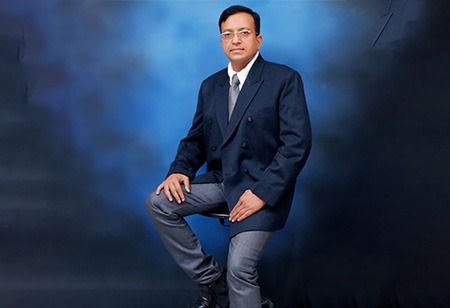
In an exclusive interaction with CEO Insights India Magazine, Dr. Sanjeev Kumar Jha, Director – Process & Technology, Borosil Renewables, a manufacturing leader with over 33 years of cross-industry experience, shares his perspectives on manufacturing leadership, process excellence, operational transformation, technology-driven innovation, sustainable productivity, and organizational capability.
Drawing from his experience across steel, automotive, engineering, and renewable energy, he explains how disciplined decision-making, continuous improvement and people-centric leadership are driving the next generation of high-performing manufacturing enterprises.
Read the full interview below to explore his insights on navigating industrial transformation, fostering innovation, and creating sustainable business value.
Q. Manufacturing has transformed dramatically over three decades. How has evolving with this change continuously reshaped your leadership philosophy?
A. I belong to a fortunate generation, entering manufacturing as India's growth story accelerates, with manufacturing likely to stay central to it for two decades more. Across steel, automotive and now glass, I have lived a real transition. Early on, leadership meant being the fastest answer on the floor - fixing equipment, settling disputes, clearing problems before the shift changed. That worked while problems repeated predictably.
As processes grew more instrumented, I saw the fastest answer was often the wrong one, since a quick fix upstream could quietly create a defect three stations downstream. My philosophy shifted from solving problems fastest to first asking whether we were solving the right one - technology accelerates performance, but only culture sustains it.
Also Read: Manufacturing: The Engine Driving India’s Industrial Leadership
Q. As manufacturing became increasingly technology-driven, what leadership mindset helped you move beyond operational execution toward long-term business transformation?
A. For years my value lay in operational execution, reading equipment, correcting a line, closing a shift report - suited to my mechanical engineering background and hands-on maintenance experience. Technology changed what that value meant. Once sensors, process historians and statistical tools made data continuously available, execution stopped being scarce; interpretation became scarce.
The shift was accepting that my job was no longer the fastest hand on a problem but to build frameworks and root-cause disciplines, supported by AI-driven analytics, CFD modelling and nuclear-based scanning - that let a team interpret data the way I would, without me in the room. Transformation began once I measured my contribution by problems the organisation could solve without me.
Q. Leading process excellence across industries requires balancing consistency with reinvention. How did repeated transitions redefine your approach to leadership decisions?
A. Every plant transition taught the same lesson: what looked like inconsistency between sites was often disguised reinvention, and reinvention was sometimes poor discipline repeating under a new name.
Moving across conventional and solar glass operations forced me to separate the two deliberately. Safety protocols, quality fundamentals and root-cause methodology needed to travel unchanged, almost dogmatically, across lines. Everything else - furnace design, forming technology, product specification - needed re-examination at every transition, since a proven practice transferring automatically is how defects get inherited; I have seen two furnaces barely twenty metres apart produce different quality on near-identical parameters.
Leadership decisions became less about consistency versus reinvention in the abstract, more about diagnosing, case by case, which one a problem required.
Q. Your career reflects building systems instead of solving isolated problems. When did creating organizational capability become your primary leadership focus?
A. The turning point came after I noticed the same defect, in different disguises, resurfacing across lines - true of automotive moulding lines just as much as glass furnaces - each time treated as a fresh, isolated investigation. Solving it well the third time still meant solving it badly the fourth, on a line nobody had checked. That is when I moved from closing individual root-cause investigations to building cross-line diagnostic frameworks and standardised RCA methodology that let one line's lesson protect the others.
Creating organisational capability became the priority once I accepted that isolated fixes, however sound, have a short shelf life; only a system that keeps asking those questions after I have moved on compounds in value over time.
Q. Scaling productivity while strengthening profitability demands disciplined choices. How has experience changed the way you now define sustainable operational success?
A. Steel and automotive manufacturing demanded a different set of deliverables, but early in my career in glass too, success simply meant tonnage - more output, fewer stop pages, a line running faster than last month. Experience has made that definition look incomplete, sometimes dangerously so.
I have watched minor and micro-dose materials breach tolerance by ten to twenty times over while bulk charges looked perfectly within specification, hiding a profitability problem behind a productivity number that read as healthy. Sustainable operational success now means disciplined attention to variables that never show up in a throughput chart - tolerance control, material consistency, defect rate stability - because profitability erodes quietly through the inputs nobody is watching, not the output everyone measures.
Q. From traditional manufacturing to renewable energy, how has industry evolution influenced your perspective on building resilient, future-ready organizations?
A. Moving from conventional manufacturing into solar glass changed what precision meant to me. Solar glass, competing on efficiency and cost per watt, cannot absorb the variation float glass once tolerated; a fraction of a millimetre in ribbon thickness now has a direct line to a customer's module output. That shift taught me resilience in a renewable-energy business means institutionalising continuous experimentation - live forming trials, design-of-experiments-based optimisation, deliberate testing of the limits of gauge and gap - backed by modern tools and, where nothing off-the-shelf fits, developing equipment in-house to our own design.
A future-ready organisation treats its current best practice as temporary by design, always assuming the next efficiency gain has not yet been found.
Q. Driving large-scale operational transformation often requires challenging established practices. How has questioning conventional manufacturing thinking shaped your leadership journey?
A. Some of the most useful moments in my career came from refusing to accept "this is how it has always been specified" as sufficient. I have challenged inherited refractory and material specifications that were compliant but never validated for a specific furnace's conditions, insisting on vendor data sheets, campaign-age evidence and controlled trials.
Equally important has been listening directly to shop-floor personnel, observing conditions myself rather than through a report, and weighing that against reliable data before concluding. That habit is uncomfortable, since it puts you at odds with convention and sometimes with people who installed the original specification. But transformation at scale rarely comes from optimising accepted practice; it comes from asking whether that practice was ever properly tested.
Also Read: Transforming Manufacturing through Technology and Leadership
Q. Looking back, which leadership principle has consistently remained relevant despite changing technologies, industries, and increasing business responsibilities?
The principle that has never gone out of date is that a conclusion is only as good as the evidence behind it. Technologies have changed from product to product and sector to sector, tools have moved from manual inspection to statistical process control, and my responsibilities have expanded from a single line to an entire factory - but the discipline of tracing a defect or a decision back to its root cause, rather than its most convenient explanation, has stayed constant. Seniority makes this harder, not easier, since the temptation to accept an experienced person's opinion over data grows with every promotion. Insisting on evidence, especially against my own assumption, remains the habit I have never found reason to abandon.
LAS WORD: Advice for young manufacturing leaders seeking to build lasting influence through operational excellence rather than positional authority:
Positional authority gets you compliance; it does not get you influence once you leave the room. Young manufacturing leaders build lasting influence by becoming the person whose diagnosis people trust, not the person whose title people obey - trust earned only through visible, repeatable rigour, showing your evidence and not just your conclusion, until people reason the same way independently of you.
I still maintain a document I call "My Learnings," adding a few slides to it almost every day; documenting what you learn is what lets it survive your next transfer or promotion. Resist the shortcut of pulling rank to settle a technical disagreement - it wins the argument and loses the credibility real influence is built on.