

The Making of a CIO: A 27-Year Journey from Code to Strategy
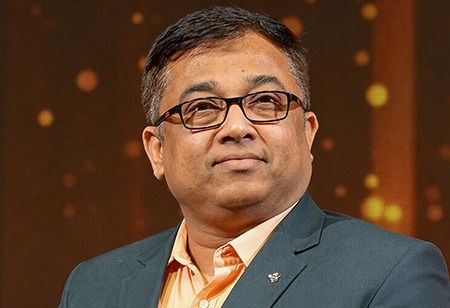
When Partha Protim Mondal began his career as a software engineer, technology seemed to have a simple equation: write better code, build stronger systems, and solve complex technical problems. But as his career progressed, he discovered that the most difficult problems were rarely technical. They were business problems disguised as technology challenges.
A system could be technically flawless and still fail if it did not solve the right problem. A digital transformation could be ambitious and still fall short if people did not adopt it. And the most sophisticated technology could deliver little value if it was disconnected from the organization’s larger goals.
That realization became a defining moment in Mondal’s 27-year journey across enterprise applications, digital transformation, IT strategy, and business innovation. A NIT alumnus, he has earned 45 national and international awards and authored 28 publications on emerging technologies and leadership. Yet his journey has taught him that technology expertise alone does not make a great technology leader.
In an exclusive conversation with CEO Insights India Magazine, Partha Protim Mondal, CIO, Berger Paints India shares how he evolved from software engineering to enterprise leadership. through the conversation he makes a strong case for why tomorrow’s technology leaders must understand not just how technology works, but why the business needs it, where it creates value, and how people can turn that value into lasting advantage.
To know more about the professional journey of Partha Protim Mondal, CIO, Berger Paints India, read the interview.
Q. Beginning your career as a software engineer, when did you first recognize that your journey would be shaped as much by business leadership as by technology expertise?
A. I began my career as a software engineer, deeply immersed in code, systems and enterprise applications. In the early years, technology appeared to be the centre of everything. But as I moved closer to users, processes and business outcomes, I realized that the real value of technology was never in the system alone. It was in the problem it solved, the decision it enabled, and the confidence it created for the business.
That realization came gradually during enterprise application implementations, where every line of code had a direct consequence on order management, inventory, finance, manufacturing or customer service. I understood that a technology professional could not remain confined to technical excellence. To be truly effective, one had to understand business pain, operational urgency, financial discipline and human adoption.
The defining shift happened when business leaders began looking to IT not merely for execution, but for advice, alternatives and direction. That was the moment I recognized that my career would be shaped as much by leadership as by technology.
Technology gave me the foundation, but business leadership gave me purpose. It taught me to translate complexity into clarity, ideas into measurable outcomes, and systems into enterprise capability.
From that stage onward, I stopped seeing myself only as a technologist. I began seeing myself as a business enabler who happened to understand technology deeply.
Q. Moving across industries over twenty-seven years meant repeatedly entering unfamiliar business environments. How did every transition redefine your approach to leadership?
A. Every industry transition taught me humility before it taught me confidence. Moving across manufacturing, consulting, technology services, automotive, chemicals and paints meant entering environments where the vocabulary, priorities and operating rhythms were different. What remained constant was the expectation that technology must serve business with precision, speed and reliability.
Each transition reshaped my leadership approach in a distinct way. In consulting and technology services, I learnt discipline, delivery excellence and stakeholder management. In manufacturing-led environments, I understood the importance of continuity, cost, quality and process discipline. In global engagements, I learnt that leadership is not about imposing a solution, but about listening deeply before designing one.
Unfamiliar environments made me more curious, more structured and more respectful of domain expertise. They taught me that a leader does not need to know everything on day one, but must know how to ask the right questions, connect the right people and build trust quickly.
Over time, I learnt to lead with context rather than assumptions. Every new industry expanded my perspective from technology implementation to enterprise value creation. It also reinforced that successful leadership is portable only when it is rooted in learning agility, empathy and the ability to align diverse stakeholders around a common outcome.
The transitions did not merely change my career path. They made me a more adaptive, inclusive and business-oriented leader.
Also Read: Sai Satheesh: Pioneering Technology Leadership In The Automotive Industry
Q. Enterprise transformation projects often expose leaders to every function within an organization. How did those experiences broaden your perspective beyond technology into business strategy?
A. Enterprise transformation is one of the finest classrooms for business leadership. It takes a technology leader into the heart of every function, including sales, finance, supply chain, manufacturing, procurement, HR, customer service and governance. My journey through large-scale enterprise applications, analytics, mobility, cloud and digital transformation projects gave me a panoramic view of how an organization truly works.
In such projects, technology is only one dimension. The larger challenge is to understand interdependencies. A change in order management can affect inventory. A finance process can influence compliance. A manufacturing decision can impact customer commitments. A dashboard can alter how leaders review performance. These experiences helped me appreciate that business strategy is not built in isolation. It emerges from the alignment of processes, people, data and decisions.
Enterprise transformation also taught me the importance of prioritization. Not every technology possibility deserves investment. The right question is not “Can we do it?” but “Should we do it, and what business value will it create?”
Over time, my perspective expanded from system implementation to capability building. I began to see IT as the nervous system of the enterprise, enabling visibility, agility, governance and resilience. Those experiences fundamentally changed my leadership lens. I no longer evaluate technology only by architecture or functionality. I evaluate it by its ability to strengthen strategy, improve execution, reduce risk and create sustainable business advantage.
Q. As technology continuously evolved from enterprise applications to cloud, cybersecurity and AI, how did the discipline of constantly reinventing yourself influence your leadership philosophy?
Technology has never allowed leaders the luxury of standing still. When I began, enterprise applications and Oracle technologies formed the core of business transformation. Over the years, the landscape expanded into business intelligence, mobility, cloud, cybersecurity, data resiliency, Zero Trust, automation and now artificial intelligence. Each wave demanded not only new knowledge, but also a new mindset.
The discipline of reinvention taught me that leadership cannot be anchored in past expertise alone. Experience is valuable only when it remains open to renewal. What made someone successful in one technology cycle may not be sufficient in the next. Therefore, I have always believed that a leader must remain a lifelong learner, not as a slogan, but as a daily operating habit.
Reinvention also made me more comfortable with ambiguity. Cloud, cybersecurity and AI all require leaders to make decisions in fast-moving environments where certainty is limited. In such situations, the role of a leader is to create direction, manage risk and keep teams confident while the landscape evolves. Technology reinvention has taught me that humility and curiosity are indispensable leadership qualities. The more technology evolves, the more important it becomes for leaders to combine innovation with responsibility, speed with governance, and ambition with resilience.
My leadership philosophy has therefore become simple: stay grounded in fundamentals but remain restless about learning. The fundamentals are business value, trust, governance, security and people. The learning keeps changing.
Also Read: John Ramesh: Leading The Next Generation Of Cybersecurity Assurance
Q. Managing transformation while ensuring uninterrupted business operations requires competing priorities. How has balancing both shaped the decisions you make as a leader today?
Balancing transformation with uninterrupted operations is one of the most important responsibilities of a technology leader.
Transformation creates the future, but operations sustain the present.
A leader cannot afford to compromise either. This balance has shaped my decision-making more than any single technology trend.
In enterprise environments, business continuity is not negotiable. Manufacturing, sales, finance, supply chain and customer-facing processes depend on reliable systems. At the same time, organizations must modernize continuously to remain competitive. The challenge is to transform without creating instability.
This has taught me to take a risk-balanced approach. I believe in ambitious transformation, but not reckless transformation. Every major change must be supported by strong governance, stakeholder alignment, testing discipline, fallback planning, cybersecurity controls and clear communication. Speed is important, but sustainable speed is more important.
It has also influenced how I prioritize investments. I look for initiatives that create measurable business value while strengthening resilience. A transformation that improves agility but weakens control is incomplete. Similarly, an operation that is stable but resistant to change may become a future risk.
Today, my decisions are guided by a dual lens: business continuity and future readiness. The best technology leadership lies in protecting the enterprise while preparing it for what comes next. This balance has made me more pragmatic, more collaborative and more disciplined. It has taught me that transformation is not an event. It is a carefully governed journey where trust must be preserved at every step.
Q. Working with global enterprises across diverse industries also means navigating different organizational cultures. How did those experiences influence the way you lead large-scale change?
A. Working with global enterprises and diverse industries taught me that culture determines the pace and success of change as much as technology does. Systems may be standardized, but people, behaviours and decision-making styles are never identical. Every organization has its own rhythm, history, informal networks and comfort zones.
My experiences with global and Indian enterprises helped me understand that large-scale change cannot be driven only by project plans. It requires trust, communication and cultural sensitivity. A solution that works in one organization may need a different adoption approach in another. Some cultures value speed, some value consensus, some value process depth, and some value entrepreneurial flexibility. A leader must recognize these differences early.
These experiences made me a strong believer in stakeholder-led transformation. Before driving change, I try to understand what people fear, what they value, and what success means to them. When people understand the purpose of change, resistance reduces and ownership increases.
Global exposure also taught me the importance of clarity. In complex environments, leaders must simplify the message without diluting the ambition. People should know why change is needed, how it will affect them, and what role they are expected to play. Today, I lead large-scale change with a blend of structure and empathy. Governance ensures discipline, while empathy ensures adoption. Technology can deliver capability, but culture determines whether that capability becomes enterprise value.
Also Read: Business Opportunities Vs. Corporate Governance in the Aftermath of Technology Transformation
Q. Every long career leaves behind principles that outlast changing technologies. Which leadership beliefs have remained unchanged throughout your journey despite constant disruption?
A. Technologies have changed dramatically during my career, but certain leadership beliefs have remained constant. The first is that trust is the foundation of leadership. Whether one is implementing enterprise applications, cloud platforms, cybersecurity frameworks or AI solutions, people must trust the leader’s intent, judgement and consistency.
The second belief is that technology must always serve business purpose. I have never believed in technology adoption for its own sake. Every initiative must either solve a meaningful problem, improve decision-making, strengthen resilience, enhance productivity or create competitive advantage.
The third belief is that teams create transformation, not individuals. A leader may define direction, but execution belongs to people. Therefore, building capable, confident and motivated teams has always been central to my leadership approach.
Another enduring principle is integrity in decision-making. Technology leaders handle critical systems, sensitive data, budgets, risks and enterprise trust. Governance, transparency and accountability are not optional. They are core to responsible leadership.
I also believe that learning must never stop. The tools will change, the platforms will change, and the vocabulary will change. But curiosity keeps a leader relevant. Finally, I believe that humility is essential. Complex transformations succeed when leaders listen, collaborate and respect functional knowledge. No title can substitute for listening.
These principles have remained unchanged because they are not technology principles. They are leadership principles. Disruption may change the environment, but values determine how leaders navigate it.
LAST WORD: Advice for young tech professionals on leadership habits to develop early on for building long careers:
Young technology professionals are entering one of the most exciting and demanding eras. The pace of change is extraordinary, but relevance over decades will not come from learning one programming language, one platform or one tool. It will come from building the right leadership habits early.
The first habit is curiosity. Learn continuously and deliberately. Do not wait for formal training to upgrade yourself. The second is business understanding. Even if you begin as a developer, analyst or engineer, make an effort to understand how your work affects revenue, cost, customers, compliance and operations. The third habit is communication. Great ideas lose impact if they cannot be explained clearly. Learn to simplify complexity for different audiences. The fourth is ownership. Do not work only to complete assigned tasks. Understand the outcome your work is meant to create.
Young professionals should also develop resilience. Technology careers include failures, migrations, escalations, long projects and unexpected disruptions. The ability to stay calm, learn and recover is invaluable. Another important habit is ethical judgement. With AI, data and cybersecurity becoming central to business, responsible decision-making will define future leaders.
Finally, build relationships. Technology transformation is a team sport. Respect users, business colleagues, peers and mentors. Listen more than you speak in the early years. My advice is simple: become technically strong, but do not remain technically narrow. Build depth in technology, breadth in business and maturity in behaviour. That combination creates careers that remain relevant for decades.