


Kartik Krishnan: Driving Global Digital Transformation With Purpose & Innovation
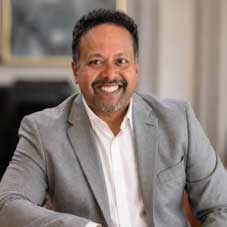
Kartik Krishnan
Managing Partner
Their journeys are defined not only by professional success but also by resilience adaptability and the ability to create meaningful influence across border.
Kartik Krishnan, Managing Partner at Balata Data, is one such leader whose career reflects a unique blend of global governance digital transformation and strategic business leadership.
Having navigated defining industry moments such as the Dotcom boom and bust and the 2008 financial crisis, Kartik has remained guided by one enduring principle, the value clients remember you for creating.
Kartik’s professional journey began within the United Nations Common System, where he contributed to globally significant initiatives.
As part of teams within the IAEA and OPCW, he shared in the Nobel Peace Prize recognition awarded to the organizations for their contributions to global peace and security.
At the IAEA, he played a key role in digitally transforming the distribution framework for over $100 million in nuclear technology funding dedicated to peaceful purposes.
Later, as a Solutions Architect supporting the International Criminal Court, he led the establishment of two major greenfield data centres funded by the Dutch Government, modernizing critical digital infrastructure.
His transition into the commercial technology sector saw him successfully spearhead Global Systems Integrator strategy at Curvature, delivering strong and profitable growth outcomes.
Today, as Managing Partner at Balata Data, Kartik is driving the expansion of Balata UK while strengthening the company’s global footprint beyond the United States.
His leadership continues to be defined by innovation, trust, sustainability, and the long-term relationships he builds with clients and partners worldwide. Let’s read on.
What signals do you look for to identify when a client is ready to shift from cost cutting to growth investment?
In my opinion, this is one of the most pivotal moments in an organization’s journey, the transition from survival mode to scale-up mode. I usually look for a combination of financial operational, market, and leadership signals.
Financially I assess whether the organization is generating healthy returns from new customer acquisition and whether CAC (Customer Acquisition Cost) is lower than lifetime value. Stable and predictable cash flow is another strong indicator of maturity and confidence.
Operational readiness is equallyimportant. I look for businesses that can comfortably support a 20–25 percent increase in demand without system failures or operational bottle necks. Mature processes and reduced dependency on a small percentage of high performers also signal scalability.
From a market perspective rising customer demand, evolving product expectations, and competitors struggling with austerity measures often create the perfect window for growth investment. One of the clearest indicators is when client conversations shift from “help us save costs” to “help us achieve more.”
Ultimately, my litmus test is leadership mindset. When executive discussions spend more time focused on opportunity, innovation, and expansion rather than survival and efficiency, it becomes clear that the organisation is ready to invest confidently in growth.
How do you align IT infrastructure strategy with broader business outcomes across EMEA markets?
I believe IT infrastructure strategy across EMEA has evolved far beyond simply 'moving to the cloud.' Today, the focus is on architecting for digital sovereignty resilience, and AI readiness. In my approach, infratructure decisions must directly support business priorities such as scalability compliance, sustainability, and innovation.
One area where my organisation is doing impactful work is helping enterprises free up power and resources for AI-driven infra -structure through strategic IT Asset Disposition (ITAD).
By enabling organisations to recover residual value from existing infrastructure through buyback programmes, we help them reinvest those funds in a green manner into next-generative AI capabilities while also supporting sustainability and operational efficiency goals.
What role does sustainability play in influencing infrastructure investment decisions in the UK and Nordics?
In my view, sustainability is no longer a secondary consideration in infrastructure investment decisions it has become one of the primary drivers shaping technology strategy across both the UK and the Nordics. However, the priorities differ significantly between the two regions.
In the UK, the market is increasingly influenced by what I call a “Power and Sovereignty” crunch. Today, organizations are not only evaluating what infrastructure or hardware to invest in, but also where they are legally and operationally able to deploy it, especially with growing concerns around energy availability, data sovereignty, and AI workloads.
In contrast, the Nordic markets, including Sweden, Norway, Finland, and Denmark, are leading conversations around energy efficiency, heat reuse, and sustainability compliance.
The EU Energy Efficiency Directive (EED) and local carbon pricing mechanisms are heavily shaping infrastructure strategies and investment decisions across the region.
At Balata, we place sustainability at the heart of every engagement. Whether we are supporting clients in the UK or the Nordics, we ensure our
From a market perspective rising customer demand, evolving product expectations, and competitors struggling with austerity measures often create the perfect window for growth investment. One of the clearest indicators is when client conversations shift from “help us save costs” to “help us achieve more.”
I believe leadership is about inspiring teams, creating trust, and enabling individuals to perform at their highest potential
Ultimately, my litmus test is leadership mindset. When executive discussions spend more time focused on opportunity, innovation, and expansion rather than survival and efficiency, it becomes clear that the organisation is ready to invest confidently in growth.
How do you align IT infrastructure strategy with broader business outcomes across EMEA markets?
I believe IT infrastructure strategy across EMEA has evolved far beyond simply 'moving to the cloud.' Today, the focus is on architecting for digital sovereignty resilience, and AI readiness. In my approach, infratructure decisions must directly support business priorities such as scalability compliance, sustainability, and innovation.
One area where my organisation is doing impactful work is helping enterprises free up power and resources for AI-driven infra -structure through strategic IT Asset Disposition (ITAD).
By enabling organisations to recover residual value from existing infrastructure through buyback programmes, we help them reinvest those funds in a green manner into next-generative AI capabilities while also supporting sustainability and operational efficiency goals.
What role does sustainability play in influencing infrastructure investment decisions in the UK and Nordics?
In my view, sustainability is no longer a secondary consideration in infrastructure investment decisions it has become one of the primary drivers shaping technology strategy across both the UK and the Nordics. However, the priorities differ significantly between the two regions.
In the UK, the market is increasingly influenced by what I call a “Power and Sovereignty” crunch. Today, organizations are not only evaluating what infrastructure or hardware to invest in, but also where they are legally and operationally able to deploy it, especially with growing concerns around energy availability, data sovereignty, and AI workloads.
In contrast, the Nordic markets, including Sweden, Norway, Finland, and Denmark, are leading conversations around energy efficiency, heat reuse, and sustainability compliance.
The EU Energy Efficiency Directive (EED) and local carbon pricing mechanisms are heavily shaping infrastructure strategies and investment decisions across the region.
At Balata, we place sustainability at the heart of every engagement. Whether we are supporting clients in the UK or the Nordics, we ensure our
discussions are aligned with their operational goals, cultural priorities, and long-term business objectives. Our approach is always centered on creating sustainable, future-ready infra- structure while keeping the client’s interests at the core of every decision.
Describe your leadership style. What guide lines or methodologies do you follow as a leader?
I would describe my leadership style as transformational, with people always at the center of my approach. I believe leadership is about inspiring teams, creating trust, and enabling individuals to perform at their highest potential.
My decisions are driven by facts, purpose, and adaptability, especially in rapidly evolving markets where the rules constantly change.
I bring a high level of energy to my work and strive to be a positive force that uplifts team morale with a “Never Say Die” attitude. However, I strongly believe leadership success is never individual.
The incredible team at Balata, the guidance of my mentor, and the strong support system within the organisation have all played a significant role in helping me grow and succeed as an intrapreneur and leader.
Based on your experience in the industry, what advice would you give to aspiring leaders in the field?
My advice to aspiring leaders is to become bridge builders rather than bosses. Leadership today is about connecting people, ideas, and cultures. I strongly encourage young professionals to travel, experience different cultures, and broaden their perspectives because global understanding shapes better decision-making.
I also believe mastering the Human–AI partnership is essential, as the future belongs to leaders who can balance technology with empathy. When leading younger generations, I focus on individualized growth rather than generic feedback, aligning personal ambitions with organisational goals.
Above all, I see leadership as a continuous practice, something that evolves through learning, reflection, mentorship, and consistent self-improvement over time.
Kartik Krishnan, Managing Partner - UK & EMEA, Balata Data
Kartik Krishnan is Managing Partner at Balata Data, leading the company’s UK and global expansion initiatives. With experience spanning the United Nations, international digital infrastructure, and enterprise technology strategy, he is recognized for driving transformation, sustainability, and AI-focused innovation while building strong client relationships across Global markets.
Awards:
•Received the prestigious Staff Recognition Award from the Director General of the OPCW for developing a transformative digital strategy that became the organisation’s operational blue print for the following decade.
•Recognized for a strong people-centric approach to technology, with special appreciation for building collaborative relation ships and improving organi -sational culture through digital transformation initiatives.
•Honoured with the 3rd Party Datacenter Maintenance Provider of the Year and Green Jacket of the Year awards for delivering outstanding revenue growth and leadership in datacenter maintenance sales.
Describe your leadership style. What guide lines or methodologies do you follow as a leader?
I would describe my leadership style as transformational, with people always at the center of my approach. I believe leadership is about inspiring teams, creating trust, and enabling individuals to perform at their highest potential.
My decisions are driven by facts, purpose, and adaptability, especially in rapidly evolving markets where the rules constantly change.
I bring a high level of energy to my work and strive to be a positive force that uplifts team morale with a “Never Say Die” attitude. However, I strongly believe leadership success is never individual.
The incredible team at Balata, the guidance of my mentor, and the strong support system within the organisation have all played a significant role in helping me grow and succeed as an intrapreneur and leader.
Based on your experience in the industry, what advice would you give to aspiring leaders in the field?
My advice to aspiring leaders is to become bridge builders rather than bosses. Leadership today is about connecting people, ideas, and cultures. I strongly encourage young professionals to travel, experience different cultures, and broaden their perspectives because global understanding shapes better decision-making.
I also believe mastering the Human–AI partnership is essential, as the future belongs to leaders who can balance technology with empathy. When leading younger generations, I focus on individualized growth rather than generic feedback, aligning personal ambitions with organisational goals.
Above all, I see leadership as a continuous practice, something that evolves through learning, reflection, mentorship, and consistent self-improvement over time.
Kartik Krishnan, Managing Partner - UK & EMEA, Balata Data
Kartik Krishnan is Managing Partner at Balata Data, leading the company’s UK and global expansion initiatives. With experience spanning the United Nations, international digital infrastructure, and enterprise technology strategy, he is recognized for driving transformation, sustainability, and AI-focused innovation while building strong client relationships across Global markets.
Awards:
•Received the prestigious Staff Recognition Award from the Director General of the OPCW for developing a transformative digital strategy that became the organisation’s operational blue print for the following decade.
•Recognized for a strong people-centric approach to technology, with special appreciation for building collaborative relation ships and improving organi -sational culture through digital transformation initiatives.
•Honoured with the 3rd Party Datacenter Maintenance Provider of the Year and Green Jacket of the Year awards for delivering outstanding revenue growth and leadership in datacenter maintenance sales.