

Building Businesses That Last: Lessons in Sustainable Leadership
 Sustainable business growth is not about moving fast; it is about building strong foundations that can withstand change.
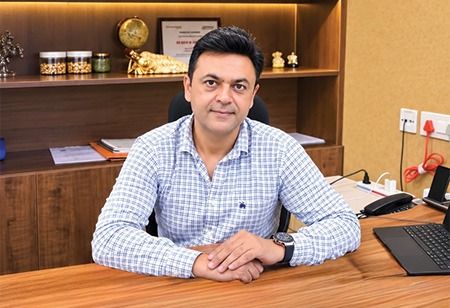
Business leader Nitin Kaushal, drawing from over two decades of experience across industrial technology, automation, strategic growth, and corporate leadership, believes that resilient enterprises are built through these fundamentals. Having been in the industry for over two decades, he believes that lasting business success comes from strong fundamentals, disciplined execution, ethical leadership, empowered teams and a long-term mindset.
In an exclusive interaction with CEO Insights India Magazine, Nitin Kaushal, Founder and CEO, SFK Group of Companies, shares his perspectives on responsible growth, operational excellence, technology adoption, leadership, and long-term value creation.
From financial discipline and empowering teams to embracing meaningful innovation and nurturing future leaders, he has highlighted practical insights into building organisations that can adapt, perform, and create lasting value.
Read the complete interview for leadership insights on sustainable business leadership.
Q1. You have built businesses across several industries. What inspired you to focus on creating a strong business foundation instead of chasing rapid growth?
A. Every sustainable business is built on solid principles as opposed to fast-track success. Quick growth without proper structures, controls and values in place often leads to problems down the road. The focus should remain on creating a business model based on trust, quality, innovation, and strong relationships with clients. The business environment needs to be solid enough to create results naturally without being imposed as a goal.
If you scale up before your operations are ready, you just multiply your existing flaws. Companies often collapse because their customer service or supply chains snapped under sudden demand. We focused on steady cash flow and clear training early on. That way, expansion happens because the market demands it, not because we are forcing it.
Q2. When you started building SFK Group, what early decisions helped shape the culture and values that continue to guide the organisation today?
A. One of the earliest decisions was to build a culture where integrity, accountability, and customer commitment were non-negotiable. We also encouraged transparency in decision-making and empowered employees to take responsibility for their work. These values have remained consistent as the organisation has grown and continue to define how we operate today.
In practice, this meant setting up an open-door policy where staff could challenge choices without fear of backlash. We openly shared our financial hurdles during tough quarters. When people see management being completely transparent, they mirror that behaviour. It built a loyal workplace where individuals took real pride in solving problems rather than hiding mistakes from their managers.
Also Read: From ESG to Net Zero: India’s Industrial Sustainability Roadmap
Q3. As your business expanded into different sectors, how did you ensure every new venture reflected the same vision and purpose?
A. Every industry faces its own set of challenges, but our mission remains the same, which is to create relevant solutions that have a lasting impact. It is essential to evaluate every new venture based on the core values of the organisation, its strategic vision and commitment to innovation and quality. With this consistency, SFK Group ensures that every business under it reflects the same standards and purpose regardless of which sector they belong to.
Q4. You often speak about discipline and accountability. How have these values helped you navigate both growth opportunities and uncertain business environments?
A.Discipline and accountability are essential for building consistency and trust. These two principles are important for every individual and organisation. I firmly believe that with discipline, you can outperform others without necessarily being smarter or luckier, provided you are willing to endure pain and uncertainty.
Discipline gives you the strength and resilience to navigate challenges and allows pain and uncertainty to pass more smoothly.
When an organization is in growth phase, such values help it execute efficiently and maintain high standard. The same elements have helped us in uncertain times, where they helped us make informed decisions and respond quickly to the challenges. Overall, discipline and consistency enable a rigid focus on long-term goals, while strengthening resilience throughout the journey.
This boils down to keeping a tight grip on our budgets and performance metrics even when times are good, and profits are rolling in. When market disruptions hit, we do not panic or make sudden cuts. Because our internal data is clear and individuals know exactly what they are responsible for, we can adjust our plans smoothly without hurting our service quality.
Q5. Technology continues to transform industries. How do you decide which innovations are worth investing in for long-term business success?
A. Our investments in technology implement solutions to existing problems, improve how businesses operate, and produce tangible results for customers. Innovation is not simply adopting modern technology. Instead, it has to be viewed from another perspective: it should be perceived as a sign of future vision and ability to drive sustainable development. It is essential to assess scalability, impact, and benefits for customers prior to making decisions on investments in technology.
We never buy software just because it is trending online or sounds impressive. Our team tests new tools first to see if they actually cut down on daily paperwork or speed up deliveries. If a piece of tech does not directly solve a frustration for our staff or make things simpler for our end users, we pass on it entirely.
Also Read: Digital Upskilling Key For Survival Of Organizations
Q6. Looking back, what leadership lessons have you learned while managing businesses with such diverse operations under one group?
A. One of the greatest lessons is that leadership is not limited to leading with control; it is about empowering people. When managing diverse business profiles, it is important to understand how to build effective teams, manage people, and adapt flexibly to change.
In my view, another key takeaway from these experiences is that learning and the willingness to accept change are crucial qualities for every leader nowadays. Every leader should possess these qualities to align with the dynamic business environment today.
Micromanaging people is not the way when you are running multiple companies at the same time. I am not a technical expert in every single sector we operate in, and I do not pretend to be. The focus is on clearing bottlenecks, securing funds, and making sure division heads stay on track.
Q7. How do you encourage your teams to take ownership and think beyond their day-to-day responsibilities?
A. People develop ownership when they realise how their contribution will help the company achieve its larger vision. We promote open communication, recognise initiative and provide a lot of opportunities for learning and space for professional growth. If employees feel valued and appreciated, they will automatically assume proactive, innovative and committed roles at work. We give our teams real authority over their project timelines and spending limits. People work much harder when they do not have to wait for weeks to get a simple idea approved by corporate headquarters.
Q8. As industries continue to evolve, what qualities will define the next generation of successful business leaders?
A. Future leaders will require adaptability, resilience, ethical decision-making, and the commitment to continuous learning. Being technologically savvy is significant for their profile, but they also need to strike a balance and not forget the human element of leadership. Motivating people, being innovative, and making ethical choices are the qualities of a good leader of tomorrow.
Top-down, rigid management simply does not work anymore. The business world moves too fast. Tomorrow's leaders need strong interpersonal skills like active listening and real empathy to keep remote teams working together smoothly. They must be comfortable changing plans when new information drops and talking clearly to their staff when industry changes create problems in the workplace.
LAST WORD: What advice would you give leaders who want to build organisations that create lasting value for the future?
When building a business, it is vital to keep in mind the long-term goals rather than focusing only on immediate successes. Focus on delivering value to people, maintain integrity, be innovative, and have the commitment to create value. Only a business which is flexible enough and stays true to its principles is destined to remain on top of the industry. This requires saying no to short-term shortcuts. You cannot slash your product quality or drop your customer support standards just to hit a quarterly financial target. When your partners know you value honest relationships over quick margins, they stick by you during tough economic downturns.