


Shrenik Kochar: Blending Tea Legacy With Modern Business Strategy
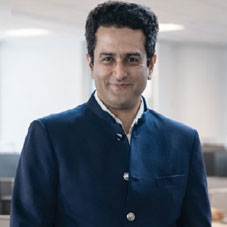
Shrenik Kochar
Director
This confluence is what characterizes the success story of Shrenik Kochar, Director of Kochar Tea and Beverages.
Shrenik got introduced to his family business of tea trade early on in life. Drawing learnings from five decades that the family has been in the business, he reinvented the traditional industry knowledge to create a revolutionary modern-day business.
Shrenik’s entrepreneurial journey began in 2011 with white labelling, a strategy that inculcated in him the confidence to first manufacture and then create his own brand, which is now ready for retail at a larger scale.
An adept leader, Shrenik’s management approach amalgamates data-driven decision-making style, flexible leadership and accountability; principles that he refined at NMIMS, a place where case-based learning, marketing frameworks and faculty mentorship transformed his business perspective.
Today, Shrenik’s comprehensive knowledge about India's regional tea preferences inspires Kochar Tea and Beverages’ product strategy and market positioning.
In conversation with CEOInsights, Shrenik shares the experiences, insights and vision that continue to shape his journey as a new-age leader in India’s tea industry.
What inspired you to start your own tea business, and how has your journey evolved since then?
I started my company in 2011, right after college. Before that, I worked at TCS for two and a half years but realized corporate culture was not for me.
My family has been in the tea business for 45–50 years, so we knew the industry inside out.
We began with some challenges but moved forward with confidence in our deep market knowledge. Initially, we focused on white labelling for several companies.
Later, we began our own tea manufacturing. We decided that since we were already producing for others, we should launch our own brand.
Now, we are in discussions with 3–4 large departmental chain stores and will be launching our team brand across several stores this year.
We continue white labelling and also supply tea to one of the largest tea chains in India.
What were the most significant learning experiences during your time at NMIMS?
My time at NMIMS taught me how leadership functions within organizations and how marketing perspectives differ. Family-owned businesses approach marketing differently from large corporations. Big companies clearly identify their market, positioning, and sales strategy.
I also learned modern team management. Traditional fixed working hours are less effective today. Teams should have flexi-bility, and work should be result-oriented. Another major learning was data driven decision-making. Decisions backed by data yield better outcomes than gut-based decisions.
How did NMIMS shape your decision making approach? Also tell us about the faculty and alumni network.
NMIMS strengthened my ability to take data-based decisions instead of relying on intuition. Case studies of companies like Hindustan Lever, Warren Buffett, Shaadi.com, and others showed how businesses start from nothing and grow with clear vision and mission. I learned how companies identify strengths and weaknesses and convert disadvantages into advantages.
This knowledge helped me believe we could build something significant. The faculty was excellent too. They were open to questions and discussions. The learning environment was interactive and engaging.
I am in touch with my entire batch of 50–60 people. We have groups, stay connected, and meet occasionally. I have not yet been very active in the broader alumni network due to work commitments.
What leadership style do you follow in your organization?
I follow a flexible, accountability-based leadership style. We have short daily calls where everyone, including me, shares progress and challenges. Weekly and monthly review calls help plan and track targets.
My team works remotely from different states. I give them the freedom to manage their time, pursue hobbies, and take leaves when needed. Accountability lies with them to achieve monthly targets. Performance is reviewed, and improvements are discussed.
How do you personally ensure consistent tea quality and safety from farm to final packaging?
I taste around 300 cups of tea daily and personally monitor production quality. If quality drops, I stop production and correct it. Products must be value for money, not underpriced to create doubt. I work directly with farmers, ensure low pesticide and fertilizer levels, and aim for tea safe for children and elders alike.
What were the most significant learning experiences during your time at NMIMS?
My time at NMIMS taught me how leadership functions within organizations and how marketing perspectives differ. Family-owned businesses approach marketing differently from large corporations. Big companies clearly identify their market, positioning, and sales strategy.
I also learned modern team management. Traditional fixed working hours are less effective today. Teams should have flexi-bility, and work should be result-oriented. Another major learning was data driven decision-making. Decisions backed by data yield better outcomes than gut-based decisions.
How did NMIMS shape your decision making approach? Also tell us about the faculty and alumni network.
NMIMS strengthened my ability to take data-based decisions instead of relying on intuition. Case studies of companies like Hindustan Lever, Warren Buffett, Shaadi.com, and others showed how businesses start from nothing and grow with clear vision and mission. I learned how companies identify strengths and weaknesses and convert disadvantages into advantages.
This knowledge helped me believe we could build something significant. The faculty was excellent too. They were open to questions and discussions. The learning environment was interactive and engaging.
I am in touch with my entire batch of 50–60 people. We have groups, stay connected, and meet occasionally. I have not yet been very active in the broader alumni network due to work commitments.
What leadership style do you follow in your organization?
I follow a flexible, accountability-based leadership style. We have short daily calls where everyone, including me, shares progress and challenges. Weekly and monthly review calls help plan and track targets.
My team works remotely from different states. I give them the freedom to manage their time, pursue hobbies, and take leaves when needed. Accountability lies with them to achieve monthly targets. Performance is reviewed, and improvements are discussed.
How do you personally ensure consistent tea quality and safety from farm to final packaging?
I taste around 300 cups of tea daily and personally monitor production quality. If quality drops, I stop production and correct it. Products must be value for money, not underpriced to create doubt. I work directly with farmers, ensure low pesticide and fertilizer levels, and aim for tea safe for children and elders alike.
We ensure pesticide and fertilizer use is minimal. Raw materials are manually inspected, sun-dried, shade-dried, cleaned, heated, and vacuum-packed.
Tea undergoes regular tasting and shelf-life checks. Stocks are separated based on quality. Storage conditions prevent contamination and sunlight exposure.
What is your future roadmap for the business?
Our short-term goal is to place our products in 10,000 brick-and-mortar stores across India and achieve ₹1 crore per month in online sales.
This phase is focused on strong distribution, retail visibility, and building consistent digital demand to create a stable revenue foundation. Expanding reach while maintaining product quality and brand recall remains a key operational priority.
Our long-term vision is to become the most reputable tea brand in India. When people think of good tea, they should instantly think of our company.
What advice would you give to upcoming leaders?
Stay in your area of expertise and keep upskilling instead of frequently changing professions. Expertise makes you harder to replace, even by AI.
Meet entrepreneurs and learn directly from them. Conversations can provide insights faster than books. Real-world stories, practical mistakes, and lived experiences often offer lessons that structured learning cannot easily replicate.
Shrenik Kochar, Director, Kochar Tea & Beverages
Shrenik Kochar, Director at Kochar Tea and Beverages, is a second-generation tea businessman mixing the longstanding industry knowledge of his family with a contemporary, data-driven approach to business.
He took the best of both worlds deep-rooted family business know-how and a solid management education at NMIMS to develop a scalable tea business that covers white labelling, manufacturing, and brand building.
•Regarding Your Hobbies and Favourite Pastimes: Learning keyboard, boxing daily, running, jogging, watching Japanese anime, Telugu movies, and reading fiction.
•Favourite Cuisine: South Indian food, especially dosa.
•Favourite Travel Destinations: Sri Lanka, Dubai, Goa, Kerala, Chikmagalur, and Rameshwaram.
•Favorite Book: The Godfather. I finished it in one night and it remains memorable.
•Awards & Recognition: Recognized as a skilled tea taster by a tasting asso - ciation and received certification. Also holds an NMIMS certificate.
Tea undergoes regular tasting and shelf-life checks. Stocks are separated based on quality. Storage conditions prevent contamination and sunlight exposure.
What is your future roadmap for the business?
Our short-term goal is to place our products in 10,000 brick-and-mortar stores across India and achieve ₹1 crore per month in online sales.
This phase is focused on strong distribution, retail visibility, and building consistent digital demand to create a stable revenue foundation. Expanding reach while maintaining product quality and brand recall remains a key operational priority.
Our long-term vision is to become the most reputable tea brand in India. When people think of good tea, they should instantly think of our company.
What advice would you give to upcoming leaders?
Stay in your area of expertise and keep upskilling instead of frequently changing professions. Expertise makes you harder to replace, even by AI.
Meet entrepreneurs and learn directly from them. Conversations can provide insights faster than books. Real-world stories, practical mistakes, and lived experiences often offer lessons that structured learning cannot easily replicate.
Shrenik Kochar, Director, Kochar Tea & Beverages
Shrenik Kochar, Director at Kochar Tea and Beverages, is a second-generation tea businessman mixing the longstanding industry knowledge of his family with a contemporary, data-driven approach to business.
He took the best of both worlds deep-rooted family business know-how and a solid management education at NMIMS to develop a scalable tea business that covers white labelling, manufacturing, and brand building.
•Regarding Your Hobbies and Favourite Pastimes: Learning keyboard, boxing daily, running, jogging, watching Japanese anime, Telugu movies, and reading fiction.
•Favourite Cuisine: South Indian food, especially dosa.
•Favourite Travel Destinations: Sri Lanka, Dubai, Goa, Kerala, Chikmagalur, and Rameshwaram.
•Favorite Book: The Godfather. I finished it in one night and it remains memorable.
•Awards & Recognition: Recognized as a skilled tea taster by a tasting asso - ciation and received certification. Also holds an NMIMS certificate.