

Ryan Pinto on the Future of K-12 Education, Technology & Leadership in India
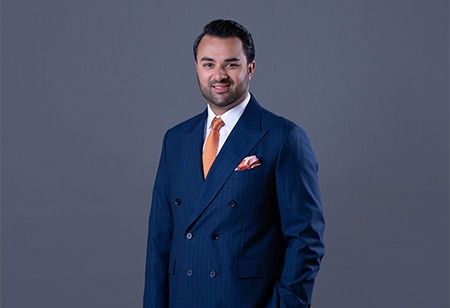
Today, as India’s K-12 education landscape evolves through technology-enabled learning, new pedagogical approaches, and a stronger emphasis on holistic development, keeping the child at the center of education remains more important than ever.
In an exclusive interaction with CEO Insights India Magazine, Ryan Pinto, CEO, Ryan International Group of Institutions, shares his perspectives on leadership, legacy, and the evolving education ecosystem as the institution approaches its 50th year.
Ryan, one of India’s youngest social entrepreneurs in the K-12 education sector, talks about leveraging the institution’s legacy as the foundation to make bold experimentation safe. He also discusses how the values passed down by his parents have shaped his leadership approach, the role of technology and global collaborations in education, and why adaptability, empathy, critical thinking, and continuous learning will be essential to preparing students for the future.
For deeper insights on the fundamentals that powered Ryan Group of Institutions’ 50 years in the Indian education sector and the future of K-12 education, read the following interview featuring Ryan Pinto.
Q1. How would you describe your leadership philosophy, and how has growing up within Ryan International shaped the leader you are today?
A. My leadership philosophy begins with a belief that has guided our family from the start: every child is a precious gift from God, with unique talents that deserve to be recognised and nurtured. The purpose of education is to help each child discover those gifts and use them to lead a meaningful life and contribute positively to society.
I grew up watching my parents put that belief into practice. Before it was expressed in a vision statement, it shaped how they led a classroom, then a school, and eventually a group of schools. They taught me through their actions to put God first, lead from the front, listen to people on the ground, be willing to try new things, and treat mistakes as opportunities to learn. Above all, they showed me that however large an institution becomes, its decisions must remain centred on the child.
Many of my leadership lessons came outside formal meetings: at the dinner table, during school visits, and in conversations while travelling. I learned by observing how my parents made decisions, explained them, and took responsibility for them. Those experiences shaped my view of leadership as stewardship. I see myself as a custodian of an institution built by others and entrusted to us for the next generation. My responsibility is to help it grow while remaining true to the values that gave it purpose.
Q2. As you lead Ryan International into its 50th year, how do you balance preserving the institution's legacy with the need to embrace new ideas and approaches?
A. This is a milestone - 50 years - that forces a question every institution eventually faces - what do you protect, and what do you let evolve? My answer is to separate the two carefully. The values such as access to quality education, discipline, all-round development, focus of strong morals & values, a genuine belief in every child's potential are all non-negotiable. Those are not up for modernization; they're the reason the institution has lasted this long.
Everything else be it pedagogy, technology, how we train teachers, how we measure outcomes all have to keep moving, because the world our students are growing up into looks nothing like the world past generations have faced. I think of it less as balancing two forces and more as using the legacy as the foundation that makes bold experimentation safe. When your values are stable, you can afford to be adventurous with your methods.
Also Read: The Role of a New Age Leader in Bridging Industry-Academia Gap
Q3. What leadership lessons have you carried forward from your parents, and how have these values influenced your approach to building the organization?
A. The biggest lesson I carry from my parents is that education can’t be treated simply like a business, it’s a calling and you can’t run it from a distance in board rooms, it's a responsibility you carry personally. I watched them build something out of very little, driven by conviction rather than convenience, and that taught me that scale should never dilute care. However large the organization gets, every decision still has to be able to survive the question: "Would this be good for a child sitting in a classroom today?"
I also learned humility and the willingness to keep learning, to visit schools rather than just review reports, to treat every teacher and parent as a partner rather than a stakeholder to be managed. Those instincts shape how I try to lead: present, accessible, and unwilling to let hierarchy replace genuine listening.
Also Read: From Ithaca to the Boardroom: Leadership Lessons from Odysseus
Q4. How do you approach decision-making when balancing the expectations of students, parents, educators, and other stakeholders in the education ecosystem?
A. When interests seem to conflict, I try to find the version of the decision that serves the student best. This is not because other stakeholders don't matter, but because their interests if properly understood, usually converge there. Parents want their children to thrive; educators want the freedom and support to teach well; the institution wants a reputation worth protecting. Almost every genuine disagreement is really a disagreement about how, not whether, to serve the child.
In practice that means trying to bring the right voices into a decision before it's made rather than defending it after. Educators who'll implement a change should shape it. Parents who'll live with a policy should understand its reasoning. It slows some decisions down, but it means the ones we make actually hold up.
Q5. How do you see global partnerships and international collaborations contributing to your vision for the future of Ryan International Group?
A. I see global partnerships as an opportunity to strengthen both the education we provide and the perspective our students develop. India has much to contribute to the world of education. At the same time, every system has something to learn from others. Collaborating with international partners allows us to exchange ideas on curriculum, teaching and teacher development, and adapt what works to the needs of our students and communities.
Equally valuable is the opportunity for students to connect with peers from other countries. They are growing up in a world where they will study, work and solve problems alongside people with different backgrounds and viewpoints. The earlier they learn to understand those differences, listen with respect and find common ground, the better prepared they will be.
For Ryan, an international partnership should create meaningful opportunities for students and teachers, while staying true to our values and the context in which each school operates. That is how I hope these collaborations will contribute to the Group’s future.
Q6. With technology and new learning models transforming education, how are you guiding the organization through this shift while keeping students at the centre?
A. Technology is a tool for personalization, not a replacement for the relationship between a teacher and a student, this is a basic fact which is uncompromised. The shift we're navigating isn't "should we adopt new tools," it's "how do we adopt them without letting the human centre of the classroom get crowded out."
Practically, that means investing heavily in teacher training alongside any new platform or tool, because technology is only as good as the educator who knows how to use it well. It also means being deliberate about what we adopt like chasing outcomes like better feedback loops, more personalized pacing, and stronger foundational skills, rather than adopting technology because it's trending.
Also Read: IIMA Effect: 5 Alumni Leaders Driving Impact Across Industries
Q7. What changes do you believe education leaders need to embrace to prepare students for a future that demands creativity, empathy, adaptability, and critical thinking?
A. The old model of education leadership such as measure success simply by test scores isn't sufficient anymore. Leaders need to get comfortable measuring things that are harder to quantify: a student's ability to adapt, to empathize, to think critically when there's no obvious right answer. That requires a real shift in how schools are run, not just what they teach. Furthermore, smaller feedback loops between teachers and students, more room for project-based and collaborative learning, and leadership that models the same adaptability it wants to see in students.
It also requires humility from leaders themselves. The skills students will need in twenty years aren't fully known yet, so the most important thing we can build into them isn't a fixed skill set — it's to instil the willingness & capacity to keep learning.
LAST WORD: Looking ahead, what is your vision for the next chapter of Ryan International Group, and what kind of impact do you hope its leadership will create in Indian education?
The next chapter isn't about a bigger footprint for its own sake but emphasising that scale and personal attention to every child is essential. I want Ryan International to be known not just as one of India's largest school networks, but as a place that consistently produces graduates who are genuinely prepared for the new world being confident, adaptable, grounded in values, and capable of thinking for themselves.
If there's one impact I hope this leadership era creates, it's raising the baseline for what Indian education can deliver at scale and showing that access and quality don't have to be a trade-off. The essentials prove that an institution can grow for fifty more years without losing the reason it started in the first place.