

From Ithaca to the Boardroom: Leadership Lessons from Odysseus
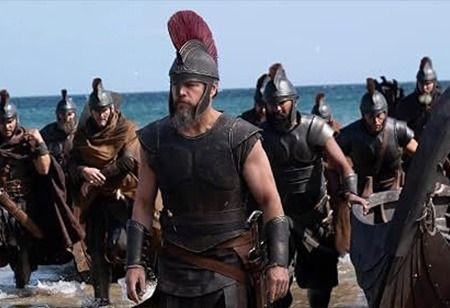
Leadership lessons from Odysseus offer valuable insights for navigating today’s complex business environment. From purpose and vision to adaptability and decision-making this article explores how lessons from The Odyssey can help modern business leaders manage uncertainty build trust strengthen resilience and guide their organizations towards sustainable growth.
Movies have always been more than entertainment for me. They showcase different stories, perspectives and ways of looking at the world. While many viewers have a favorite actor or actress, I have always been drawn to directors, particularly Christopher Nolan, whose films explore complex questions of time, morality, identity and human nature.
That is why his latest film, The Odyssey, caught my attention. The film brings Homer's ancient epic to the screen through Nolan's distinctive vision. Matt Damon stars as Odysseus, King of Ithaca, whose journey home after the Trojan War takes him through encounters with the Cyclops, Circe, the Sirens, Scylla and Charybdis, as well as the wrath of the gods.
Yet beneath the mythology and cinematic spectacle lies a story that speaks to something much closer to the modern world: leadership.
Leadership is often associated with vision, authority and decisive action. But in today's business environment, it increasingly resembles navigation. Markets shift, technology disrupts established models, customer expectations evolve and organizations must respond before uncertainty becomes a crisis.
Like navigators, leaders must make decisions without knowing exactly what lies ahead. That makes Odysseus' journey particularly relevant to the corporate world. His story is not simply about reaching Ithaca, but about how he responds to what he encounters along the way, including the consequences of his own choices.
For today's leaders, that journey offers five important lessons.
Knowing Your Ithaca: Leading with Purpose and Vision
For Odysseus, Ithaca represents more than a destination. It is home, identity, responsibility and the reason he continues his journey despite years of hardship.
 Businesses need their own version of Ithaca: a purpose that gives direction to everything they do.
A clear vision helps employees understand not only what the organization wants to achieve, but why it matters. This becomes particularly important during periods of transformation, when businesses are restructuring, adopting new technologies, entering unfamiliar markets or responding to disruption.
Without a larger purpose, employees can become focused solely on immediate targets and operational demands. They may achieve short-term goals without understanding how their efforts contribute to the organization’s broader ambitions.
A strong leader connects everyday work to a larger objective. Purpose provides stability during change because strategies may evolve while the underlying reason for the journey remains constant.
But purpose can also become a blind spot if leaders become so focused on the destination that they overlook the people making the journey possible. A compelling vision should not simply tell people where the organization is going; it should make them feel that their role in getting there matters.
Navigating Uncertainty: Making Decisions in Changing Times
Odysseus rarely has the benefit of certainty. His plans are repeatedly disrupted, forcing him to respond to situations he could not have anticipated.
The same is true for today's business leaders.
Artificial intelligence, geopolitical tensions, economic volatility, cybersecurity threats and changing consumer behavior have made long-term planning increasingly complex. Even carefully developed strategies can become outdated when circumstances shift.
In such an environment, leadership cannot depend on having all the answers. It requires the ability to make sound decisions with incomplete information.
This means gathering relevant data, listening to different perspectives, identifying risks and distinguishing between facts and assumptions. But analysis alone is not enough. At some point, someone has to make the call and take responsibility for it.
There is another challenge: leaders must know when their confidence is becoming overconfident.
Odysseus is celebrated for his intelligence and strategic thinking, but his journey also demonstrates the risks of pride and judgment becoming too closely tied to one's own abilities. Modern leaders face a similar danger. Experience can help leaders make decisions, but it can also cause them to dismiss information that challenges their assumptions.
The strongest leaders therefore create organizations where information can move quickly and where people feel safe enough to question decisions. They do not treat dissent as disloyalty.
A leader's role is not to predict every storm. It is to ensure the organization is prepared to navigate one and humble enough to change course when the evidence demands it.
Also Read: The Leadership Traits Manufacturing CEOs Need to Win in Industry 4.0
Changing Course: The Power of Adaptability
Odysseus' journey repeatedly forces him to rethink his approach. His ability to improvise and find alternative solutions becomes essential to his survival.
For modern businesses, adaptability has become equally important.
Technologies can make established processes obsolete, competitors can introduce new business models and consumer preferences can shift faster than expected. Organizations that remain committed to strategies simply because they worked in the past risk losing relevance.
However, adaptability does not mean changing direction constantly.
Effective leaders understand the difference between changing the route and abandoning the destination.
An organization can remain committed to serving its customers while adopting new technology. A manufacturer can maintain its focus on quality while embracing automation. A financial institution can preserve its commitment to trust while moving towards digital services.
The challenge is to identify what must change and what must remain intact.
This requires leaders to regularly question their assumptions: What has changed? Which parts of our strategy are still relevant? What should we preserve? Where do we need to experiment?
It also requires leaders to accept that changing course is not necessarily an admission of failure. Recognising that an approach is no longer effective and having the courage to change it can be a sign of strong leadership.
But adaptability must not become impulsiveness. Constantly changing direction can exhaust employees, confuse customers and weaken organizational confidence. The best leaders provide stability in purpose while allowing flexibility in execution.
Also Read: How CHROs Can Build an AI-Ready Workforce
Between Scylla and Charybdis: Leading Through Difficult Choices
The encounter with Scylla and Charybdis is one of the most enduring episodes in The Odyssey because Odysseus faces a choice between two dangerous alternatives. There is no perfect route, only one that carries a different level of risk.
Business leaders frequently encounter similar situations.
Should an organization prioritize profitability or invest for future growth? Should it reduce costs during uncertain times or continue investing in talent? Should it adopt emerging technology quickly or wait until the risks are better understood?
These decisions rarely offer a completely safe answer.
Leadership therefore requires more than the ability to identify opportunities. It requires the courage to confront trade-offs.
Rather than searching endlessly for a risk-free solution, leaders must assess the consequences of each option and determine which risks are manageable and which are unacceptable. This is where judgment becomes critical.
Yet difficult choices also test a leader's relationship with their people. A decision may be strategically sound but still damage trust if employees do not understand why it was made or feel that their concerns were ignored.
This becomes especially important during restructuring, mergers, acquisitions, layoffs or major strategic shifts. Avoiding difficult conversations may temporarily reduce discomfort, but it can create greater uncertainty in the long run.
Also Read: Leadership Expertise in the Services Sector
Keeping the Crew Together: Building Trust, Dissent and Resilience
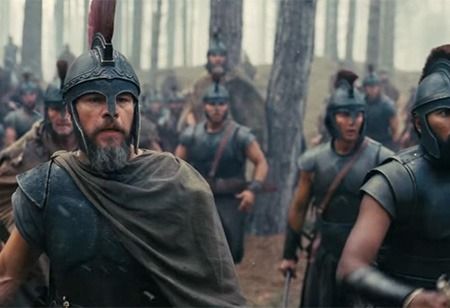 Even the most capable leader cannot complete a difficult journey alone.
Odysseus' story highlights the importance and fragility of the crew. In business, strategy ultimately depends on people who can execute it, challenge assumptions and respond when plans go wrong.
That makes trust one of the most valuable assets a leader can build.
Employees who trust their leaders are more likely to communicate openly, raise concerns and share ideas. When trust is missing, people may hesitate to speak up or hide mistakes, allowing small problems to become larger ones.
But strong teams need more than loyalty. They need the confidence to disagree with the person at the helm.
A leader surrounded by people who simply agree may feel supported, but that support can become a weakness. Constructive dissent allows organizations to identify blind spots before they become costly mistakes.
Building this kind of culture requires consistency. Leaders must communicate honestly, keep their commitments and acknowledge mistakes rather than shifting blame. They must also create an environment where employees feel their contributions matter.
Delegation is equally important. A leader who attempts to control every decision can become a bottleneck, particularly during periods of rapid change. Effective leaders know when to take command and when to trust others to act.
Resilience then becomes a collective capability rather than an individual trait.
A resilient team is not one that never experiences setbacks. It is one that can recover, learn and move forward after them. Leaders can build such resilience by encouraging teams to examine failures constructively, identify lessons and improve processes.
They must also recognize that sustained performance cannot come from constant pressure. People need realistic expectations, support and a culture where accountability exists alongside empathy.
The Leader as Navigator
Perhaps the greatest lesson from Odysseus is that leadership is not about having a perfect map.
Unexpected challenges, competing priorities and changing circumstances will always test the original plan. What matters is how leaders respond.
Effective leaders know their Ithaca — the purpose that gives their organization direction. They make decisions despite uncertainty, adapt without losing sight of what matters, confront difficult choices and build teams strong enough to question and challenge them.
They also recognize their own blind spots. Intelligence can become overconfidence, determination can become stubbornness and vision can become tunnel vision. Leadership is not about always being right; it is about creating an environment where the right decision can emerge, even when it challenges the leader's thinking.
In today's corporate world, the journey may look different, but the principles remain familiar. With purpose as the compass, adaptability as the skill, judgment as the guide and trust as the strength of the crew, even an uncertain journey can become one worth taking.