

After Tim Cook: What John Ternus's Apple CEO Era Means for AI, Innovation & Hardware
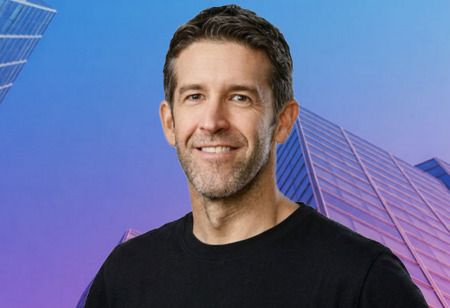
John Ternus takes the reins at Apple at a pivotal moment for the technology industry. As Tim Cook’s successor, Ternus brings decades of hardware expertise and a track record that includes Apple’s transition to Apple Silicon. But with AI reshaping computing, intensifying competition, and changing how consumers interact with technology, his biggest challenge may be defining what comes next for Apple. The article explores Ternus’s leadership profile, the role of hardware in Apple’s strategy, the company’s AI challenge, the possibility of new product categories, and what his rise could signal for the future of global technology leadership.
Within the serene hallways of Apple Park, where executives rarely step into the spotlight without a reason, one name has increasingly entered conversations about Apple’s next chapter: John Ternus.
He may not be a household name, nor does he have the theatrical presence often associated with high-profile CEOs. Yet inside Apple—and increasingly among analysts watching the company’s leadership trajectory—Ternus has emerged as a compelling successor to Tim Cook.
Ternus currently serves as Apple’s Senior Vice President of Hardware Engineering, placing him at the heart of the company’s product ecosystem. He oversees the engineering teams behind the iPhone, iPad, Mac, AirPods, and much of the broader hardware portfolio that contributes significantly to Apple’s $383 billion in annual revenue. In many ways, he is the person responsible for turning Apple’s ambitious product ideas into the devices millions of people use every day.
Also Read: Apple Tops $5 Trillion Valuation Milestone
For Ternus, however, the next chapter as Apple’s new CEO looks very different. Apple remains one of the world’s most valuable and profitable companies, but the technology landscape is shifting beneath its feet. Artificial intelligence is changing how people interact with technology, while companies such as OpenAI, Anthropic, Google, and Meta are racing to make AI assistants and agents the next major computing interface.
That puts Ternus at an interesting crossroads. He is not taking over a company that needs to be rebuilt; he is taking over one that needs to reinvent what comes next. The question now is whether Apple can shape the next era of computing—or find itself playing catch-up.
From Cook’s Era to Ternus’s Moment: A New Face, A New Chapter for Apple
After 15 years at the helm, Apple has a new captain. On September 1, John Ternus officially stepped into the role of CEO, succeeding Tim Cook, who has taken on a newly created position as executive chairman. Cook leaves behind a remarkable chapter in Apple’s history—one that saw the company reach unprecedented heights.
When Cook became CEO in August 2011, Apple was already a technology powerhouse, riding the success of the iPhone, Mac, and iPad. Fifteen years later, he leaves the CEO role with Apple transformed into a nearly $4 trillion technology giant, with its empire extending well beyond devices into services, entertainment, health, financial offerings, and wearables.
His journey at Apple began in 2001 as a product design engineer. Over the years, he steadily moved through increasingly senior roles, including Vice President of Hardware Engineering for the Mac and later the iPhone, before becoming Apple’s top hardware executive in 2021. Along the way, he played a key role in one of Apple’s most significant technical transitions: the move from Intel processors to Apple Silicon. The years-long effort required coordinating thousands of engineers across disciplines while maintaining Apple’s famously tight secrecy and delivering products on schedule.
But Ternus’s appeal as a potential CEO goes beyond his technical credentials. His growing presence on Apple’s product-launch stages has also caught attention. In recent presentations, he has taken on bigger roles, introducing flagship products, explaining complex technological developments, and becoming a familiar face in Apple’s carefully choreographed presentations.
At Apple, that visibility matters. The company is known for keeping its leadership circle relatively low-profile, making increased exposure on the keynote stage an interesting signal of a leader’s growing influence.
Ternus also brings a combination that could suit Apple’s next phase: deep knowledge of the products that drive its business, experience leading complex and high-stakes projects, growing confidence in front of a global audience, and a long track record within Apple’s distinctive culture.
His career represents a somewhat different path to the corner office. Rather than coming up through finance, marketing, or general management, Ternus has spent much of his career building the technology itself.
What Gives Ternus the Edge
What makes Ternus stand out as a potential successor is not simply his technical expertise, impressive as it is. It is the way Apple has increasingly begun putting him in the spotlight.
In recent product launches, Ternus has taken on bigger roles—unveiling flagship products, breaking down complex technological developments, and becoming one of the more recognizable faces in Apple’s carefully choreographed presentations. For a company that has traditionally guarded its executive visibility, that shift is hard to overlook.
At Apple, the keynote stage is more than a place to launch the latest iPhone or Mac. It can also offer a glimpse into who is being prepared to represent the company’s future. Ternus’s growing presence suggests that Apple may be giving the world a closer look at the person increasingly trusted to explain what comes next.
And he brings a rather unusual CEO profile to the table. Ternus understands the products that generate Apple’s business, has led complex projects where failure was hardly an option, and is steadily becoming more comfortable as a public-facing leader. Just as importantly, he has spent decades learning Apple from within—a valuable advantage in a company whose culture can be as distinctive as its technology.
Unlike executives who rise through finance, marketing, or broad corporate management, Ternus has taken a different route to the corner office. He built his career around technology before stepping toward the business side of leadership. In that sense, he is not a business executive who learned to understand engineering. He is an engineer who learned how to lead a business.
Also Read: EU Tech Chief, Apple CEO Hold Constructive Talks
Why Hardware Still Matters
There is a reason Apple’s succession conversation may be leaning toward a hardware leader rather than the head of Services or Software. For all the growth of its services business, Apple remains, at its core, a product company. The App Store, Apple Music, and other services may generate significant revenue, but they ultimately depend on the devices that bring users into Apple’s ecosystem. That helped Ternus gain a unique perspective on the hardware foundation on which much of Apple’s business is built—and the technology that keeps its ecosystem connected.
His role in Apple’s transition to Apple Silicon offers a glimpse of what he brings to the table. This was not simply a technical upgrade. Apple was making a bold decision to move away from Intel after 15 years and bet the future of its Mac business on chips designed in-house.
The challenge required thousands of engineers, software teams, developers, and manufacturing partners to work in sync, all while meeting demanding deadlines. Yet the transition was remarkably smooth.
The payoff has been significant. Apple’s M-series chips have become a major competitive advantage for the Mac, strengthening its performance and efficiency. At the heart of that transformation was Ternus.
The experience demonstrated something beyond technical expertise: Ternus knows how to turn a complex technological gamble into a business advantage.
What Could Change at Apple Under Ternus’ Leadership
The biggest shift could come at the intersection of hardware and software, where Apple has long held an advantage. Ternus has spent his career working across that boundary, and the move to Apple Silicon reflects his approach: control the technology, and you can control the experience.
His leadership could also bring a greater appetite for product innovation. Cook’s tenure has been defined by operational discipline and steady evolution, with products such as the iPhone receiving regular updates rather than frequent reinvention. Ternus may push Apple toward bolder engineering and faster development cycles.
What is unlikely to change is Apple’s premium positioning. Ternus has built his career around the idea that better engineering can justify a premium price. Under his leadership, Apple’s products would likely remain firmly at the high end of the market, with the company continuing to turn its tightly integrated ecosystem into a competitive advantage.
The Big Battle is AI
Ternus is stepping into a competitive landscape very different from the one Cook encountered in 2011. Apple’s biggest challengers are no longer limited to smartphone makers. Meta is pushing smart glasses as a potential AI interface, Google is weaving Gemini into Android while developing new wearable devices, and OpenAI is moving deeper into consumer hardware.
Meanwhile, Anthropic is expanding Claude into enterprise applications and autonomous agents. The bigger disruption, however, is how AI could change the way people interact with technology. AI agents could allow users to book travel, make purchases, contact businesses, find information, and complete everyday tasks without manually opening individual apps. That could challenge one of Apple’s biggest advantages: the iPhone’s role as the gateway to digital services. In an AI-first world, controlling the assistant could become almost as important as controlling the operating system.
No development, therefore, is likely to shape the early Ternus era more than artificial intelligence. While rivals have moved quickly, Apple’s progress has been more complicated. The anticipated evolution of Siri has faced setbacks, while the company has increasingly relied on outside AI vendors to strengthen its capabilities. For a company that built its competitive edge around controlling both hardware and software, dependence on external foundational models creates a significant strategic dilemma.
Ternus appears to recognize the importance of closing that gap. Before becoming CEO, he reportedly reorganized Apple’s hardware engineering division around a new AI platform designed to support product development and improve device quality.
But the bigger opportunity may lie beyond simply making Apple’s existing products smarter. It could be about answering a much larger question: what should an Apple product look like in an age where AI—not the app—becomes the primary way people interact with technology?
That is where Ternus’s engineering background could become particularly valuable. If AI is reshaping the interface between people and technology, Apple will need to rethink not only what its devices can do, but how those devices fit into everyday life.
Also Read: Apple to Use Google's AI Model to Run New Siri
Can Ternus Build the Next Big Apple Product?
Perhaps the biggest question surrounding any Apple CEO transition is whether the new leader can create the next breakthrough product category. Under Cook, Apple introduced the Apple Watch and AirPods, turning both into hugely successful products in their own right. But Apple’s reputation has always rested on something bigger: its ability to make consumers want products they never knew they needed.
Ternus’s engineering background suggests that the next big bet could begin with technology rather than traditional market research. The Apple Vision Pro offers a glimpse of this approach. While its high price has limited its mass-market appeal, the device demonstrates what Apple can build when it combines custom silicon, software, and hardware into a product that is difficult for competitors to replicate.
An Apple under Ternus could follow a similar path, investing in products whose capabilities are rooted in Apple’s silicon advantage. The goal would not simply be to enter another market, but to create products that are difficult to copy because the technology behind them is uniquely Apple.
The real test, then, may not be whether Ternus can make the next iPhone. It is whether he can imagine—and engineer—what comes after it.
What Ternus’s Rise Could Mean for Global Leadership
John Ternus’s potential move from Apple’s hardware engineering chief to CEO of one of the world’s most valuable companies would mean more than a change at Apple. It could also signal a broader shift in what the modern technology CEO looks like.
The next generation of tech leaders may need to be more than visionaries. They will need to understand engineering, operations, technology, and the complex systems connecting them. As companies become increasingly intertwined across hardware, software, AI, and global supply chains, technical depth is becoming a leadership advantage.
The trend is already visible across the technology sector. Microsoft’s Satya Nadella rose through engineering and cloud leadership before becoming CEO, while Google’s Sundar Pichai moved from an engineering background into product management and eventually the corner office. At Amazon, Andy Jassy built his reputation leading AWS, the company’s highly technical cloud business, before taking the top job.
Ternus fits this emerging role particularly well. He is not a traditional generalist who learned to appreciate technology along the way. He is a technologist who has spent decades learning how to turn complex engineering challenges into products, and increasingly, into business decisions.
If he succeeds Cook, his rise could mark another step in the evolution of the tech CEO—from the charismatic corporate generalist to the technically grounded leader who understands how the machine works before deciding where to take it.