

BRICS Summit 2026: 15 Key Takeaways You Need to Know
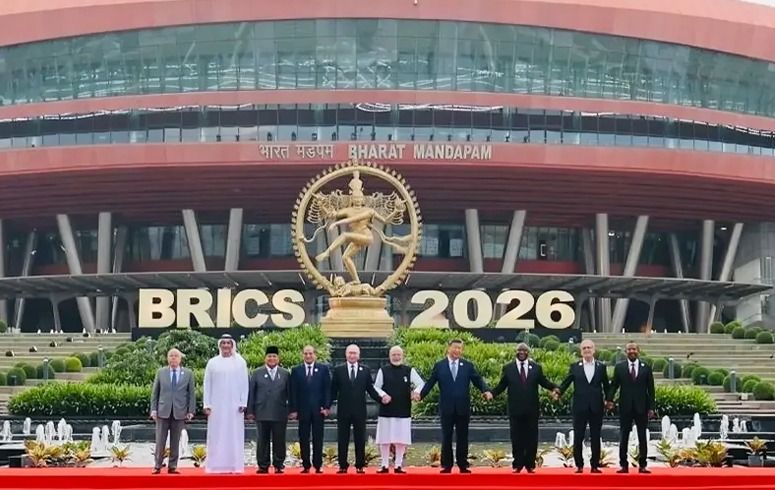 The 18th BRICS Summit was held in New Delhi on 12–13 September 2026 under India’s chairship and the theme “Building for Resilience, Innovation, Cooperation and Sustainability.” The summit marked two decades of BRICS cooperation and brought the expanded 11-member grouping together amid geopolitical tensions, economic uncertainty and rapid technological change.
The summit concluded with the adoption of the New Delhi Declaration, which sets out the bloc’s priorities across global governance, trade, finance, artificial intelligence, health, technology, sustainability and women’s economic participation. The declaration also reaffirmed BRICS’ emphasis on a stronger voice for emerging markets and developing countries in global decision-making.
For India, the summit marked the conclusion of its fourth BRICS chairship. China will take over the chairship in 2027 and host the 19th BRICS Summit.
Also Read: 9 Indian CEOs With Surprising Career Origins: Unconventional Success Stories
Here is everything you need to know about the summit, the bloc behind it, and the 15 takeaways that matter most.
What Is the BRICS Summit?
 BRICS began as an economic concept rather than a formal political grouping. In 2001, Goldman Sachs economist Jim O’Neill coined the term BRIC to refer to Brazil, Russia, India, and China, highlighting their growing economic potential. The four countries later established a formal diplomatic grouping, holding their first BRIC summit in Yekaterinburg, Russia, in 2009.
South Africa joined the grouping in 2011, adding the “S” to BRICS. The bloc subsequently expanded significantly. Egypt, Ethiopia, Iran, Saudi Arabia and the UAE became full members in January 2024, while Indonesia joined as the 11th full member in January 2025.
BRICS now comprises Brazil, China, Egypt, Ethiopia, India, Indonesia, Iran, Russia, Saudi Arabia, South Africa and the UAE. Together, the members account for approximately 49.5% of the global population, 40% of global GDP and 26% of global trade, according to the Government of India.
The grouping has also developed a partner-country framework. Ten countries joined the partner-country category during 2025: Belarus, Bolivia, Cuba, Kazakhstan, Malaysia, Nigeria, Thailand, Uganda, Uzbekistan and Vietnam.
BRICS' agenda has expanded beyond economics to include global governance, trade, finance, technology, health, climate action, energy and people-to-people cooperation. Its members have consistently called for greater representation of emerging and developing economies in institutions such as the United Nations, the IMF, and the World Bank.
India’s 2026 chairship focused on making BRICS more practical and development-oriented. According to Prime Minister Narendra Modi, more than 350 meetings were organised across nearly 30 Indian cities during the year.
15 Key Takeaways From The BRICS Summit 2026
The CEO Insights team has rounded up 15 key developments from the BRICS Summit 2026.
1. BRICS Adopted the New Delhi Declaration
The biggest outcome of the summit was the adoption of the New Delhi Declaration, which sets out the grouping’s priorities for cooperation. The document reaffirms commitments to sovereign equality, multilateralism, inclusive development and stronger cooperation across political, economic, financial and people-to-people areas.
2. The Summit Marked Two Decades of BRICS
The 2026 summit marked 20 years of BRICS cooperation, tracing the bloc’s evolution from a four-country economic grouping into an 11-member platform spanning Asia, Africa, the Middle East and Latin America. The declaration reaffirmed the importance of multilateralism and a more representative global order.
3. West Asia Remained a Major Concern
The declaration expressed concern over escalating tensions in the Middle East and West Asia and called for maximum restraint and measures to prevent further escalation. Rather than adopting a single position on every aspect of the conflict, BRICS members reiterated their respective national positions while calling for dialogue and restraint.
4. Global Trade Tensions Shaped the Economic Agenda
Trade protectionism and disruptions to global supply chains featured prominently in the summit’s wider economic agenda. BRICS continued to stress the importance of a predictable, open and inclusive multilateral trading system while promoting stronger trade and investment ties among members.
India had already advanced work on the BRICS Economic Partnership 2030, while its 2026 trade agenda also focused on reducing trade-finance gaps and improving market access for smaller businesses.
5. Local-Currency Trade Remained on the Agenda
 BRICS continued discussions around greater use of national currencies and cross-border payment mechanisms. However, the 2026 summit did not announce the creation of a common BRICS currency.
The emphasis remained on practical financial cooperation, including settlement infrastructure, payment systems and technical dialogue between member countries.
6. AI Became a Major Area of BRICS Cooperation
Artificial intelligence emerged as one of the summit’s key technology priorities. The declaration recognised AI’s potential to support economic growth and sustainable development while stressing the need for safe, secure, inclusive and reliable systems.
Also Read: India, Russia to Expand AI & Manufacturing Cooperation at BRICS 2026
Members also committed to implementing the BRICS Leaders’ Statement on the Global Governance of Artificial Intelligence, while acknowledging the role of India’s AI Impact Summit and the World AI Conference in Shanghai.
7. Health Security Received Fresh Attention
Health cooperation remained an important component of the BRICS agenda. The declaration addressed areas including infectious diseases, tuberculosis, antimicrobial resistance and non-communicable diseases.
India also highlighted the importance of strengthening early-warning mechanisms for infectious diseases, reflecting the bloc’s broader focus on health security and preparedness.
8. BRICS Renewed Its Push for Global Institutional Reform
Reform of global institutions remained one of the grouping’s central priorities. BRICS called for greater representation of emerging markets and developing countries in international decision-making structures.
The declaration specifically addressed representation in the UN system and called for greater participation of developing countries and women at senior levels of international organisations.
9. Inequality Was Linked to Sustainable Development
The summit placed inequality and inclusive development within the broader sustainable-development agenda. BRICS members highlighted the importance of addressing economic disparities within and between countries while advancing the UN Sustainable Development Goals.
The focus reflects the bloc’s wider argument that economic growth should translate into broader social and development gains.
10. Women, Peace and Security Received Explicit Backing
 The New Delhi Declaration reaffirmed BRICS’ commitment to the Women, Peace and Security agenda and called for the full, equal, safe and meaningful participation of women in decision-making related to peace and security.
This includes conflict prevention and resolution, humanitarian relief, mediation, peacebuilding and post-conflict reconstruction.
11. The Declaration Highlighted Women’s Underrepresentation
The document directly acknowledged the continuing underrepresentation of women and developing countries at senior levels of the UN system.
It noted that no woman has ever been elected UN Secretary-General, while also pointing to the limited geographical representation of developing regions in the organisation’s highest leadership.
12. Women’s Economic Participation Became a Stronger BRICS Priority
Women’s economic participation received substantial attention in the declaration. BRICS recognised women as leaders, decision-makers and drivers of economic growth and social transformation.
The declaration also welcomed the outcomes of the BRICS Women Ministerial Meeting held in Kochi and recognised the importance of women’s participation in governance, finance, digital inclusion, skills development and entrepreneurship.
13. Women Entrepreneurs Gained Greater Institutional Support
The summit highlighted the role of the BRICS Women’s Business Alliance (WBA) in promoting women’s entrepreneurship, leadership and economic participation.
The declaration welcomed recommendations aimed at improving women-led enterprises’ access to finance, markets, technology, skills and digital opportunities. It also encouraged national chapters to strengthen cooperation and knowledge-sharing on women’s economic participation.
The declaration additionally welcomed initiatives such as the BRICS Women’s Start-up Awards 2026, which recognised innovative and scalable solutions supporting sustainable development and inclusive growth.
14. Digital Inclusion and Innovation Took Centre Stage
Alongside AI, BRICS emphasized digital infrastructure, cybersecurity, emerging technologies and financial technology. Members called for a more inclusive and interoperable digital environment while addressing risks such as cybercrime, misinformation, disinformation and deepfakes.
For entrepreneurs, stronger digital access could have implications for cross-border commerce, financial inclusion, technology adoption and access to international markets.
15. China Will Lead BRICS in 2027
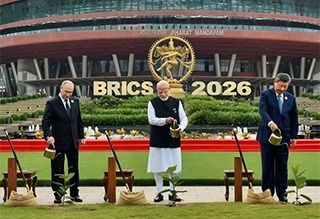 With India’s 2026 chairship concluding, China will assume the BRICS chairship in 2027 and host the 19th summit. The New Delhi Declaration formally extended support to China for its chairship and the next summit.
China’s upcoming chairship will take place within an expanded BRICS framework, with cooperation continuing across trade, finance, technology, supply chains, development, and people-to-people engagement.
What the BRICS Summit 2026 Means for Global Cooperation
The BRICS Summit 2026 demonstrated how significantly the grouping has expanded since its original four-member format. Its 11 members now represent almost half of the world’s population and around 40% of global GDP, giving the bloc considerable economic and demographic weight.
The New Delhi Declaration also showed that BRICS' agenda extends well beyond traditional economic cooperation. AI governance, digital inclusion, health security, global institutional reform, sustainable development and women's economic participation featured prominently in the 140-point document.
For women entrepreneurs, the summit's emphasis on access to finance, technology, skills, markets and digital opportunities is particularly relevant. The stronger recognition of the BRICS Women’s Business Alliance, women-led start-ups and women's role in economic growth indicates that women's participation is increasingly being addressed within the bloc's wider development agenda.
With China set to take over the chairship in 2027, the next phase will focus on translating these commitments into practical cooperation. For BRICS, the challenge will be to maintain consensus among an increasingly diverse membership while turning summit declarations into measurable outcomes for businesses, economies and communities.