

10 Indian Solar Manufacturing Leaders Shaping India’s Renewable Energy
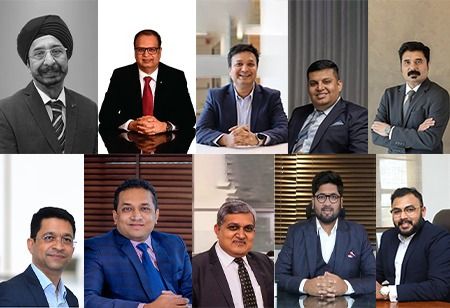
As India accelerates its solar manufacturing ambitions, the focus is increasingly shifting beyond manufacturing capacity toward technology, supply-chain resilience, innovation, sustainability, talent, and global competitiveness. The article highlights how Indian solar manufacturing leaders are driving this transition and shaping the next phase of India’s clean-energy future.
India’s solar industry is entering a defining phase, with manufacturing emerging as a critical pillar of the country’s clean-energy ambitions. In the first half of 2026, India added 50.6GW of solar module manufacturing capacity and 9.7GW of solar cell manufacturing capacity, according to Mercom India’s State of Solar PV Manufacturing in India H1 2026 report.
Yet, the opportunity extends beyond capacity expansion. It encompasses technological advancement, supply-chain resilience, automation, sustainability, talent development, and global competitiveness. Across established enterprises and rapidly scaling new-age ventures, solar manufacturing leaders are pursuing strategies toward a shared strategic objective: strengthening domestic capabilities while positioning Indian companies for international markets.
For these business leaders, manufacturing capacity is only one measure of progress. The larger challenge is building organizations that innovate continuously, adapt to evolving technologies, develop resilient supply chains, and create sustainable long-term value while competing globally. Their leadership vision is shaping the next chapter of India’s renewable-energy story.
Here are the 10 Indian solar manufacturing leaders shaping the future of Indian solar manufacturing sector.
1. Hitesh Doshi, Chairman & Managing Director, Waaree Group
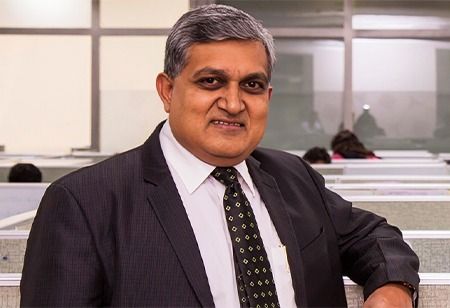 With more than 38 years of entrepreneurial and industry experience, Hitesh began in 1985 by establishing a trading company specializing in hardware and process-control instruments. In 1989, he founded the Waaree Group, laying the foundation for an enterprise that would eventually develop into one of India’s prominent renewable energy businesses.
His vision has centered on making clean energy more accessible, affordable, and scalable. Waaree Energies has since expanded its manufacturing capabilities across India and internationally, while developing a broader clean-energy portfolio spanning solar modules and inverters, EPC services, green hydrogen, battery energy storage systems, green-energy infrastructure, and data centers.
The breadth of this portfolio reflects a willingness to look beyond a single product or market and participate across the emerging clean-energy ecosystem.
Hitesh’s influence also extends into industry, education, and social development. He is associated with the Instrumentation Expert Club, Jain Education and Empowerment Trust, JITO Educational Assistance Program, and All-India Solar Industries Association.
2. Capt. Ishver Dholakiya, Founder & Managing Director, Goldi Solar
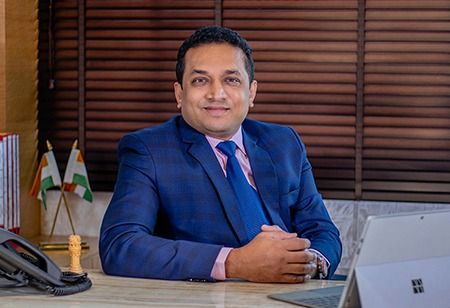 Capt. Ishver Dholakiya represents the entrepreneurial drive behind one of India’s rapidly expanding solar manufacturers. With more than 15 years of entrepreneurial and business experience, he has built Goldi Solar around manufacturing scale, localization, quality, and innovation.
His earlier career in the diamond industry, spanning more than 13 years across sales, marketi\ng, and quality management, provided a foundation in customer understanding, quality discipline, and business development. He subsequently applied those capabilities to renewable energy, establishing Goldi Solar in 2011 as a 10 MW manufacturing operation.
The company has since undergone a dramatic expansion. Its strategy increasingly revolves around automation, artificial intelligence, quality control, and backward integration. AI-powered manufacturing facilities in Gujarat underline the emphasis on technology-enabled production and operational efficiency.
The next stage involves deeper participation across the solar value chain, including solar cell manufacturing. This is significant at a time when India is seeking to reduce dependence on imported components and develop a stronger domestic manufacturing base.
3. Vinay Thadani, Director & CEO, GREW Energy
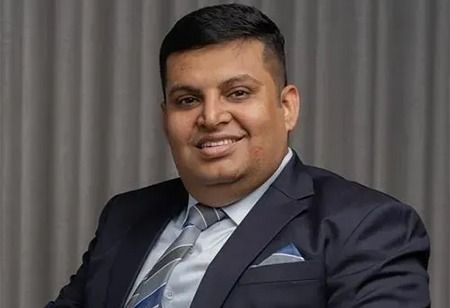 Vinay Thadani brings a financial and operational lens to solar manufacturing. A Chartered Accountant with experience spanning finance, operations, risk management, and technology-driven growth, he combines financial discipline with an ambitious expansion strategy at GREW Energy.
Before joining GREW, Vinay held leadership positions including CFO and CEO at Vishal Fabrics, a Chiripal Group company. That experience across finance and operations has shaped his ability to approach growth through both strategic planning and execution.
Founded in 2022 and backed by the five-decade manufacturing legacy of the Chiripal Group, GREW Energy has pursued rapid expansion in a relatively short period.
The company is developing capabilities around high-efficiency solar modules, TOPCon technology, R&D, and backward integration.
Its 6.5 GW module manufacturing facility in Jaipur, plans for an additional 8 GW module facility, and the development of an 8 GW solar cell manufacturing plant in Madhya Pradesh reflect an integrated growth strategy.
Also Read: Green Governance and the Leaders Driving Sustainable Growth
4. Gyanesh Chaudhary, Chairman & Managing Director, Vikram Solar
 Gyanesh Chaudhary’s career mirrors the evolution of India's solar industry. When Vikram Solar was established in 2005 with 12 MW of capacity, domestic solar manufacturing was still at an early stage. The company has since grown into a major global manufacturer serving 39 countries.
Technology has been central to that transformation. Gyanesh has championed the move toward N-type TOPCon technology and a 100 percent G12R module portfolio, alongside highly automated manufacturing.
The commissioning of Vikram Solar’s Vallam mega-facility in Tamil Nadu within a year illustrates an emphasis on speed and execution. Following the company’s public listing in 2025, its next phase of growth has included investments in integrated solar cell manufacturing and battery energy storage systems.
Gyanesh also brings an industry-wide perspective through his engagement with the World Economic Forum, YPO, CII, and the Indian Chamber of Commerce, contributing to wider discussions around energy, ESG, entrepreneurship, and industrial development.
His approach treats solar not simply as a manufacturing category but as a strategic opportunity for India—one capable of strengthening energy security, technological capability, industrial competitiveness, and participation in the global clean energy economy.
5. Suhas Donthi, President & CEO, Emmvee Photovoltaic Power
 Suhas Donthi brings cross-functional experience to his role at Emmvee, having progressed through positions across production, business process re-engineering, sales, and operations.
That breadth is particularly relevant in an industry where manufacturing performance increasingly depends on coordination between production, quality, technology, sales, and customer requirements.
With more than three decades of experience in solar, Emmvee has developed capabilities across PV modules, solar panels, and solar water-heating solutions. Its portfolio reflects an emphasis on performance, reliability, durability, and efficiency for residential, commercial, and industrial applications.
Suhas’s career progression within the organization has given him exposure to production planning, quality control, process optimization, sales strategy, and client relationships. Rather than viewing manufacturing as an isolated function, his experience highlights the importance of connecting operational performance with commercial outcomes.
As solar production becomes more technology-intensive and competitive, such cross-functional understanding is increasingly valuable. At Emmvee, the focus remains on developing dependable solar solutions while contributing to the wider adoption of renewable energy.
Also Read: The Leadership Traits Manufacturing CEOs Need to Win in Industry 4.0
6. Surender Pal Singh Saluja, Chairman, Premier Energies
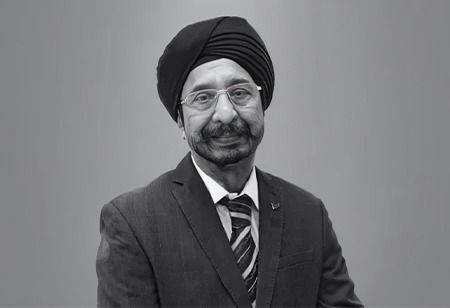 Surender Pal Singh Saluja represents one of the solar industry's longest entrepreneurial journeys. In 1995, he established Premier Energies with the objective of harnessing solar energy through the production of cells and modules.
Over the decades, Premier Energies has evolved alongside the Indian renewable-energy sector, expanding into end-to-end solar solutions and serving markets across multiple countries. The company also provides turnkey EPC capabilities for solar power projects.
Continuity has been a defining feature of Surender’s contribution. Premier Energies has invested in automated cell and module manufacturing systems capable of accommodating evolving cell formats and technologies, while continued expansion reflects the rising demand for domestic production.
Sustainability and workplace culture form another part of the company's development. Premier Energies has received recognition for water treatment and conservation initiatives, while its repeated Great Place to Work certification points to an emphasis on employee experience and organizational culture.
Surender’s mechanical engineering background and recognition with the National Award for Outstanding Entrepreneurship in Micro and Small Enterprises further underline a career built around manufacturing entrepreneurship.
7. Avinash Hiranandani, Vice Chairman & Managing Director, RenewSys
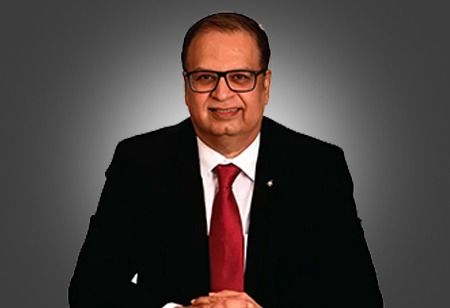 With nearly three decades of experience across packaging, energy, and engineering, Avinash Hiranandani brings a cross-industry and international perspective to renewable-energy manufacturing.
His career spans India and Africa, including senior assignments in Nigeria and South Africa. Earlier roles at Larsen & Toubro and Wärtsilä provided exposure to engineering, industrial operations, and international business.
At RenewSys, Avinash has helped drive substantial business growth while building an integrated manufacturing model. The company produces solar PV modules alongside critical components such as EVA and POE encapsulants and backsheets, while also expanding its solar cell capabilities.
His management philosophy is notably adaptive. Rather than relying on a fixed formula, he has emphasized adjusting to different teams and circumstances, treating challenges as opportunities to experiment, learn, and improve.
That flexibility is well suited to solar manufacturing, where technology, markets, supply chains, and customer expectations can shift rapidly. His emphasis on collaboration and shared responsibility reflects the increasingly complex nature of managing a modern clean-energy enterprise.
8. Prashant Mathur, CEO, Saatvik Green Energy
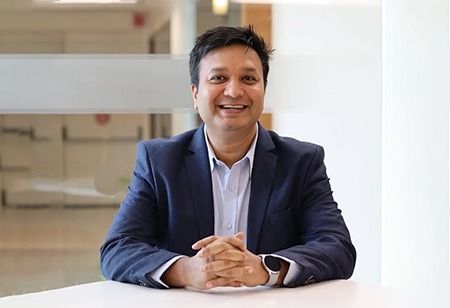 Prashant Mathur brings an entrepreneurial and execution-focused perspective to renewable-energy manufacturing. With an engineering background and an MBA in marketing, he has experience in incubating and managing businesses across the renewable and environmental sectors in India and international markets.
At Saatvik Green Energy, the focus is on combining manufacturing expansion with technology and market development.
Saatvik manufactures Mono PERC, bifacial, and N-Type TOPCon G12R solar PV modules, alongside products and services including inverters, solar kits, solar pumps, transformers, and EPC solutions.
The company is also pursuing deeper backward integration. Its in-house protective encapsulant film manufacturing facility, together with planned module and cell capacity in Odisha, reflects the growing importance of strengthening domestic supply chains.
Prashant’s experience in strategy execution and business incubation is particularly relevant to this expansion. The challenge is not simply to add gigawatts of capacity, but to develop an ecosystem that can support India's renewable-energy ambitions with increasingly localized and technologically advanced manufacturing.
Also Read: Manufacturing: The Engine Driving India’s Industrial Leadership
9. Muralee Krishnan, CEO, Adani Solar
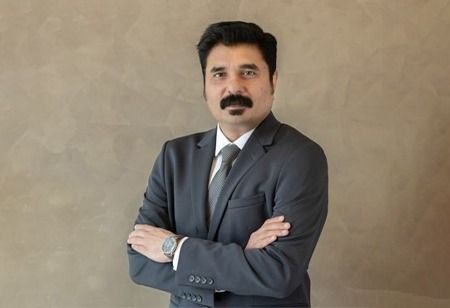 With more than 30 years of experience spanning manufacturing, strategic planning, business development, sourcing, infrastructure, and operations, Muralee Krishnan brings a strong execution orientation to Adani Solar.
His career has encompassed product development, market expansion, strategic sourcing, CAPEX planning, partnerships, team development, and business transformation.
At Adani Solar, these capabilities are being applied to an ambitious integrated manufacturing strategy covering the solar value chain from polysilicon and ingots to wafers, cells, and modules.
Such integration represents an important evolution in India's solar manufacturing model. Rather than concentrating primarily on module assembly, manufacturers are increasingly seeking deeper control over upstream stages to strengthen supply-chain resilience and technological capability.
Executing this model requires coordination across infrastructure, procurement, capital, technology, quality, production, and talent. Krishnan’s experience across these functions provides a foundation for managing that complexity.
The larger objective is to build manufacturing depth that can support India's energy transition while positioning the country more strongly within the global solar supply chain.
10. Amit Barve, Chief Executive Officer, Rayzon Solar
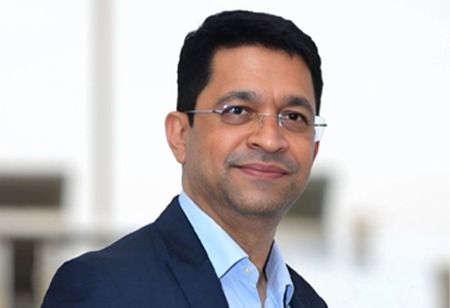 Amit Barve brings more than 20 years of solar-industry experience across products, systems, investments, business development, and international expansion.
His career has focused on developing profitable businesses, introducing new models, and expanding into new territories. At Rayzon Solar, that experience is reflected in the company’s emphasis on manufacturing scale, product quality, technology, and overseas markets.
Founded in 2017, Rayzon Solar has built a large-scale manufacturing operation in Gujarat supported by automated production systems. Its growing presence across the USA, Canada, Europe, the Middle East, and South Africa signals an ambition that extends well beyond the domestic market.
Sustainability and product reliability are also important elements of the company's positioning, reflected in certifications and recognitions covering environmental performance, product transparency, and module reliability.
Amit places equal importance on personal discipline. His involvement in strength training, long-distance running, marathons, and hill marathons reflects a belief that physical fitness and endurance can complement professional performance.
With a workforce of more than 4,000 professionals, the company's next chapter is increasingly about building a technology-driven organization capable of competing across global markets.
The Leadership behind India’s Solar Manufacturing Future
India’s solar manufacturing opportunity is entering a more sophisticated phase. The question is no longer simply whether the country can produce solar modules at scale. It is whether Indian manufacturers can develop the technology, supply chains, talent, capital discipline, quality systems, and global market capabilities needed to compete sustainably over the long term.
The next phase of the industry will be defined not only by gigawatts added, but by the capabilities built behind those numbers: stronger domestic supply chains, deeper technological expertise, skilled workforces, efficient factories, innovative products, and globally competitive businesses.
The leaders driving these transformations are helping turn India’s solar ambition into industrial capability. Their choices today will play an important role in determining how deeply India participates in the global clean-energy economy and how effectively the country can build an energy future that is more resilient, self-reliant, and sustainable.