

Strategies to Build A Global Leadership Team
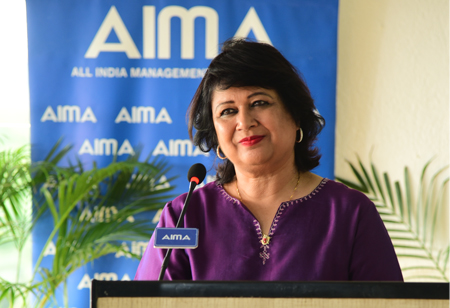
Rekha Sethi, Director General, All India Management Association (AIMA) , 0
In an increasingly interconnected world, trade, finances, entertainment, and culture now have a global reach, emphasizing the need for a Global Mindset to achieve success. Developing a global mindset and adopting a global approach to leadership is crucial for standing out in today's business environment. They are the next-generation leaders who excel in navigating the international landscape, establishing cross-cultural connections, and promoting growth for businesses and communities worldwide. Global leadership combines the characteristics of a traditional leader with a Global Mindset. Cultivating a Global Mindset begins with the capacity to articulate a clear vision, think strategically, and inspire collaboration. As a global leader, one must effectively handle challenges and leverage opportunities within a dynamic, international environment. Through an exclusive interview with CEO Insights, Rekha Sethi, Director General, All India Management Association (AIMA) sheds light on leadership-building strategies.
How to maximize the benefits of leadership workshops and other educational events toward enhancing leadership & team building?
Leadership development programs are particularly useful for senior and middle-level executives. Unlike classroom education, which focuses on concepts and exercises, such programs provide decision-makers opportunities to learn real-world strategies and practices from eminent industry leaders and experts. Such programs are helpful even for junior executives and students, as they can listen and learn from the best in the business.
For instance, AIMA has a bouquet of leadership development programs for all levels of executives, including specific programs for young women. These programs offer exposure to the latest management know-how, emerging trends, and technology applications in business, and changing organization structures and practices. AIMA also holds management competitions that enhance the problem-solving and decision-making skills of young executives and students in a simulated business environment.
What is the systematic approach to identifying gaps between current skills and desired competencies?
Identifying gaps in skills and competencies is about
continuously tracking changing customer needs and emerging technologies and business models. The misalignment between the changing market and the old expertise has to be logged and shared from the board down to the shop floor.
In its executive training programs, AIMA does a systematic need gap analysis with the stakeholders to identify the issues, the related effects, and the role of training in the progression and learning curve of the individuals along with the growth of the organization. AIMA curates, creates, and designs learning programs that match the organization’s objectives. After the delivery of the training programs, AIMA obtains post-training feedback that takes care of the associated needs that arise from the training.
Tell us about the importance of incorporating technology into training and development initiatives.
Technology takes care of the differences in time, space, scale, and individual requirements. Technology allows customized mass training to be provided at any time, at any number of places, to any number of people at minimal incremental costs. During the COVID pandemic, AIMA continued all its education, training, and testing services online, which prevented any disruption of learning.
According to you, what strategies do the leaders and businesses implement to engage employees in continuous learning and development?
Nothing focuses the mind quicker and better than money and status. Leaders need to link learning and development with better pay and a higher place in the hierarchy. The employees who see that they can earn more and rise if they learn more tend to demand more training.
AIMA enables continuous learning and development by offering both open and company-specific programs in the latest management know-how and emerging management areas.
What would be your advice to budding leaders in the industry?
Leadership is about building a good team and getting the best out of the team. To attract and keep the best talent in the team, one needs to add moral and intellectual authority to the given or taken, organization.
AIMA holds several programs to give budding leaders opportunities to seek and receive advice from peers, experts, and veterans. AIMA has created a Young Leaders’ Council to bring together young leaders to network and learn from each other. This council runs mentoring programs for young leaders. AIMA also holds a Shaping Young Minds Program where industry veterans share their stories and mantras with budding leaders.
In its executive training programs, AIMA does a systematic need gap analysis with the stakeholders to identify the issues, the related effects, and the role of training in the progression and learning curve of the individuals along with the growth of the organization. AIMA curates, creates, and designs learning programs that match the organization’s objectives. After the delivery of the training programs, AIMA obtains post-training feedback that takes care of the associated needs that arise from the training.
Tell us about the importance of incorporating technology into training and development initiatives.
Technology takes care of the differences in time, space, scale, and individual requirements. Technology allows customized mass training to be provided at any time, at any number of places, to any number of people at minimal incremental costs. During the COVID pandemic, AIMA continued all its education, training, and testing services online, which prevented any disruption of learning.
To attract and keep the best talent in the team, one needs to add moral and intellectual authority to the given or taken, organization
According to you, what strategies do the leaders and businesses implement to engage employees in continuous learning and development?
Nothing focuses the mind quicker and better than money and status. Leaders need to link learning and development with better pay and a higher place in the hierarchy. The employees who see that they can earn more and rise if they learn more tend to demand more training.
AIMA enables continuous learning and development by offering both open and company-specific programs in the latest management know-how and emerging management areas.
What would be your advice to budding leaders in the industry?
Leadership is about building a good team and getting the best out of the team. To attract and keep the best talent in the team, one needs to add moral and intellectual authority to the given or taken, organization.
AIMA holds several programs to give budding leaders opportunities to seek and receive advice from peers, experts, and veterans. AIMA has created a Young Leaders’ Council to bring together young leaders to network and learn from each other. This council runs mentoring programs for young leaders. AIMA also holds a Shaping Young Minds Program where industry veterans share their stories and mantras with budding leaders.