


Manoj Kumar Bansal : Weaving Strategy, Scale & Sustainability Into Growth
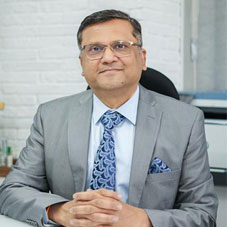
Manoj Kumar Bansal
Chief Transformation Officer and Chief Risk Officer
Institutions such as the International Institute for Management Development have long championed this approach, shaping leaders capable of navigating complexity while building sustainable, future ready enterprises.
Within this context, Manoj Kumar Bansal’s journey stands out as a compelling example of purpose-driven leadership. With nearly three decades of experience across strategic management, operations, sourcing, and transformation in the textile industry, he currently serves as Chief Transformation Officer and Chief Risk Officer at RSWM Ltd. His career reflects a consistent focus on strengthening organizations, driving operational excellence, and creating long-term value.
A significant phase of his professional growth unfolded at the Vardhman Group, where he led initiatives in strategic sourcing, large-scale project execution, modernization, expansion, and strategic management of the fabric business.
At Trident Group, he advanced marketing, sales and business development, particularly in the yarn division, enhancing market reach and margins. At RSWM, he leads enterprise-wide transformation, improving EBITDA, building capabilities, and embedding sustainability for sustained competitive growth.
An alumnus of IMD, Saïd Business School, and ISB, he combines global perspective with deep industry insight. Let’s hear from him.
As an alumnus of the International Institute for Management Development, which learning experiences had the most profound impact on you during your time there?
I focus on building capabilities that enhance competitiveness and strengthen customer trust. Whether through energy
optimization, sustainable practices, or process improvements, every effort is linked to long-term value creation, with the goal of building a resilient, future-ready organization that can grow alongside India’s evolving economic landscape.
Additionally, I embraced the practice of consciously training the mind towards positivity, which plays a crucial role in shaping outcomes and continues to influence my approach to leading teams and navigating complex situations.
Describe the accessibility of faculty during your time at International Institute for Management Development
The faculty were extremely approachable and genuinely invested in our development, fostering an open environment for honest discussions and exchange of ideas. Their ability to link theory with practical insights stood out.
This accessibility encouraged reflection and applied learning, helping us convert insights into action making the experience immersive and valuable well beyond the duration of the program.
How have you leveraged the alumni network during your time as a student and after graduating from IMD?
The IMD alumni network serves as a valuable platform for shared learning and global exposure. I have not used it in a transactional way, but it has helped me stay connected with diverse leadership experiences and evolving business practices.
It enables exchange of ideas, benchmarking of perspectives, and understanding global trends. Over time, it becomes a source of insight and perspective, shaping how I approach challenges and opportunities.
What is one experience that stands out most from your time at IMD?
What remains most significant is the shift in mindset the program brought about. I learnt the importance of addressing issues openly and immediately instead of allowing them to accumulate reinforcing transparency in leadership.
The emphasis on self-awareness and managing one’s reactions, rather than being driven by external factors, was equally impactful. These experiences proved deeply personal and transformative, continuing to shape how I think and lead today.
Additionally, I embraced the practice of consciously training the mind towards positivity, which plays a crucial role in shaping outcomes and continues to influence my approach to leading teams and navigating complex situations.
For me, leadership is about empowering people, removing obstacles, and fostering a culture where teams are enabled to perform effectively and deliver tangible outcomes
Describe the accessibility of faculty during your time at International Institute for Management Development
The faculty were extremely approachable and genuinely invested in our development, fostering an open environment for honest discussions and exchange of ideas. Their ability to link theory with practical insights stood out.
This accessibility encouraged reflection and applied learning, helping us convert insights into action making the experience immersive and valuable well beyond the duration of the program.
How have you leveraged the alumni network during your time as a student and after graduating from IMD?
The IMD alumni network serves as a valuable platform for shared learning and global exposure. I have not used it in a transactional way, but it has helped me stay connected with diverse leadership experiences and evolving business practices.
It enables exchange of ideas, benchmarking of perspectives, and understanding global trends. Over time, it becomes a source of insight and perspective, shaping how I approach challenges and opportunities.
What is one experience that stands out most from your time at IMD?
What remains most significant is the shift in mindset the program brought about. I learnt the importance of addressing issues openly and immediately instead of allowing them to accumulate reinforcing transparency in leadership.
The emphasis on self-awareness and managing one’s reactions, rather than being driven by external factors, was equally impactful. These experiences proved deeply personal and transformative, continuing to shape how I think and lead today.
How do you ensure transformation initiatives remain aligned with the organization’s long-term strategic objectives?
Transformation, for me, is about equipping the organization for future opportunities while strengthening present performance. At RSWM Ltd, initiatives are closely aligned with long-term priorities such as sustain ability, cost efficiency, and product innovation.
I focus on building capabilities that enhance competitiveness and strengthen customer trust. Whether through energy optimization, sustainable practices, or process improvements, every effort is linked to long-term value creation, with the goal of building a resilient, future-ready organization that can grow alongside India’s evolving economic landscape.
Describe your leadership approach. What guiding principles or methods do you follow as a leader?
My leadership style is inclusive, pragmatic, and focused on results. I emphasize aligning teams through open communication, shared clarity, and collective ownership. While consensus matters, decisions are ultimately driven by what serves the organization best.
I prioritize transparency, timely problem-solving, and ensuring strategies convert into actionable results. For me, leadership is about empowering people, removing obstacles, and fostering a culture where teams are enabled to perform effectively and deliver tangible outcomes.
What is the future direction you are working towards?
The focus ahead is on building a resilient, future-ready organization that can leverage India’s growth trajectory. At RSWM Ltd., we are strengthening our product portfolio, scaling sustainably, and positioning ourselves as a trusted global partner.
The immediate priority is to consolidate gains and ensure efficient operations, followed by accelerated growth. Our efforts are centered on enhancing resilience, innovation, and alignment with global benchmarks to reinforce leadership in sustain ability and manufacturing excellence.
Manoj Kumar Bansal, Chief Transformation Officer & Chief Risk Officer, RSWM
A seasoned leader, Manoj Kumar Bansal brings nearly three decades of expertise in strategy, operations, and transformation, currently driving sustainable growth and enterprise-wide excellence at RSWM.
Transformation, for me, is about equipping the organization for future opportunities while strengthening present performance. At RSWM Ltd, initiatives are closely aligned with long-term priorities such as sustain ability, cost efficiency, and product innovation.
I focus on building capabilities that enhance competitiveness and strengthen customer trust. Whether through energy optimization, sustainable practices, or process improvements, every effort is linked to long-term value creation, with the goal of building a resilient, future-ready organization that can grow alongside India’s evolving economic landscape.
Describe your leadership approach. What guiding principles or methods do you follow as a leader?
My leadership style is inclusive, pragmatic, and focused on results. I emphasize aligning teams through open communication, shared clarity, and collective ownership. While consensus matters, decisions are ultimately driven by what serves the organization best.
I prioritize transparency, timely problem-solving, and ensuring strategies convert into actionable results. For me, leadership is about empowering people, removing obstacles, and fostering a culture where teams are enabled to perform effectively and deliver tangible outcomes.
What is the future direction you are working towards?
The focus ahead is on building a resilient, future-ready organization that can leverage India’s growth trajectory. At RSWM Ltd., we are strengthening our product portfolio, scaling sustainably, and positioning ourselves as a trusted global partner.
The immediate priority is to consolidate gains and ensure efficient operations, followed by accelerated growth. Our efforts are centered on enhancing resilience, innovation, and alignment with global benchmarks to reinforce leadership in sustain ability and manufacturing excellence.
Manoj Kumar Bansal, Chief Transformation Officer & Chief Risk Officer, RSWM
A seasoned leader, Manoj Kumar Bansal brings nearly three decades of expertise in strategy, operations, and transformation, currently driving sustainable growth and enterprise-wide excellence at RSWM.