


Priti Agarwal: Turning Child-First Learning Into An Educational Legacy

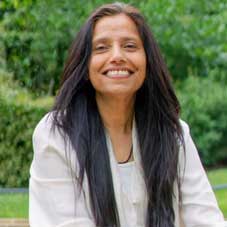
Priti Agarwal
Founder & CEO
Her entry into education was influenced by her exposure to Western schooling and more personally, by watching her first daughter experience Mumbai’s conventional education system. She recognised a clear contrast between a child-first approach and a model heavily centred on textbooks, content and assessment. At a time when international schools were still emerging in India, Agarwal saw an opportunity to offer children a fundamentally different edu-cational experience through Kangaroo Kids and Billabong High.
For Agarwal, education could not be reduced to examination preparation. Her approach focused on developing the child beyond the scorecard—encouraging independent thinking, questioning, confi -dence and the ability to become a high achiever without being shaped by rote learning. This philosophy became the foundation for an educational ecosystem designed to evolve with changing learners and their needs.
As Billabong High expanded into the international education space, the institution invested in educator recruitment, technology and future-ready learning, while also placing emphasis on women empowerment. Its engagement with universities, international schools and platforms such as the World Scholar’s Cup and World Scholar’s Debate broadened students’ exposure to global academic communities.
Agarwal has continued to view technology as an enabler of educational relevance. Billabong High was among the early schools in North India to adopt Microsoft Teams during COVID-19 and is now exploring AI and Copilot as part of its next phase of digital evolution. Yet, her leadership is not defined by technology alone. It is anchored in a willingness to choose disruption over settling for what already exists—a philosophy that continues to shape Billabong High’s approach to child-centred, future-ready education. Let’s read.
How has your academic philosophy evolved to prepare students for a world beyond examinations and conventional academic success?
We now place much greater emphasis on student agency, leadership and account ability. Academic excellence remains important, but it is only the starting point. Students need courage, independent thinking, humility and a strong sense of responsibility towards society.
Through student-led events, entrepreneurship, art design and TEDx initiatives, we encourage them to take ownership and express their ideas. We also integrate sustainability, health, fitness and social responsibility into their learning. My objective is to develop young people who can think independently, create meaningfully and contribute selflessly. Ultimately, I want them to build purposeful lives, not merely impressive academic records.
How do you balance educational innovation with faculty development parent expectations, academic outcomes and operational excellence?
Sustaining innovation requires relentless commitment, teamwork and strong people. I invest significantly in developing key members of the team so that operational responsibilities are managed effectively while educators remain focused on learning. We also use technology to simplify processes and strengthen engagement through learner-led conferences, research projects and culminating activities.
Social and emotional learning is embedded through initiatives such as our RULER collaboration with Yale University. Journals, knowledge capsules, podcasts, book fairs, sports and expert interactions further enrich learning. Most importantly, we consciously choose relevance and joy. I believe innovation becomes sustainable when the entire school community experiences its value.
Which emerging shifts do you believe will have the greatest impact on K–12 education in India over the next five years?
I see AI as a powerful leveller because it can make vast amounts of knowledge accessible to children, irrespective of their location. However, this makes creativity and problem-solving even more important. AI will continue to evolve but the ability to imagine, innovate and respond to uncertainty remains funda-mentally human.
I also believe students need stronger connections with nature, health, travel and diverse perspectives. AI-enabled simulations can expand learning
We now place much greater emphasis on student agency, leadership and account ability. Academic excellence remains important, but it is only the starting point. Students need courage, independent thinking, humility and a strong sense of responsibility towards society.
Through student-led events, entrepreneurship, art design and TEDx initiatives, we encourage them to take ownership and express their ideas. We also integrate sustainability, health, fitness and social responsibility into their learning. My objective is to develop young people who can think independently, create meaningfully and contribute selflessly. Ultimately, I want them to build purposeful lives, not merely impressive academic records.
My objective is to develop young people who can think independently create meaningfully and contri- bute selflessly
How do you balance educational innovation with faculty development parent expectations, academic outcomes and operational excellence?
Sustaining innovation requires relentless commitment, teamwork and strong people. I invest significantly in developing key members of the team so that operational responsibilities are managed effectively while educators remain focused on learning. We also use technology to simplify processes and strengthen engagement through learner-led conferences, research projects and culminating activities.
Social and emotional learning is embedded through initiatives such as our RULER collaboration with Yale University. Journals, knowledge capsules, podcasts, book fairs, sports and expert interactions further enrich learning. Most importantly, we consciously choose relevance and joy. I believe innovation becomes sustainable when the entire school community experiences its value.
Which emerging shifts do you believe will have the greatest impact on K–12 education in India over the next five years?
I see AI as a powerful leveller because it can make vast amounts of knowledge accessible to children, irrespective of their location. However, this makes creativity and problem-solving even more important. AI will continue to evolve but the ability to imagine, innovate and respond to uncertainty remains funda-mentally human.
I also believe students need stronger connections with nature, health, travel and diverse perspectives. AI-enabled simulations can expand learning
experiences without requiring physical travel.India offers enormous opportunities for creative problem-solving particularly through entre- preneurship and innovation. Progressive schools must therefore use technology while deliberately developing creativity, enterprise, recall and independent thinking.
What has leadership through challenging situations taught you about resilience and adaptive leadership?
Resilience has been the most important quality throughout my journey. I have always believed that giving up is not an option. Every wholehearted effort has value, even when it does not produce the result we initially expected.
Sometimes it simply opens another pathway. This mindset has helped us navigate challenges while remaining committed to relevant education. I have also learned to question conventions whenever they compromise children's dignity opportunities or individuality.
I believe leadership is about continuing to move forward despite uncertainty, learning from circumstances and staying connected to one's purpose. Whatever life presents, I believe we must remain willing to try.
What is your vision for the next phase of Billabong High while preserving its philosophy of joyful, experiential and future-ready learning?
We already have a strong foundation and a carefully curated in-house curriculum. Going forward, I want to create more organic and creative opportunities for students rather than pursuing expansion for its own sake. Student-led initiatives, entrepreneurship and leadership will remain central, with children encouraged to challenge limitations and discover their potential.
We already have several academic and institutional collaborations, but I believe our real differentiator is the everyday commitment of our educators.
My vision is to build a legacy institution rather than a franchiseled model—one that remains relevant, process-driven, safe and deeply connected to its students and parents. Most importantly, we will continue innovating with purpose.
Priti Agarwal, Founder & CEO, Billabong High International School
Priti Agarwal, Founder & CEO of Billabong High International School, is an education leader with over two decades of experience across early childhood and K–12 education.
With a child-first philosophy at the core of her leadership she champions experiential learning, innovation technology inte- gration, student agency and future-ready education.
What has leadership through challenging situations taught you about resilience and adaptive leadership?
Resilience has been the most important quality throughout my journey. I have always believed that giving up is not an option. Every wholehearted effort has value, even when it does not produce the result we initially expected.
Sometimes it simply opens another pathway. This mindset has helped us navigate challenges while remaining committed to relevant education. I have also learned to question conventions whenever they compromise children's dignity opportunities or individuality.
I believe leadership is about continuing to move forward despite uncertainty, learning from circumstances and staying connected to one's purpose. Whatever life presents, I believe we must remain willing to try.
What is your vision for the next phase of Billabong High while preserving its philosophy of joyful, experiential and future-ready learning?
We already have a strong foundation and a carefully curated in-house curriculum. Going forward, I want to create more organic and creative opportunities for students rather than pursuing expansion for its own sake. Student-led initiatives, entrepreneurship and leadership will remain central, with children encouraged to challenge limitations and discover their potential.
We already have several academic and institutional collaborations, but I believe our real differentiator is the everyday commitment of our educators.
My vision is to build a legacy institution rather than a franchiseled model—one that remains relevant, process-driven, safe and deeply connected to its students and parents. Most importantly, we will continue innovating with purpose.
Priti Agarwal, Founder & CEO, Billabong High International School
Priti Agarwal, Founder & CEO of Billabong High International School, is an education leader with over two decades of experience across early childhood and K–12 education.
With a child-first philosophy at the core of her leadership she champions experiential learning, innovation technology inte- gration, student agency and future-ready education.