


Raj Dhami : Engineering Impact Through Innovation In Cooling Solutions

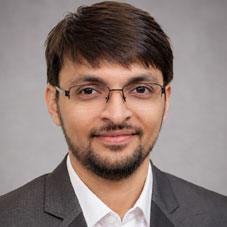
Raj Dhami
CEO
Their journeys often reflect experimentation, resilience, and a willingness to navigate uncertainty in pursuit of impactful solutions. Among this emerging group of entrepreneurs is Raj Dhami, whose journey reflects a strong mix of curiosity and hands-on learning.
Influenced by an early exposure to business through his father, he began exploring practical skills at a young age, working on electronic circuits in school, experimenting with machining, and even understanding taxation fundamentals.
Beyond professional achieve- ments, his travels across regions like Nagaland, Arunachal Pradesh, and Himachal Pradesh shaped his grassroots understanding of real-world challenges.
After six years of persistence in finding product-market fit, he founded FreeziGo, focused on building efficient and economical energy storage solutions for the cooling industry, which accounts for nearly 15 percent of global electricity consumption. Let’s read.
What were the most transformative learning experiences during your time at Indian Institute of Technology Bombay?
What truly defined my time at IIT Bombay was the freedom to explore without boundaries. One day, I would be working on a 3D-printed micropump, and the next I’d be experimenting with a completely new kind of air conditioner. That environment encouraged curiosity without forcing a fixed path.
I was also surrounded by incredibly intelligent and creative peers, and learning from them was one of the most valuable parts of my journey. I even built a custom air conditioner for my
hostel room purely out of interest. Over time, I learned to make mistakes quickly chase opportunities confidently, and think on a much larger scale.
How did your time at Indian Institute of Technology Bombay help shape your passion and business acumen?
At IIT Bombay, I was deeply inspired by professors who were solving real-world problems through innovation. Watching their work showed me how one idea can create a meaningful impact. Working closely with Dr Milind Rane in the radiant cooling space further strengthened my passion for the field.
I realized that business acumen is largely about confidence, adaptability, and team building. Publishing my first paper on a 3D-printed micropump gave me the confidence to turn ideas into reality. Constant experimentation taught me to think adaptively, while hostel life played a huge role in shaping my ability to collaborate and build strong teams.
What opportunities at Indian Institute of Technology Bombay helped you gain global exposure and diverse perspectives?
To be honest, I didn’t actively pursue global exposure during my time at IIT Bombay. What the institute truly gave me was access to incredible people, and that mattered far more than any formal program. India itself is immensely diverse, and being surrounded by peers from different back grounds, cultures, and experiences naturally broadened my perspective.
For me, college wasn’t about building networks, it was about unlearning old ways of thinking and creating space for new ideas. That mindset became a strong foundation later on. Today, I have friends and colleagues across the world, which helps me think bigger, move faster, and approach challenges with a much wider perspective.
How did your time at Indian Institute of Technology Bombay shape your sense of responsibility toward society?
It may not have been direct, but it definitely planted the seeds. I remember a course on the environment where we were shown two completely opposing documentaries, not to decide what was right or wrong, but to
How did your time at Indian Institute of Technology Bombay help shape your passion and business acumen?
At IIT Bombay, I was deeply inspired by professors who were solving real-world problems through innovation. Watching their work showed me how one idea can create a meaningful impact. Working closely with Dr Milind Rane in the radiant cooling space further strengthened my passion for the field.
For me, leadership is about creating a culture where people feel confident taking ownership and solving problems indepen -dently
I realized that business acumen is largely about confidence, adaptability, and team building. Publishing my first paper on a 3D-printed micropump gave me the confidence to turn ideas into reality. Constant experimentation taught me to think adaptively, while hostel life played a huge role in shaping my ability to collaborate and build strong teams.
What opportunities at Indian Institute of Technology Bombay helped you gain global exposure and diverse perspectives?
To be honest, I didn’t actively pursue global exposure during my time at IIT Bombay. What the institute truly gave me was access to incredible people, and that mattered far more than any formal program. India itself is immensely diverse, and being surrounded by peers from different back grounds, cultures, and experiences naturally broadened my perspective.
For me, college wasn’t about building networks, it was about unlearning old ways of thinking and creating space for new ideas. That mindset became a strong foundation later on. Today, I have friends and colleagues across the world, which helps me think bigger, move faster, and approach challenges with a much wider perspective.
How did your time at Indian Institute of Technology Bombay shape your sense of responsibility toward society?
It may not have been direct, but it definitely planted the seeds. I remember a course on the environment where we were shown two completely opposing documentaries, not to decide what was right or wrong, but to
understand complexity. That stayed with me. I believe responsibility comes from within, shaped by what you truly care about.
For me, that translated into the mission behind FreeziGo, working on vaccine cold chains, solar-powered milk cooling for farmers, and storage solutions for small vendors. When real impact happens, that’s what responsibility means to me. That said, I’m still learning and evolving, and I know there’s much more to be done.
What defines your leadership approach while building and scaling FreeziGo?
For me, leadership is about creating a culture where people feel confident taking ownership and solving problems independently. Some of FreeziGo’s best innovations have come from team members closest to customer challenges. One field solution from a service engineer was later refined and integrated into our machines, reinforcing my belief that innovation comes from listening, experi- mentation, and empowering people.
What is the next chapter you look forward to in your professional journey?
I don’t really chase destinations, I focus on enjoying the journey. Right now, my next chapter is centered on a clear mission: making cold chain solutions accessible to everyone. I envision a future where not a single drop of a farmer’s effort goes to waste. Whether it’s milk, fresh produce, or vaccines, everything should reach the people who truly need it.
We are already working on vaccine delivery systems in Africa, solar-powered milk cooling for farmers and diesel-independent cooling for transport. Soon, we plan to expand into solar-based cold storage solutions as well. For me, this mission brings enough meaning and purpose to define the road ahead.
Raj Dhami, CEO, FreeziGo
Raj Dhami, CEO of FreeziGo, is an IIT Bombay alumnus building thermal energy storage solutions to make cold chain accessible without electricity, from vaccine delivery in Africa to solar-powered cooling for farmers.
A hands-on engineer and entrepreneur, he holds a personal patent and has won international recognition, including the Startup Energy Transition Award by the German Energy Agency. After six years of finding product-market fit, he believes the best innovations are the ones that simply show up for the people who need them most.
For me, that translated into the mission behind FreeziGo, working on vaccine cold chains, solar-powered milk cooling for farmers, and storage solutions for small vendors. When real impact happens, that’s what responsibility means to me. That said, I’m still learning and evolving, and I know there’s much more to be done.
What defines your leadership approach while building and scaling FreeziGo?
For me, leadership is about creating a culture where people feel confident taking ownership and solving problems independently. Some of FreeziGo’s best innovations have come from team members closest to customer challenges. One field solution from a service engineer was later refined and integrated into our machines, reinforcing my belief that innovation comes from listening, experi- mentation, and empowering people.
What is the next chapter you look forward to in your professional journey?
I don’t really chase destinations, I focus on enjoying the journey. Right now, my next chapter is centered on a clear mission: making cold chain solutions accessible to everyone. I envision a future where not a single drop of a farmer’s effort goes to waste. Whether it’s milk, fresh produce, or vaccines, everything should reach the people who truly need it.
We are already working on vaccine delivery systems in Africa, solar-powered milk cooling for farmers and diesel-independent cooling for transport. Soon, we plan to expand into solar-based cold storage solutions as well. For me, this mission brings enough meaning and purpose to define the road ahead.
Raj Dhami, CEO, FreeziGo
Raj Dhami, CEO of FreeziGo, is an IIT Bombay alumnus building thermal energy storage solutions to make cold chain accessible without electricity, from vaccine delivery in Africa to solar-powered cooling for farmers.
A hands-on engineer and entrepreneur, he holds a personal patent and has won international recognition, including the Startup Energy Transition Award by the German Energy Agency. After six years of finding product-market fit, he believes the best innovations are the ones that simply show up for the people who need them most.