

Access Control Systems for Safer and More Connected Facilities
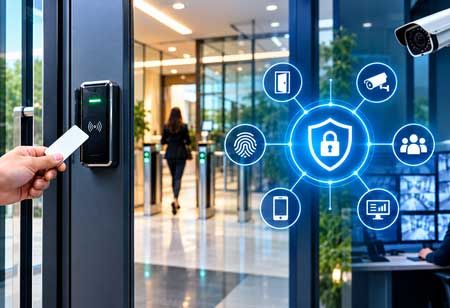 Modern facilities need effective ways to manage who can enter, which areas they can access, and when entry should be permitted. Offices, industrial facilities, healthcare centers, educational institutions, and commercial buildings may have several entry points with different security requirements.
Traditional keys can become difficult to manage as the number of users and access areas increases. Access control systems offer a more organized approach through technologies such as access cards, key fobs, mobile credentials, PINs, and biometric identification. How do access control systems improve security in commercial buildings? Let’s look at how they can support safer and more connected facilities.
What are Access Control Systems?
Access control systems are electronic security solutions that regulate access to specific areas within a facility. They verify a person's credentials before allowing entry, helping organizations control access according to predefined permissions.
Depending on the facility's requirements, users can be verified through access cards, key fobs, mobile credentials, PINs, or biometric identification. Administrators can assign permissions based on roles, departments, locations, or working hours.
For example, employees may access general office spaces, while server rooms, laboratories, storage areas, or production zones can be restricted to authorized personnel. Permissions can also be updated when an employee changes roles or leaves the organization.
How Can Access Control Improve Facility Security?
Access control systems can support facility security in several practical ways:
1. Controlled Entry
Electronic credentials can restrict entry to authorized individuals. This provides greater control over sensitive areas and reduces dependence on physical keys.
2. Centralized Access Management
Administrators can manage permissions through a centralized system. Access can be added, changed, or revoked without replacing physical locks across the facility.
3. Access Activity Monitoring
Modern systems can record access events, giving security teams greater visibility into entries and exits. These records can help review unusual activity when required.
4. Flexible Access Permissions
Employees, contractors, visitors, and service personnel may need different levels of access. Access control systems can support permissions based on users, locations, and specific time periods.
What Should You Consider When Choosing an Access Control Solution?
The right solution should match the facility's security requirements and allow room for future changes. Consider these factors:
1. Scalability for Future Growth
Choose a system that can support additional users, access points, buildings, and restricted areas as requirements change.
2. Integration With Existing Systems
Check whether the access control system can communicate with other security and facility management technologies. Interoperability allows different systems to exchange information and work together, supporting more coordinated facility management.
3. Ease of Access Management
Look for systems that make it simple to add users, update permissions, issue credentials, and revoke access. This can make daily administration more efficient.
4. Authentication Options
Consider the authentication methods available, such as cards, mobile credentials, PINs, key fobs, or biometric technologies. Select options based on the facility's security and operational needs.
5. Monitoring and Reporting
Monitoring and reporting features can provide visibility into access activity. These records can help security teams review events and maintain oversight of restricted areas.
Build Safer Facilities With the Right Access Control Solution
The right access control system can help organizations manage facility entry while supporting security, visibility, and efficient access management. Choosing a suitable solution requires consideration of scalability, integration, authentication methods, monitoring, reliability, and support.
Partnering with a reputable electric brand can provide access to technologies designed to support connected facility operations. By selecting a solution that aligns with current requirements and future plans, organizations can create safer, more controlled, and better-connected facilities.