

Maruti Suzuki Commissions Green Hydrogen Plant at Manesar
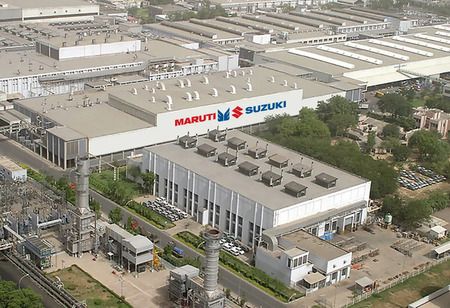
Car market major Maruti Suzuki India Limited announced the startup of a 300 kW green hydrogen electrolyzer plant, established as a pilot, at its Manesar facility in Haryana.
Discussing the pilot initiative, Hisashi Takeuchi, Managing Director & CEO of Maruti Suzuki India Limited, stated that the company aims to decrease its carbon footprint in manufacturing processes from the current 6,15,000 tonnes to 2,66,000 tonnes by FY 2030-31 through various clean technologies.
Drawing from the insights gained in this pilot project, the company aims to expand the use of green hydrogen technology throughout its production sites in Haryana and Gujarat.
Also Read: Starbucks to Set Up its First India GCC in Chennai
"The commissioning of our 300 kW green hydrogen plant is aligned with the Government of India's Green Hydrogen Mission. This, along with the expansion of solar, biogas and installation of battery energy storage systems, reflects our commitment to transition to cleaner and sustainable energy solutions," Takeuchi says.
The MD and CEO of Maruti Suzuki India Ltd emphasized that India is becoming a manufacturing leader, and its competitive edge may rely not just on cost and quality, but also on CO2 emissions.
"With such initiatives, we are building capability today so that we can support a low-carbon and more energy-efficient manufacturing ecosystem tomorrow," Takeuchi says.
Maruti Suzuki is enhancing its initiatives to decrease carbon emissions throughout its production processes by embracing various green energy alternatives.
These consist of internal solar power facilities, renewable energy acquisition from governmental sources, and energy purchase contracts with external providers for solar and wind energy.
Also Read: Assam Foundation Stone Laid for Adani Power’s 3,200 MW Project
Moreover, Maruti Suzuki is nearing completion of a 10-tonnes-per-day biogas plant at its Kharkhoda facility, expected to be operational by FY 2026-27. The company has recently launched a 1-MWh battery energy storage system at its Kharkhoda facility. It has started using compressed biogas (CBG) as fuel for processes.
The board of Maruti Suzuki India Limited has recently green-lit 4 CBG projects and allocated a budget of Rs 561 crore for this purpose. Independently, its parent company Suzuki Motor Corporation (SMC), collaborating with groups like the National Dairy Development Board (NDDB) and dairy industry unions, will establish 10 biogas plants throughout India.
The green hydrogen facility enhances the use of solar energy produced at the company's Manesar site. Solar energy generated during holidays, typically wasted, is harnessed to produce green hydrogen. The hydrogen is kept and later utilized in production processes.
Also Read: Tata Electronics, L&T Semiconductor Join Hands to Make Chips in India
The launch of the Manesar green hydrogen facility provides an additional renewable-energy alternative for Maruti Suzuki’s production activities.
The firm stated that its clean-energy efforts aim to enhance resource efficiency and lower the carbon footprint linked to production. The pilot will also offer operational insights prior to broader implementation of green hydrogen at its facilities.
The initiative is a component of Maruti Suzuki’s larger strategy to integrate solar energy, biogas, battery storage, and green hydrogen technologies into its production ecosystem. Maruti Suzuki India has initiated a 300 kW pilot plant for green hydrogen production at its Manesar site, where the hydrogen will be mixed with natural gas and utilized as a fuel for processes.
The initiative will make use of excess solar energy produced at the site and aims to offer practical insights for possible green hydrogen implementation throughout the company’s manufacturing sites. Maruti Suzuki stocks were priced at Rs.12,148, a decrease of 0.67 percent.