

Airtel Africa Q1 Net Profit Jumps Five Times to $156 Million
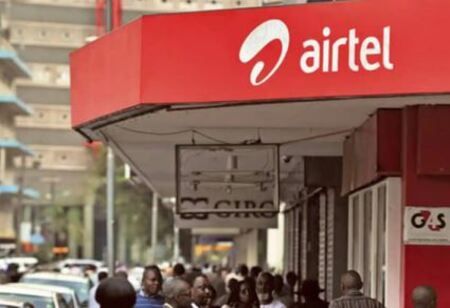
Due to sustained operating momentum, steady fuel costs, and an extraordinary benefit from foreign exchange swings, Bharti Airtel's Africa division recorded a five-times-on-year increase in net profit to $156 million in the fiscal first quarter.
With the help of Nigeria tariff adjustments, a solid showing in Francophone Africa, and a reduction in currency headwinds over the last three quarters, Airtel Africa's revenue increased 24.9 percent year over year to $1.41 billion in constant currency.
“This strong revenue performance and continued cost efficiencies contributed to further EBITDA margin expansion which resulted in strong EBITDA growth of approximately 30 percent, and we remain focussed on further margin improvements subject to macroeconomic stability,” said Sunil Taldar, CEO, Airtel Africa.
He added that with smartphone penetration only at 45.9 percent, there is significant headroom to drive further adoption for Airtel Africa and play a key role in bridging the digital divide.
Also Read: How AI is Transforming the Restaurant and Fast-Food Chain Industry
Following the purchase of 26.3 million common shares as part of the first tranche of the company's second share buyback program, which will return up to $100 million to shareholders in two tranches, Airtel Africa gave $45 million to shareholders in April 2025.
Due to an increase in interest on lease obligations brought on by tower contract renewals and an increase in operating company (OpCo) market debt, Airtel Africa's net finance cost jumped 24 percent year over year to $173 million in Q1.
A switch from international to local currency debt, which has a higher average interest rate, also increased financing expenses. In the first quarter, the group's effective interest rate rose to 12.9 percent from 12.7 percent in the same period last year.
As part of the company's goal to lower its foreign currency debt, 95 percent of Airtel's Africa's OpCo debt (excluding lease liabilities) was in local currency during the June quarter, up from 86 percent a year earlier.
Also: Go Green: These Five Indian Solar Companies Are Ruling Global Market
Due mostly to timing discrepancies, capex for the quarter that ended June 30, 2025, at $121 million, was 18 percent lower than it was a year earlier. For the entire year, the company's capital expenditure guidance ranged from $725 million to 750 million.
As a result of continuous advantages from its cost-efficiency initiative, stable fuel prices, and ongoing operating momentum, Airtel Africa's quarterly operating margins increased from 45.3 percent in Q1 2026 to 48 percent.
In the fiscal first quarter, Airtel Africa's ARPU, a key performance metric, increased 4.4 percent sequentially to $2.4, driven by a 13.2 percent sequential gain in net customer additions of 3.3 million. This indicates that operational performance continued to pick up speed.
As the number of mobile money users increased to 45.8 million in the June quarter, Airtel Africa's mobile money service penetration increased 2.8 percent sequentially. The mobile money services' ARPU increased 5.9 percent sequentially to $2.1, and their quarterly revenue increased 8.1 percent on-quarter to $284 million.
In the June quarter, Airtel Africa's data user base grew by three percent sequentially to 75.6 million. The total number of customers in the telco's 14 African markets increased by two percent over a sequential period to 169.4 million. Data consumption rose 11.7 percent, contributing to a 10 percent sequential gain in data income to $548 million.