

Draft IT Rules Widen Govt Oversight to User-Generated News
The Ministry of Electronics and Information Technology has put forth a new series of revisions to the Information Technology (Intermediary Guidelines and Digital Media Ethics Code) Rules, 2021 (IT Rules, 2021), aiming to enhance governmental supervision of online content and broaden the range of entities subject to regulatory measures.
The Ministry has requested input from stakeholders regarding the proposed revisions, with a primary focus on including user-generated news content from individuals not officially recognized as publishers within the regulatory scope.
Also Read: Kotak Mahindra Prime Appoints Suraj Rajappan as MD & CEO
This would broaden regulatory oversight to encompass platforms that feature news content from influencers and independent creators, thus subjecting such content to regulatory review. The deadline for submitting feedback is April 14th, as designated by MeitY.
The primary change impacting individuals is resulting from revisions made to Part III (Rule 8) of the IT Rules, which outline the scope of Part III and specify that regulatory provisions extend to intermediaries that host news and current affairs content shared by users who are not officially classified as publishers.
Previously, Part III mainly pertained to established digital news publishers and OTT platforms. The updated language now broadens the scope to include platforms that host news-related content generated by regular users, such as opinions, analyses, or public affairs discussions, potentially subjecting them to regulatory oversight. This adjustment signifies a subtle yet significant transformation for individuals, as their news-related content could now be subject to scrutiny by regulatory bodies through adherence to platform-specific compliance measures.
Per the Internet Freedom Foundation (IFF), a non-profit organization focused on advocating for internet rights, it is imperative that the proposed amendments be revoked promptly.
It is urged that every member of our society call for their reconsideration and align with the principles outlined in the Constitution of India. The proposed amendments also entail changes in Part II. Specifically, there is a clarification in Rule 3(1)(g) and 3(1)(h) emphasizing that retention obligations do not override obligations imposed by other laws.
Also Read: India's EV Transition to be Inclusive, Sustainable: Kumaraswamy
Additionally, Rule 3(4) has been added to require intermediaries to adhere to clarifications, advisories, directives, standard operating procedures (SOPs), codes of practice, and guidelines issued by the Ministry. These measures are considered essential components of the due diligence process outlined in Section 79.
According to the Internet Freedom Foundation (IFF), Rule 3(4) grants extensive authority to the Ministry of Electronics and Information Technology (MeitY) to establish enforceable tools like clarifications, advisories, directives, standard operating procedures (SOPs), codes of conduct, and guidelines. These tools are mandatory for intermediaries to adhere to in order to qualify for protection under Section 79 of the Information Technology Act.
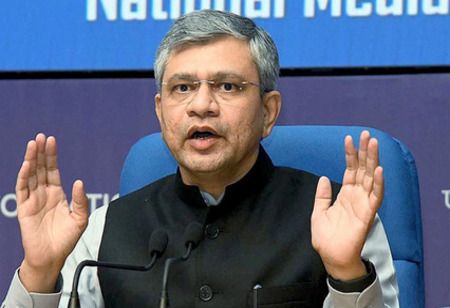
Meanwhile, Minister of Electronics and Information Technology, Ashwini Vaishnaw, expressed growing apprehension regarding the proliferation of AI-generated deepfakes. He also acknowledged the heightened measures taken by social media platforms in combating deepfake content.
Also Read: Manoj Kohli Joins Adobe International Advisory Board
Vaishnaw characterized deepfakes as a burgeoning peril that poses a significant threat to societal well-being. A considerable amount of content in the form of deepfakes has emerged due to recent advancements in artificial intelligence.
As a result, there has been a notable increase in the dissemination of deepfakes on various social media platforms worldwide. In response to this trend, social media platforms have intensified their endeavors to detect and eliminate deepfakes, Vaishnaw remarked.