

Eutelsat, SES Eye $6 Billion from US Spectrum Deal
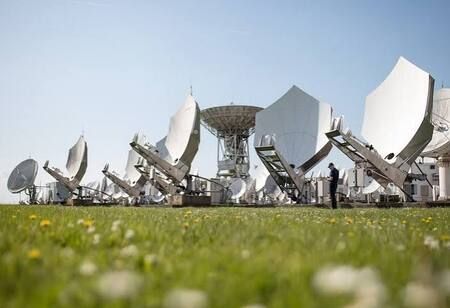
SES and Eutelsat, European satellite operators, announced that they expect to receive about $6.1 billion in total payments for facilitating the clearing of satellite spectrum for U.S. wireless services, causing their stock prices to rise.
SES shares increased by 6.6 percent and Eutelsat rose by 5.7 percent as of 0720 GMT, as investors responded positively to the possibility of significant incentive payments associated with releasing spectrum for next-generation wireless services in the U.S.
The order from the Federal Communications Commission distributes a total of $6.3 billion in incentive payments to satellite operators, with SES receiving 89 percent, Eutelsat 8 percent, and Canada's Telesat 3 percent. The FCC intends to release 160 megahertz of upper C-band spectrum for mobile operators, with an auction planned to start on April 27, 2027.
Satellite firms need to finalize the primary spectrum transition by December 2030 to obtain $4.9 billion in incentives, with a concluding deadline in June 2031 associated with an additional $1.4 billion.
They will be compensated for qualifying transition expenses, which the FCC predicts to be between $4 billion and $5 billion.
Also Read: Amkor Technology and Nvidia Sign $1.5 Billion Deal
According to JPMorgan analysts in a note to investors, the net present value of the incentive payments is approximately €6 per SES share, compared to under €0.5 per Eutelsat share.
JPMorgan mentioned that SES's total payment of $5.6 billion might be lowered due to taxes and commitments to Intelsat bondholders, who are entitled to 42.5 percent of revenues, approximately $1.1 billion, from the initial 100 megahertz of available spectrum.
Also Read: Samsung, SK Hynix Eye $950 Billion U.S. Tech Tie-Ups
For European telecom investors, the choice also reflects the magnitude of future spectrum expenditures for U.S. carriers.
Also Read: Nvidia–OpenAI in Talks for $250 Billion Data Center Funding
JPMorgan indicated that the upcoming auctions in 2027-2028 may necessitate approximately $25 billion in expenditures, possibly complicating projections for future share repurchases.