

Gujarat to Build Rubber Dams for Irrigation and Flood Control
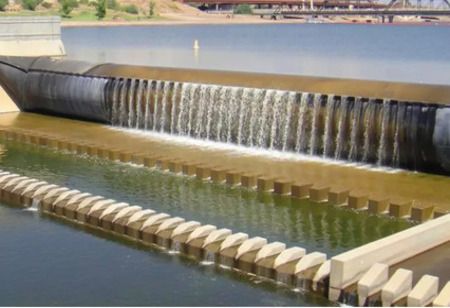
Gujarat plans to build two inflatable rubber dams on the Heran River in Chhota Udepur district and the Ambika River in Tapi district, in a joint initiative valued at over Rs.160 crore.
The project represents the state's initial application of South Korean technology-driven rubber dam systems, designed to enhance irrigation reliability, groundwater replenishment, and flood management in areas facing water scarcity.
The Rajvasana project is being developed at a cost of Rs.82.97 crore under the oversight of Water Resources and Water Supply Minister Ishwarsinh Patel, with an anticipated completion date of September 2027. It will provide irrigation benefits directly to farmers in 25 surrounding villages.
Also Read: Microsoft, Lightstorm Plan India-SEA Subsea Cable
The Rajvasana initiative includes a 180-metre-long, 3.5-metre-high inflatable rubber bladder spanning the Heran River, increasing the storage potential of the current weir to 3.5 million cubic metres (MCM). This intends to raise groundwater levels, ensuring irrigation and potable water resources. Three-quarters of this project has been finished.
The design of the rubber dam enables it to discharge sand and silt, maintaining storage capacity. In monsoon floods, the dam can be lowered to let floodwaters flow through, safeguarding surrounding villages. The project features 900 metres of flood defense wall on the left side and 500 metres on the right side of the river. In Tapi district, the Rs.79.13 crore Pathakwadi Air-Filled Rubber Dam located near Pathakwadi village tackles the area's flat landscape and low riverbanks, rendering traditional check dams or weirs impractical. Ninety percent of the building work has been finished.
Also Read: Mankind Pharma, Denovo Sciences to Launch AI-led Drug Discovery
In response to appeals from local farmer leaders and Mohanbhai Kokni, the Water Resources Department chose this innovative technology over a conventional barrage. The dam is constructed in accordance with the Japanese Code 2000 and incorporates a uniquely produced South Korean rubber bladder, measuring 18–32 mm in thickness, intended to withstand temperatures exceeding 50°C and expected to last for 30 years. A sophisticated SCADA automation system allows for the remote inflation and deflation of the rubber bladder, eliminating the necessity for manual handling.
The design features a concrete base that is 2.0 metres high, with a 2.5-metre inflatable rubber bladder secured by J-bolts on top, achieving a total height of 4.5 metres and a length of 280 metres across four spans.
Also Read: Spense Raises $2.8 Million Seed Round Led by Arkam Ventures
Its structure offers flood protection and minimizes soil erosion by permitting floodwaters to flow unimpeded when deflated and allowing natural silt movement, maintaining reservoir capacity.
The Pathakwadi Dam is set to hold around 3.5 MCM of water, irrigate 650 hectares of agricultural land, replenish wells and borewells, enhance groundwater levels, and provide dependable drinking water resources. Future uses of this technology involve acting as a tidal barrier to stop seawater from entering freshwater ecosystems in coastal regions.