

Horlicks Enters Protein Market With Fermented Yeast-Based Powder
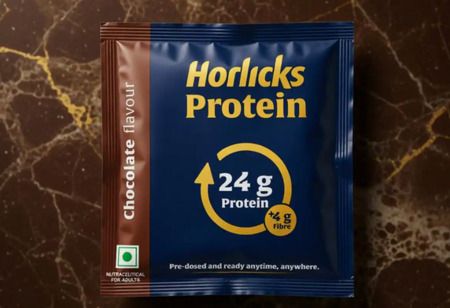
Horlicks, the malt drink brand with a history spanning more than a century and currently owned by Hindustan Unilever in India, has made a comeback in the protein powder market with a new formula focused on fermented yeast protein.
What is notable is that Horlicks India opted to substitute its traditional whey, soy, and casein protein powder for a yeast-based alternative.
The final product has a Protein Digestibility-Corrected Amino Acid Score, known as PDCAAS, of 1.0, which is the highest rating achievable according to a method supported by the World Health Organization and the US Food and Drug Administration.
The item comes in a pack of 28 single-serving sachets per kilogram, available in Chocolate, Coffee, and Unflavoured options, and costs approximately Rs 2,500 per kilogram.
Rajneet Kohli, Executive Director, Foods at HUL, framed the launch around the insight that physical demands are not limited to structured exercise.
“Life is a gym,” he says, referencing the brand’s positioning around the idea that daily routines, commuting, carrying groceries, managing a busy workday, place real nutritional demands on the body.
The introduction signifies a strategic expansion for Horlicks, a brand with more than a century in the nutrition sector, into the rapidly growing protein supplement market. HUL has oriented the product towards convenience and accessibility instead of performance, moving away from the traditional marketing of protein products in India.
Also Read: Milky Mist Commissions New High-Protein Skyr and Yoghurt Plant
On Tuesday, HUL shares were trading at Rs.1,963 on the NSE, reflecting a 1.87 percent increase from the last close, but the stock has notably lagged behind the Nifty 50 over extended periods, falling approximately 24 percent in the last year compared to the index's 6.9 per cent decrease.
Kohli asserts that the potential exists due to the category's minimal starting point: protein supplement penetration in India is roughly three percent, based on the company's evaluation. Mordor Intelligence forecasts that the Indian protein market will increase from $1.62 billion in 2026 to $2.22 billion by 2031.
Also Read: Greenwave Circularity Raises $31.5 Million for Plastic Recycling
India is the location where consumer brands, retailers, ingredient suppliers, and now a significant FMCG player are emerging simultaneously. Additionally, last month, Arboreal Bioinnovations secured over $24M to expand its domestic yeast protein production.
China seems to take the lead in launching yeast protein powders, primarily in the sports nutrition sector. Angel Yeast's AngeoPro ranks among the largest commercial products in its category, with the firm launching an 11,000-ton yeast protein line in Yichang in 2025 and reaching over 40 markets. This is part of a larger shift in Chinese fermentation resources towards alternative proteins as pharmaceutical profits decrease.
Also Read: Maharashtra Power Firms Will Not Be Privatized, Says Fadnavis
Europe boasts a more robust B2B ingredient ecosystem compared to its consumer presence, featuring Yeastup, Revyve, and Cosaic. In a similar fashion, South Korea's Intake is developing a yeast strain derived from grapes intended for whey substitution. In the US, SpaceMilk is still one of the rare consumer-focused examples in the yeast protein powder market.