

Hyper-Realistic Lip Sync AI Videos Transform Audience Expectations
 The way audiences judge video credibility has changed permanently, and the brands that recognize this shift early are already operating with a measurable competitive advantage.
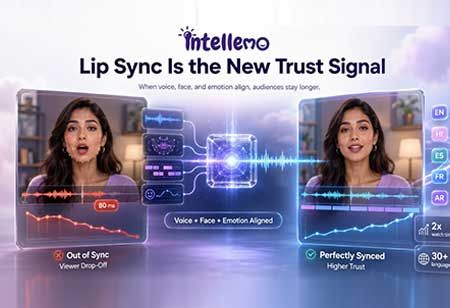
A lip-sync mismatch can be detected by a viewer in less than 80 milliseconds, and that's why for digital video today, the most important quality signal is the coherence between the audio and the face. People cannot make an effort to think about what they're viewing. When they don't feel good about it, they withdraw from it, and when they feel good about it, they stay with it. Now the accuracy of AI lip sync technology has reached the level that perfectly fits this visual standard, and so has the sense of an acceptable standard for the audience of any type of video.
It is a shift that is marked at a significant level in consumption patterns. On average, viewers watch videos twice as long if they are perfectly synced to the lip movements and the music sounds. This means that the difference in viewing time equates to a difference in conversions, brand recall, and, in the end, the viewer's credibility with the brand. There is no longer any excuse for production flaws, as audiences have been familiar with high-quality streaming content for years. They bring the same visual expectations to an ad on the brand's social feed as they do for a Netflix show.
This is where the content production landscape has been revolutionized, and the implications extend to every sector that relies on video to reach an audience:
- Language no longer limits reach: A single AI video with hyperrealistic lip sync can be accurately adapted across 30 or more languages without any reproduction, giving brands the ability to communicate natively with regional audiences at meaningful scale without proportional increases in cost or time.
- Avatar consistency creates sustained brand recall: AI-powered presenters will have the same facial structure, expression range, and voice tone in hundreds of videos, leading viewers to recognize and trust a brand's visual identity over time.
- Production timelines have compressed from weeks to hours: Marketing teams are now able to create video in real time, in broadcast quality, and respond to all cultural moments, product launches, and competitive shifts, eliminating the operational lag that previously made video the slowest asset in a marketing campaign.
- Creative testing has become economically viable at volume: Brands can now create and test dozens of lip-synced video versions at the same time, while 73 percent of performance marketers said they make better creative decisions prior to making a media purchase.
Audience Exposure Is Driving the New Quality Benchmark
The reason audience expectations have shifted so sharply is that sustained exposure to quality content drives the perceptual standard upward. When consumers spend several hours daily inside environments where AI-generated content sits alongside professionally produced content, their baseline adjusts without conscious awareness, and they begin comparing branded video not to other branded video but to everything they have encountered that day across every screen.
Platforms building for this environment are focusing on precision and narrative coherence rather than novelty. Leading Platforms like Intellemo AI operate within this space by combining cinematic lip-sync accuracy with structured storytelling, ensuring that every video asset maintains coherence across character, voice, and scene from beginning to end.
What This Means For Brands
For content strategists and marketing leaders, the operational question has already moved past whether AI video belongs in the production workflow. The conversation now centers on which capabilities within that workflow are producing quality that genuinely meets the audience's current perceptual standard. Simply because lip sync accuracy has crossed from being a technical feature into a baseline expectation. Organizations whose content consistently falls below it are seeing measurable audience drop-off that older performance benchmarks were never designed to capture.
Where Audience Expectations Are Headed Next
As AI lip sync models continue to improve in facial muscle accuracy, emotional expression mapping, and real-time rendering, the gap between what audiences expect and what under-invested content delivers will expand further. Organizations that build their video infrastructure around this reality today will not need to rebuild it tomorrow. The brands that treat hyper-realistic video quality as a current operational requirement rather than a future aspiration are the ones that will hold audience trust as that standard continues to rise.
About Intellemo AI
Intellemo is an AI-powered cinematic video generation platform trusted by 287+ million creatives, marketers, and businesses. The platform enables brands to create scroll-stopping, accurate lip-synced videos from text prompts and independently manage video content across channels.