

India Boosts Power Transmission Projects With Set Deadlines
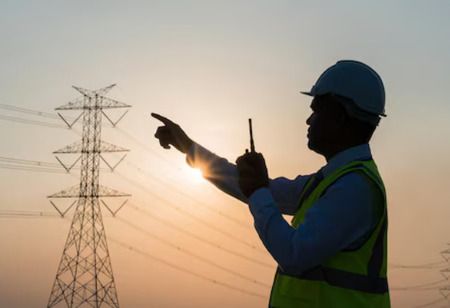
India has implemented a standardized timeline for power transmission projects to improve the alignment of grid expansion with generation and distribution systems, as the nation aims to expedite the incorporation of renewable energy into its power framework.
The schedules, released by the Central Electricity Authority of the government, will synchronize generation and final distribution projects with the grid, assisting in preventing delays.
HVDC projects need to be finished within a maximum of 54 months, whereas a 765-kilovolt substation should be constructed in three years, as per the advisory.
Also Read: LG Expects India to Remain its Largest Global AC Market
The CEA stated that projects in mountainous areas might be permitted an extended construction timeline. As per details released on the CEA website, the National Committee on Transmission (NCT) approved standardized timelines for various configurations of Inter-State Transmission System (ISTS) projects during its 40th meeting on April 15, 2026. The initiative seeks to enhance predictability and facilitate coordinated growth of the nation's power grid.
According to the advisory, high-voltage direct current (HVDC) transmission projects must be finalized within a maximum timeframe of 54 months. A substation with a capacity of 765 kilovolts is expected to be constructed within three years.
The advisory additionally pertains to initiatives that encompass various forms of transmission infrastructure.
“In case of a scheme having combination of the above-mentioned types of projects, the qualifying time schedule of the activity having maximum time period shall be considered for the scheme as a whole,” the CEA said.
“However, in case of any exigency, compressed time schedule may be considered on case-to-case basis,” it added.
The action occurs as the growth of transmission networks in India and various other regions worldwide fails to keep up with the swiftly increasing renewable energy capacity. Solar and wind initiatives are frequently constructed more quickly than the transmission lines required to link them to users, resulting in an increasing backlog of projects waiting for grid connection.
Also Read: Goyal, Nice Mayor Talk Expanding India-France Ties in Innovation
The swift growth of clean energy has exerted pressure on the manufacturing capability for transmission gear, lengthening delivery timelines for essential parts needed to construct new power systems.
To enhance coordination, the CEA recommended that generation firms, transmission developers, power distribution companies, large-load consumers, and other stakeholders incorporate the timelines into their project planning.
“Generation/ transmission developers, DISCOMs, Bulk load and other relevant stakeholders are advised to take the above timelines into account while planning their generation/ load schedules, financial closure, equipment procurement, and related milestones for better alignment with the corresponding transmission system,” the authority says.
Industry analysts have consistently cautioned that grid expansion continues to be one of the major obstacles to India's clean energy goals.
The company stated that grid limitations pose a risk of hindering India's energy transition and contended that generation and transmission infrastructure must be coordinated for the long term to ensure new transmission lines are not constructed solely in reaction to generation initiatives.
Also Read: DoT Clears Spectrum Hurdles for Vehicle Safety Tech
In addition to the strain on equipment providers, especially in the HVDC area, the industry still grapples with delays associated with right-of-way permits and disjointed land ownership structures that hinder project implementation.
Ember reports that India has met only roughly 80 percent of its yearly transmission expansion goals in the last five years. The research company also discovered that around one in four inter-state transmission initiatives experienced delays of at least one year, emphasizing the magnitude of the problem facing the nation's power sector.