

India, South Korea See Strong Sectoral Synergies: S. Jaishankar
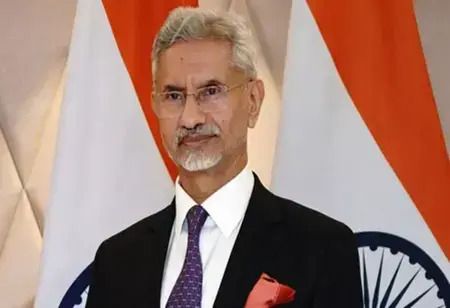
External Affairs Minister S. Jaishankar on Thursday urged for stronger collaboration between India and South Korea, noting that both nations possess complementarities across numerous sectors "from ships to chips" which can enhance a more resilient and cooperative global framework.
During his two-day visit to the Republic of Korea (June 24-25), Jaishankar delivered the keynote speech at the Jeju Forum for Peace and Prosperity 2026, stating that the world needs to adjust to a new reality of fragmentation while exploring new avenues for cooperation.
"This forum addresses a divided world as an issue and reimagining collaboration as a remedy." "I concur with both the evaluation and the remedy," he stated.
He stated, "With that in mind, let's acknowledge two truths: First, that fragmentation is permanent." And secondly, it might not be entirely negative; in certain aspects, it could even be positive. Ultimately, it signifies reduced control, increased freedom, and enhanced democratization.
Jaishankar stated that the current world is characterized by increasing economic integration and interdependence, even amidst geopolitical tensions.
Also Read: India Set to Become Aviation's Most Exciting Global Market
He stated, "What defines our present existence most importantly is the level of economic integration and interdependence." The globe is progressively focused on supply chains, their effectiveness, and their robustness. "This isn't solely concerning products; it also pertains to resources."
Also Read: US Tariffs on India an Economic Boon?
He observed that technology has emerged as a strong unifying force between nations and that artificial intelligence would amplify these trends even more. He stated, "The emergence of AI, artificial intelligence, will merely speed up these trends because the gathering of data and the implementation of models is fundamentally transnational."
Also Read: How US–China Tariffs Are Disrupting Textile Trade
Simultaneously, he emphasized that worldwide issues like pandemics, terrorism, and climate-related disasters necessitate joint efforts. He remarked, "Ironically, the obstacles we face have only bolstered the centripetal aspect, be it pandemics such as COVID-19, acts of terrorism, or the consequences of severe climate events." These cannot be restricted by political boundaries. Consequently, global collaboration is essential.