

IndiGo Eyes Himalayan Routes Amid International Operations Curbs
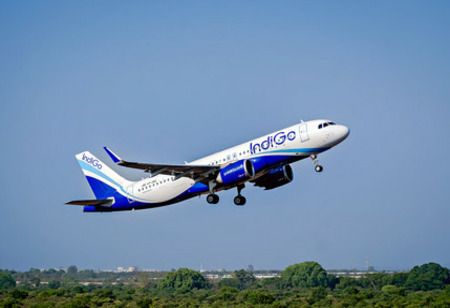
Indian aviation leader IndiGo is considering the option of running flights over the Himalayas as ongoing airspace limitations persist, affecting international travel and extending flight durations on important long-distance routes.
The move follows airspace closures and restrictions caused initially by Operation Sindoor last year and more recently by the geopolitical situation in West Asia, both of which have compelled Indian airlines to reroute and cancel flights heading to Europe, North America, and Canada.
Also Read: Maharashtra Acquires Air India Building in Mumbai
Historically, Indian airlines have refrained from operating flights over the Himalayan area because of operational and safety concerns. The lack of appropriate diversion airports during emergencies and the highly unpredictable mountain weather, capable of creating severe turbulence, have rendered these routes less appealing for commercial operations.
The difficulty increases due to the vastness of the mountain range, which contains some of the tallest peaks on the planet, such as Mount Everest at 29,032 feet, K2 at 28,251 feet, and Kanchenjunga at 28,169 feet. Although commercial planes fly significantly higher than these altitudes, the topography, climatic conditions, and few emergency diversion choices have traditionally prevented frequent overflight activities by Indian airlines.
However, given the current limitations heavily affecting network planning and aircraft usage, IndiGo is currently considering different routing strategies that may aid in recovering some of the efficiency diminished by diversions. Industry specialists indicate that flying over the Himalayas would necessitate a mix of regulatory permissions, crew education, improved navigation protocols, and evaluations of aircraft performance.
Also Read: Center Inks Deal With ISRO, Unveils Water Research Initiatives
Airlines functioning on these routes must ensure adherence to strict safety standards, especially concerning emergency diversion abilities and high-altitude activities.
The initiative signifies the increasing demand on Indian airlines to discover novel approaches to geopolitical challenges that have altered worldwide aviation routes. Numerous airlines globally have had to change their flight routes in recent years because of conflicts and airspace restrictions, leading to extended travel durations, greater fuel usage, and rising operational expenses.
Earlier this month, IndiGo declared it would halt all flight operations to and from Manchester, UK, starting August 31, 2026, due to ongoing international airspace limitations. In early February, the airline halted flights to Copenhagen and decreased the frequency of flights to London due to airspace limitations.
Also Read: India and Canada Launch Trade and Investment Forum
To address increasing demand, IndiGo plans to grow its capacity share of A321XLR and widebodies from 4 percent in FY26 to 10-15 percent by FY30. A321XLR will operate on mid-to-long-haul international routes, while widebody aircraft will serve the long-haul international routes. Indigo aims for 40 percent of its overall capacity to be dedicated to international routes by FY30, including A320/A321 aircraft for short-haul international locations, according to the Motilal Oswal report.
For IndiGo, which is swiftly broadening its global presence and getting ready to utilize long-range planes on additional international routes, discovering effective alternatives has grown progressively vital. The airline is now expected to modify schedules and reduce services on specific western routes due to ongoing airspace restrictions impacting operational economics.