

Manmohan Singh, Visionary Leader and Economist, Passes Away at 92
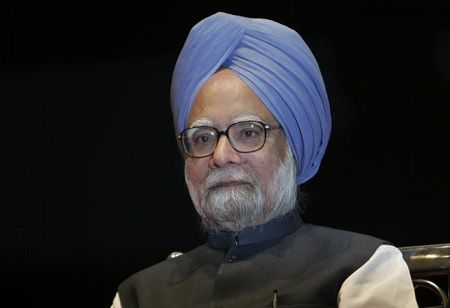 Manmohan Singh, India’s former prime minister and a pivotal figure in the country’s economic liberalization, passed away at the age of 92. Singh, an economist-turned-politician and one of India’s most revered leaders, breathed his last at the All India Institute of Medical Sciences in New Delhi, where he had been admitted due to a sudden loss of consciousness. The hospital confirmed that he was being treated for age-related ailments.
Singh, a mild-mannered technocrat with a reputation for personal integrity, served as India’s prime minister for two consecutive terms from 2004 to 2014. Prior to that, he had established himself as a trailblazing finance minister who introduced reforms that transformed India’s economic landscape. His tenure as prime minister saw significant economic growth, social welfare schemes, and a landmark nuclear deal with the United States.
Born in 1932 in a region of British-ruled India now located in Pakistan, Singh rose from humble beginnings to become a globally respected economist. He studied at Cambridge University and later earned a doctorate from Oxford University, focusing on the role of exports and free trade in India’s economy. Singh began his professional journey as a Central Bank governor and government adviser, playing a crucial role in shaping India’s financial policies. His foray into politics came unexpectedly when he was appointed finance minister in 1991, a time when India was grappling with a severe balance of payments crisis. Singh’s economic reforms during this period, which included deregulation and opening the economy to global trade, marked a turning point in India’s development.
In 2004, Singh became the country’s prime minister under extraordinary circumstances. Sonia Gandhi, the leader of the Indian National Congress party, chose Singh to take the position after the party’s surprising victory. Gandhi, born in Italy, believed her foreign origin could become a point of contention for political opponents, leading her to entrust Singh with the leadership.
During his tenure, Singh spearheaded significant initiatives, including a rural employment guarantee scheme that provided jobs to millions of impoverished citizens. He also oversaw the 2008 India-US nuclear deal, which allowed peaceful nuclear energy trade after a three-decade embargo, bolstering India’s relationship with Washington. Despite these achievements, Singh’s efforts to further liberalize the economy faced resistance from within his own party and coalition partners. In 2012, his government lost its majority when a key ally withdrew support over the entry of foreign supermarkets into the Indian market. By 2014, Singh’s Congress-led coalition was decisively defeated by Narendra Modi’s Bharatiya Janata Party in the general elections.
Following his departure from office, Singh adopted a low profile but remained respected across political divides. Prime Minister Modi, who succeeded him, described Singh as one of India’s most distinguished leaders, praising his wisdom, humility, and contributions to economic policy. Modi also noted Singh’s efforts to improve the lives of ordinary Indians during his time in office.
Reflecting on his legacy, Singh once remarked, “I honestly believe that history will be kinder to me than the contemporary media or, for that matter, the opposition parties in parliament”.
Singh is survived by his wife and three daughters. His death marks the end of an era for India, with tributes pouring in from across the political spectrum for a leader remembered for his intellect, vision, and unwavering commitment to the nation.