

Renowned Ecologist Madhav Gadgil Passes Away at 83
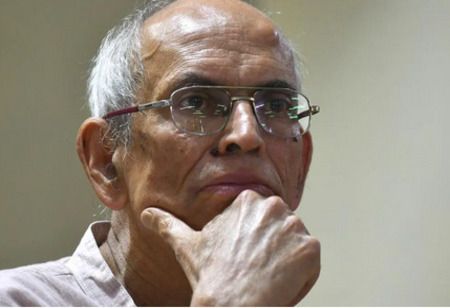
Renowned ecologist Madhav Gadgil, who was celebrated for his efforts in preserving the Western Ghats region, has sadly passed away in Pune following a short period of illness on Thursday at the age of 83. He was instrumental in guiding the development of India's ecological research and conservation policy.
Gadgil established the Centre for Ecological Sciences at the Indian Institute of Science (IISc) in Bengaluru, as well as served as the chairman of the Western Ghats Ecology Expert Panel (WGEEP), commonly referred to as the Gadgil Commission.
Also Read: Granules India Names Vinodkumar Parur as its New CHRO
In 2024, the United Nations awarded Gadgil with the distinguished Champions of the Earth prize, their most prestigious environmental accolade, in recognition of his groundbreaking research on the Western Ghats, an internationally significant biodiversity hotspot.
He was appointed as the chairman of the Western Ghats Ecology Expert Panel established by the government to assess the effects of population growth, climate change, and development projects on the environmentally sensitive region in India.
In 2010, Gadgil was named as the leader of the committee that presented a groundbreaking report suggesting the allocation of a substantial section of the Western Ghats to be classified as ecologically sensitive. Despite sparking considerable controversy, the report is widely recognized as a significant achievement in India's environmental dialogue.
Gadgil was born in Pune on May 24, 1942, into a distinguished family of academics. His father, Dhananjay Ramchandra Gadgil, was a renowned economist and former director of the Gokhale Institute. Madhav Gadgil obtained a degree in biology from Fergusson College in 1963 and later earned a master's degree in zoology from the University of Mumbai in 1965. Subsequently, he pursued a PhD in 1969 at Harvard University, focusing his research on mathematical ecology and animal behavior.
Also Read: Ministry of Agriculture Seeks Feedback on Draft Seeds Bill 2025
In 1971, Gadgil returned to India and subsequently became a member of the Indian Institute of Science in 1973. Throughout his time at IISc, he successfully founded important establishments such as the Centre for Ecological Sciences and the Centre for Theoretical Studies, thereby establishing the groundwork for contemporary ecological research in the nation. In 2004, he concluded his tenure at IISc and subsequently pursued academic endeavors at the Agharkar Research Institute in Pune and the University of Goa.
Gadgil has held positions on various esteemed national and international committees, such as the Scientific Advisory Council to the Prime Minister, the National Advisory Council, and the National Tiger Conservation Authority.
Gadgil, a highly productive researcher and writer, has penned numerous influential books such as "This Fissured Land" and "Ecology and Equity", as well as over 250 scientific papers.
He was a frequent contributor to various publications, sharing his insights on environmental issues through articles written in both English and Marathi languages with the aim of promoting ecological consciousness among the general public.
Also Read: PwC India Ropes in Former Ten Sports CEO Rajesh Sethi
Gadgil has received multiple prestigious accolades both domestically and internationally, such as the Padma Shri in 1981, Padma Bhushan in 2006, the esteemed Shanti Swarup Bhatnagar Prize, Volvo Environment Prize, and the renowned Tyler Prize for Environmental Achievement. His final religious ceremonies will be conducted at a later time in the day.