

Siddaramaiah Announces Karnataka Budget For Record 17th Time
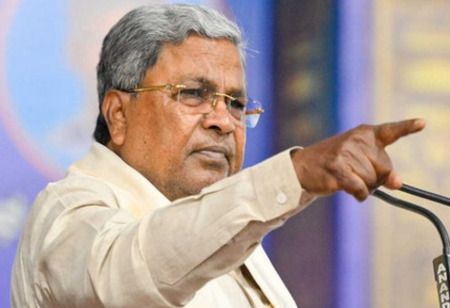
Chief Minister Siddaramaiah introduced his 17th State Budget, detailing a spending proposal of Rs 4.48 lakh crore for the fiscal year 2026-27, amid the state grappling with a revenue shortfall for the third year in a row.
The budget forecasts a total revenue of Rs 3,15,050 crore, consisting of the state's own tax revenue amounting to Rs 2,20,000 crore, non-tax revenue of Rs 16,000 crore, and transfers from the Government of India totaling Rs 79,050 crore.
Also Read: Aditya Birla Fashion and Retail names Pranchal Srivastava as CBO
The projected total receipts for the fiscal year 2026-27 include gross borrowings of Rs 1,32,000 crore and non-debt capital receipts of Rs 190 crore, amounting to a total of Rs 4,47,240 crore.
The total expenditure for the year is estimated at Rs 4,48,004 crore, which includes:
-
Revenue expenditure: Rs 3,38,007 crore.
-
Capital expenditure: Rs 74,682 crore.
-
Loan repayments: Rs 35,316 crore.
The government has forecasted a revenue shortfall of Rs 22,957 crore and a fiscal deficit of Rs 97,449 crore, equating to 2.95 percent of the Gross State Domestic Product (GSDP). At year-end, total liabilities are projected to amount to Rs 8,24,389 crore, representing 24.94 percent of the Gross State Domestic Product (GSDP).
The government has stated that both numbers fall within the parameters established by the Karnataka Fiscal Responsibility Act, demonstrating a continued commitment to fiscal discipline.
A revised version of the Detailed Project Report (DPR) for the Mekedatu Dam Project is on the verge of completion and will be promptly submitted to the Government of India, alongside a proposal seeking forest clearance. The primary objective of the project is to provide a sustainable source of drinking water to the city of Bengaluru, although it has encountered significant resistance from the state of Tamil Nadu in previous instances.
Also Read: PRISM Appoints Former SEBI Chairman Ajay Tyagi as Independent Director
The government has additionally revealed intentions to implement the Rohith Vemula Act to address and prevent instances of discrimination and violence based on caste targeting students attending government, private, and deemed universities within the state.
As part of efforts to improve welfare for tribal communities, the government has planned to build the Sri Maharshi Valmiki Administrative Soudha in Sumanahalli, Bengaluru. This construction project will specifically accommodate offices of the Scheduled Tribes Welfare Department and is estimated to cost Rs 50 crore.
Properties owned by a Waqf that are situated in highly desirable commercial regions will be enhanced through a collaborative approach between the public and private sectors, known as a Public-Private Partnership (PPP), to maximize their economic value. The government has declared an allocation of Rs 1,255 crore for the enhancement of ward-level road and infrastructure in Bengaluru, covering five city corporations.
Also Read: Canva Names Nirmal Govind as its First Chief Algorithms Officer
The state plans to develop 100 Miyawaki urban forests, employing a dense planting of indigenous species to form green areas within urban locales. To enhance investment opportunities and streamline business operations, the state has introduced a consolidated investment platform in collaboration with Microsoft, providing a wide range of services from over 30 departments for potential investors.
The Indian Institute of Science is partnering with the Indian Space Research Organisation and Karnataka State Electronics Development Corporation Limited to establish the Bangalore Robotics and AI Innovation Zone (BRAIN) within the ARTPARK. A dedicated facility for testing and evaluating drones will be established in Chikkaballapur in order to foster the expanding drone industry.