

From Automation to Orchestration: Rethinking Leadership in the AI Age
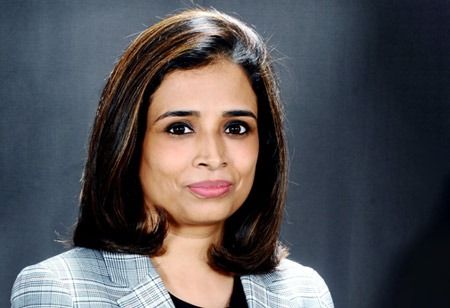
Gayathri Abishek, Senior Director of Technical Support at Dynatrace, is a seasoned IT networking expert with 16 years of experience in Customer Success, Service Sales, Service Delivery, Customer Experience, and Technical Support. In her current role as Senior Director, she oversees global teams across APAC, EMEA, and AMER to enhance customer engagement, retention, and growth. She is dedicated to promoting Women in Tech and consistently champions the creation of inclusive, future-oriented work environments.
The world of technology leadership is undergoing a profound shift. We have moved from an era defined by tools and systems to one defined by intelligence and outcomes. Artificial Intelligence and automation are fundamentally changing how we build, operate, and scale organizations but they’re also changing what it means to lead in technology. For women in technology, this shift is not just transformational it is an opportunity to redefine leadership with greater visibility, influence, and impact.
Today’s leaders must not only understand AI’s potential but must also humanize it. We’re being called to bridge intelligence with empathy to ensure that as machines become smarter, our teams become stronger, more creative, and more adaptable. Empathy, often underestimated in technical leadership, is increasingly proving to be one of the strongest differentiators especially for women leaders navigating complex, high-performance environments.
For me, this begins with a simple question: as a woman leader in a technical field, how do we help people especially more women thrive in intelligent operations? The answer lies in reimagining leadership not as control but as orchestration aligning human potential, data, and insight to drive tangible, sustained business outcomes.
Driving Business Outcomes Through Intelligent Operations
AI and data-driven operations have unlocked a new business imperative: the ability to predict and prevent incidents before they disrupt customer experience. In technical operations, success no longer depends solely on incident response; it’s about anticipation, prevention, and continuous learning.
Every real-time customer interaction is an opportunity to transform data into trust. But beyond operational metrics, the real value lies in how intelligently the system adapts. It also lies in who is empowered to lead these intelligent systems and how inclusive leadership shapes stronger outcomes
I’ve learned that operational excellence doesn’t emerge from just process optimization it comes from intelligent empowerment. When teams understand the why behind every decision and see the impact of their actions, they start behaving like owners, not operators. That’s how intelligence compounds. When women are given equal ownership and visibility, that impact compounds even further.
The most effective leaders in this new environment don’t just build efficient systems they build meaningful connections between those systems and the people who run them. Because technology doesn’t improve performance on its own people do, when they are supported by clarity, confidence, and purpose. For many women in technology, confidence grows when leadership environments actively create space for their voices, ideas, and expertise to be recognized.
Building and Empowering High-Performance Technical Teams
Early in my career, I believed technical excellence was primarily about solving complex problems faster. Over time, I realized it’s about enabling others to do so sustainably. As someone who built her career in a technical domain where women are still underrepresented, I also learned that visibility and advocacy matter as much as capability.
Building high-performance teams is less about hiring the best talent and more about creating conditions where talent can flourish. For me, that means three foundational pillars: clarity, accountability, and trust.
- Clarity ensures everyone understands not just what needs to be done, but why it matters.
- Accountability aligns individual purpose to organizational goals, creating a sense of shared ownership.
- Trust enables experimentation, open feedback, and the courage to challenge the status quo.
A high-performing team doesn’t fear mistakes it learns from them quickly. People don’t grow from perfection; they grow from trust, feedback, and opportunity. My job as a leader is to provide all three consistently. This is particularly important for women professionals who may hesitate to step forward in environments where representation is limited.
When individuals feel psychologically safe to take decisions, they evolve faster. When they see progress celebrated over perfection, innovation naturally follows. My leadership philosophy centers on balancing structure with flexibility, creating frameworks where people can stretch into their potential while staying connected to a larger mission and ensuring that women are not just contributors to innovation but leaders shaping it.
Also Read: 5 Women Entrepreneurs Who Flourished through Their Brands
Leadership Through Inclusion and Diversity
In today’s connected world, diversity is a strategic advantage not an HR metric. The best innovation happens at the intersection of different perspectives. But inclusion doesn’t happen organically; it requires intention, listening, and sustained effort.
I’ve seen first-hand how diverse teams not only solve problems differently but also expand how we define success. Inclusion, to me, is about building cultures where every individual feels visible and valued—where confidence and opportunity are not constrained by hierarchy, background, or geography.
Leading distributed, global teams has reinforced an important truth: communication is culture. When people feel heard, they contribute with authenticity. This creates a ripple effect teams become more collaborative, resilient, and aligned to shared outcomes.
Also Read: Women Leaders Transforming the Financial Sector in India
A truly inclusive environment also fosters mentorship. One of the most rewarding aspects of my role is coaching emerging women leaders helping them build confidence in their voice, master their craft, and seek visibility. Empowerment starts with awareness, but it grows through action when we actively open doors for others and make room for new voices to lead.
Shaping Future-Ready Enterprises with Women in Tech
India’s technology narrative is one of momentum and reinvention. The country’s depth of analytical talent, adaptability, and collaborative culture has made it the backbone of global innovation. As India continues to lead in AI, observability, and automation, the question is no longer whether we can scale but how we can sustain that growth meaningfully.
Women are at the heart of this next wave. The intersection of empathy, logic, and problem-solving makes women uniquely positioned to lead intelligent enterprises. The future of technology will demand leaders who combine data-driven decision-making with an understanding of human context.
However, to accelerate this shift, organizations must go beyond representation. We must build ecosystems where women in tech have mentorship, visibility, and strategic pathways to leadership. From flexible work models to growth-oriented performance systems, future-ready enterprises will be built by those that prioritize inclusion as a driver of innovation. Embedding gender equity into core business strategy will determine how sustainable that innovation truly becomes
For women navigating their early careers, my advice is simple: don’t wait to be completely ready before saying yes to big opportunities. Growth happens not from certainty, but from courage. Say yes, learn fast, and trust that your journey will shape your readiness.
Personally, I’ve embraced a mindset of progress over perfection. Technology evolves too quickly for us to chase flawless outcomes. What matters is momentum moving forward with clarity and resilience, learning continuously, and staying adaptable to change.
Also Read: Transformative Shifts Reshaping Enterprise Defence in India
The Future of Leadership
As I look ahead, I believe the next decade of leadership will be defined by three shifts:
- From leading through answers to leading through questions.
- From managing performance to enabling discovery.
- From scaling systems to scaling trust.
AI will continue to reshape the mechanics of work but leadership will remain a deeply human endeavor. Our role as technology leaders is to make intelligence personal and impact measurable. To connect human curiosity with machine capability, and to cultivate cultures that don’t just adapt to change they anticipate it.
In the end, redefining technology leadership means remembering that while machines may learn patterns, people create progress. The future belongs to leaders who can blend both seamlessly and it must belong equally to the women ready to lead it.