

12 Timeless Gandhi Quotes Every Business Leader Can Learn From
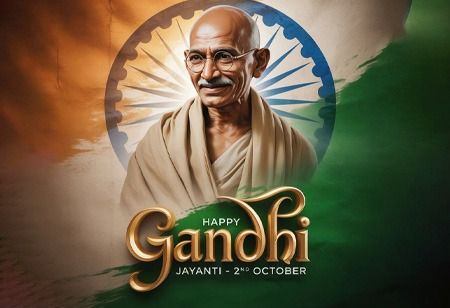 Mahatma Gandhi’s legacy extends far beyond India’s freedom movement. His ideas on truth, self-discipline, service, courage, responsibility, and collective action continue to offer a distinctive perspective on leadership. For business leaders operating in an environment shaped by rapid technological change, intense competition, shifting consumer expectations, and growing demands for responsible business, many of Gandhi’s principles remain remarkably relevant.
Gandhi’s approach to leadership was not built around authority alone. He emphasised personal example, moral courage, disciplined action, and the ability to bring people together around a larger purpose. His understanding of nation-building also went beyond political freedom. It involved empowering ordinary people, encouraging self-reliance, creating livelihoods and placing human dignity at the centre of progress.
On Gandhi Jayanti, celebrated every year on October 2, his words can therefore be read not only as historical reflections but also as prompts for modern business leaders. From building organisations around values to making decisions that consider their wider social impact, these lessons can be applied to boardrooms, startups, workplaces and entrepreneurial journeys.
Here are 12 Gandhi quotes that offer meaningful lessons for CEOs, founders and business leaders.
Also Read: 9 Indian CEOs With Surprising Career Origins: Unconventional Success Stories
1. “Strength does not come from physical capacity. It comes from an indomitable will.”
Gandhi wrote this in the context of India’s struggle against British rule, arguing that real strength was not determined by physical power but by an unwavering will. The quotation appears in Young India dated August 11, 1920, and is preserved in Gandhi-focused source collections.
What does it mean for leaders?
Leadership strength is often mistaken for authority, resources, or positional power. Gandhi’s idea presents strength differently: as the ability to remain committed to a purpose despite uncertainty, resistance, and setbacks.
For a CEO or founder, this can mean continuing to pursue a long-term vision when immediate results are disappointing. Businesses inevitably encounter failed launches, difficult markets, employee challenges, and financial pressures. A leader’s response to those moments often reveals more than their response during periods of growth.
Learning for Business Leaders
Build organisational resilience through conviction, not merely authority. A strong leader does not need to dominate every conversation. They need the clarity and determination to keep the organisation moving towards a defined purpose.
2. “Satisfaction lies in the effort, not in the attainment. Full effort is full victory.”
Gandhi expressed this thought in Young India on March 9, 1922. The quotation appears in collections of his writings as: “Satisfaction lies in the effort, not in the attainment. Full effort is full victory.”
What does it mean for leaders?
Business culture can become heavily focused on outcomes: revenue, valuation, market share, profits, funding rounds, and rankings. While these measures matter, Gandhi’s observation encourages leaders to examine the quality of the effort behind those outcomes.
A company may not achieve every target it sets. Yet disciplined preparation, ethical execution, continuous learning, and perseverance can still create long-term organisational strength.
Learning for Business Leaders
Measure the quality of the process as well as the result. Leaders can encourage teams to learn from unsuccessful initiatives instead of treating every missed target as a failure. The objective should be ambitious performance supported by disciplined execution.
3. “The common people are a devoted worker's real bank, and this bank never fails.”
 Gandhi made this observation in January 1946, highlighting the importance of public trust and the relationship between committed workers and ordinary people. The quotation is recorded by the Gandhi Heritage Portal among his documented thoughts.
What does it mean for leaders?
For modern businesses, the “common people” can be understood through several stakeholder groups: customers, employees, communities, suppliers, and other people who interact with an organisation.
A company may possess capital, technology and sophisticated infrastructure, but its long-term strength also depends on trust. Customers must trust a brand. Employees must trust leadership. Partners must trust commitments.
Learning for Business Leaders
Treat trust as an organisational asset. It cannot be created through advertising alone. It is accumulated through consistent behaviour, transparent communication, and keeping promises.
4. “A nation's culture resides in the hearts and in the soul of its people.”
Gandhi used these words while discussing culture and civilisation, arguing that culture could not simply be reduced to physical structures or written texts. The quotation is recorded in Gandhi’s works and in Mani Bhavan, which cites the relevant volume.
Also Read: BRICS Summit 2026: 15 Key Takeaways You Need to Know
What does it mean for leaders?
The same principle can be applied to organisational culture. A company’s culture does not exist simply because its website describes a list of values.
Culture lives in how managers treat employees, how teams respond to mistakes, how customers are handled, and what behaviour gets rewarded. A company can publish “integrity” among its core values, but employees understand culture through everyday decisions.
Learning for Business Leaders
Culture is demonstrated, not declared. CEOs and founders shape organisational culture through their own conduct and through the behaviours they reward, tolerate, or challenge.
5. “We shall cease to think only of ourselves when we think of others.”
 This thought appears in Gandhi’s documented writings from August 1946 and reflects his broader emphasis on service, responsibility and the interconnectedness of individuals and society.
What does it mean for leaders?
A business exists within an ecosystem. Its decisions affect employees, customers, suppliers, communities and the environment around it.
This does not mean that businesses must ignore profitability. Rather, it encourages leaders to consider whether growth is creating sustainable value for the wider ecosystem on which the organisation depends.
For example, a company that invests in employee development may strengthen retention. A business that treats suppliers fairly may build more reliable relationships. A company that listens carefully to customers can improve its products.
Learning for Business Leaders
Look beyond the immediate transaction. Sustainable leadership considers how decisions affect the people and systems that make long-term business growth possible.
6. “Power is of two kinds. One is obtained by the fear of punishment and the other by acts of love. Power based on love is a thousand times more effective and permanent than the one derived from fear of punishment.”
This quotation, attributed to Gandhi, is reproduced by the Embassy of India in Bucharest among its collection of Gandhi’s words.
What does it mean for leaders?
Organisations can technically be managed through authority. Employees may follow instructions because of hierarchy, performance pressure, or fear of consequences. But compliance and commitment are not the same thing.
A workplace in which employees respect their leaders and believe in the organisation’s purpose can encourage a different kind of engagement. Such leadership does not eliminate accountability. Instead, it combines accountability with trust, respect and empathy.
Learning for Business Leaders
Influence is stronger when people choose to follow rather than merely have to follow. Leaders can build this form of influence by communicating openly, recognising contributions and treating employees with dignity.
7. “Non-violence is not a weapon of the weak. It is a weapon of the strongest and the bravest.”
Gandhi repeatedly rejected the idea that non-violence represented passivity or weakness. Gandhi Heritage and Mani Bhavan preserve his formulation that non-violence was associated with strength and courage.
What does it mean for leaders?
In business, the broader lesson can be applied to conflict management. Leadership does not require aggression to demonstrate authority.
A CEO may have to handle disagreements between executives, negotiate with competitors, respond to criticism, or make unpopular decisions. Strength can be expressed through calmness, patience, and the ability to disagree without undermining people.
Learning for Business Leaders
Constructive leadership is not the absence of firmness. A leader can be decisive while remaining respectful. The ability to manage conflict without creating unnecessary hostility can strengthen an organisation.
8. “I will give you a talisman. Whenever you are in doubt, or when the self becomes too much with you, try the following expedient: Recall the face of the poorest and the most helpless man whom you may have seen and ask yourself, if the step you contemplate is going to be of any use to him.”
 Gandhi offered this “talisman” as a test for decisions, asking whether a contemplated action would help the poorest and most vulnerable people regain control over their lives and destiny. The passage is documented in Gandhi’s writings.
What does it mean for leaders?
This is perhaps one of Gandhi’s most useful ideas for modern decision-making.
Business decisions can become highly quantitative. Leaders consider revenue projections, costs, market size, margins, and shareholder returns. Gandhi’s talisman introduces another question: Who benefits from this decision, and who might be left behind?
The principle is particularly relevant to businesses working in financial inclusion, healthcare, education, technology, employment, sustainability, and consumer services.
Learning for Business Leaders
Put human impact alongside financial metrics. Before taking a major decision, leaders can ask how it affects the most vulnerable stakeholders and whether it creates meaningful, sustainable value.
9. “Action expresses priorities.”
This concise principle is widely associated with Gandhi and captures an important distinction between what leaders say they value and what their organisations actually prioritise. Gandhi-focused collections include the quotation among his thoughts.
What does it mean for leaders?
A CEO can speak about innovation while allocating almost no resources to experimentation. A company can claim that employees are its greatest asset while neglecting development and wellbeing. A brand can describe sustainability as a priority while making decisions that consistently place short-term gains above environmental considerations.
The gap between stated values and actual decisions is visible to employees and customers.
Learning for Business Leaders
Your calendar, budget, and decisions reveal your real priorities. Leaders should periodically examine whether their actions match the values they communicate.
10. “An ounce of practice is worth more than tons of preaching.”
The statement reflects Gandhi’s emphasis on putting principles into practice rather than merely discussing them. It is included in collections of his thoughts and quotations.
What does it mean for leaders?
Leadership communication has become easier in the digital age. CEOs regularly communicate through town halls, social media, interviews, and corporate announcements. But communication cannot substitute for execution.
If leaders want accountability, they must demonstrate accountability. If they want innovation, they must create space for experimentation. If they want ethical conduct, they must show that ethical considerations matter when difficult commercial choices arise.
Learning for Business Leaders
Lead through visible behaviour. Employees learn what an organisation truly values by watching senior leaders act, particularly when principles come into conflict with convenience or short-term gains.
11. “The goal ever recedes from us. The greater the progress, the greater the recognition of our unworthiness.”
 This statement appears alongside Gandhi’s observation that satisfaction lies in effort and that full effort constitutes full victory.
What does it mean for leaders?
Growth can create a paradox. The more successful an organisation becomes, the more opportunities it discovers to improve.
For business leaders, this can translate into intellectual humility. A company that reaches a new market, develops a successful product, or achieves strong financial performance should not assume that its existing model will remain sufficient indefinitely.
Markets evolve. Customers change. Technology disrupts established models.
Learning for Business Leaders
Success should create curiosity, not complacency. Leaders should encourage teams to question existing assumptions and remain open to better ways of working.
12. “My life is my message.”
Gandhi’s famous expression summarises the connection between personal conduct and public leadership. The Press Information Bureau has used the phrase in discussing Gandhi’s philosophy, describing it as his way of summing up his approach to life.
There is some quotation-history debate surrounding the precise origin and documentation of the phrase, so it is better understood as a concise expression associated with Gandhi rather than treated as an extensively documented standalone speech quotation.
What does it mean for leaders?
For CEOs, the idea is particularly powerful. A leader’s reputation is not created only through interviews, speeches, or company announcements. It is built through repeated decisions.
How does the CEO behave when the company misses a target? How are employees treated during difficult periods? Does leadership accept responsibility when something goes wrong? Are promises to customers honoured?
These everyday actions become the organisation’s leadership message.
Learning for Business Leaders
Personal example is one of the strongest forms of leadership communication. The behaviour of senior leaders can influence organisational norms more powerfully than a values statement on a corporate website.
From Gandhi’s Philosophy to Modern Leadership
Gandhi’s ideas emerged in a very different historical and economic context, and they should not be treated as ready-made management formulas. Yet several principles running through his writings have a clear relevance to contemporary leadership.
The first is purpose. Gandhi’s approach to nation-building was connected to a larger objective rather than personal advancement alone. For modern businesses, this raises an important question: beyond generating revenue, what meaningful problem does an organisation exist to solve?
The second is trust. Gandhi’s emphasis on ordinary people, service and collective participation demonstrates the importance of relationships in achieving large-scale change. Businesses similarly depend on networks of employees, customers, investors, suppliers and communities.
The third is personal accountability. Gandhi repeatedly connected ideas with conduct. For a CEO, this means recognising that leadership behaviour sets expectations across an organisation.
The fourth is resilience. Gandhi’s emphasis on indomitable will and sustained effort speaks to the reality of entrepreneurship, where setbacks are unavoidable and long-term outcomes are rarely guaranteed.
Finally, there is responsible decision-making. Gandhi’s talisman asking whether a decision benefits the poorest and most vulnerable offers a useful framework for leaders who increasingly have to consider not only what a business can do, but also what its actions mean for society.
For entrepreneurs and CEOs, leadership ultimately extends beyond managing balance sheets, products, and teams. It involves deciding what kind of organisation they want to build and what kind of impact that organisation should have.
Gandhi’s legacy offers a reminder that strength can coexist with humility, ambition with responsibility, and leadership with service. His philosophy of action, discipline, and purpose can therefore continue to provoke meaningful reflection in the modern boardroom.
As businesses become increasingly influential participants in society, perhaps one of the most enduring leadership lessons from Gandhi is that the measure of an organisation cannot be separated from the values that shape its actions.
On Gandhi Jayanti, that is a lesson worth taking from history into the future.