

AI Appreciation Day 2026: Executive Insights on Innovation & Trust

As artificial intelligence becomes the driving force behind digital transformation, organizations are embracing AI to enhance productivity, strengthen security, streamline operations, and accelerate innovation. This article explores how industry leaders across software, fintech, cybersecurity, and IT services are leveraging AI to build intelligent, trustworthy, and responsible systems, while emphasizing the importance of governance, transparency, ethical adoption, and human oversight in shaping the future of enterprise AI.
Artificial intelligence (AI) has rapidly evolved from an emerging technology into the backbone of the global digital economy. Today, AI is transforming industries ranging from healthcare and finance to manufacturing, education, retail, and public services. Organizations are increasingly integrating AI into their core business strategies to improve efficiency, automate complex workflows, strengthen decision-making, and deliver personalized customer experiences.
Reflecting this shift, global technology giants such as Meta, Google, and Microsoft are expected to invest nearly $665 billion in AI data centres and infrastructure, while AI adoption among the global working-age population has reached approximately 17.8 percent. Reports suggests that AI could contribute over $15 trillion to the global economy by 2030, making it one of the most transformative technologies of this decade. In India, initiatives such as the India AI Mission and investments in multilingual AI models are accelerating AI adoption across enterprises, startups, and public services.
Against this backdrop, AI Appreciation Day, observed annually on July 16, celebrates AI's transformative potential while encouraging discussions around innovation, ethics, transparency, and responsible adoption.
History and Significance of AI Appreciation Day
AI Appreciation Day was established in 2020 by authors and AI educators Tom Taulli and Pete Mack to encourage public conversations around artificial intelligence and its growing influence on society. The date was selected to coincide with the annual wave of technology conferences and innovation events in the United States.
What began as a niche initiative has grown into a global observance, bringing together businesses, universities, governments, and research institutions through webinars, workshops, conferences, and awareness campaigns. As AI increasingly shapes healthcare diagnostics, financial services, policymaking, education, scientific research, and enterprise operations, the day serves as an important reminder that technological progress must be accompanied by ethical development, regulatory frameworks, digital literacy, and responsible governance.
On the occasion of AI Appreciation Day 2026, industry leaders from software development, fintech, cybersecurity, and enterprise technology share their perspectives on how AI is transforming businesses while highlighting the importance of responsible innovation.
Also Read: AI, Traceability, and the Future of Food Supply Chains
Building Trust in Enterprise AI
As AI becomes increasingly embedded in enterprise operations, trust has emerged as the foundation for successful adoption. Organizations are prioritizing transparency, governance, explainability, and human oversight to ensure AI delivers reliable, secure, and accountable outcomes at scale.
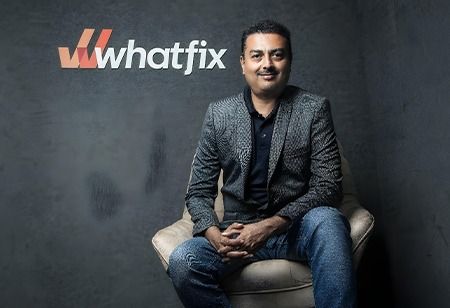 Khadim Batti, CEO and Co-Founder, Whatfix says, “AI Appreciation Day is a reminder that the biggest gains are still ahead, particularly for the organizations willing to build the trust to get there. We've seen this pattern before. Every major technology wave, from the internet to the cloud, has unfolded in several acts: infrastructure first, platforms second, and enterprise transformation last. This happens because business-critical workflows demand a level of reliability that takes time to earn.”
“Building that trust starts with how we deploy AI. Too often, AI fatigue gets blamed on the tools themselves, when it's really an implementation failure. Employees are left to guess at boundaries, prompt their way through ambiguity, and absorb friction that good design should have removed. The organizations that will lead when AI reaches its next inflection point will be the ones that treat AI as an operating model transformation, rethinking how work gets structured so AI can execute autonomously within clear guardrails, while employees focus their energy on judgment, strategy, and creativity.”
“That's the vision behind Whatfix AI. Powered by ScreenSense, our AI engine that understands context and intent, Whatfix AI embeds agentic intelligence directly into enterprise workflows. Rather than expecting employees to navigate an ever-growing collection of AI tools, AI agents operate within enterprise guardrails to deliver contextual guidance, accelerate execution, surface adoption friction, and continuously optimize how work gets done. The real promise of AI is that intelligence becomes an invisible part of the operating model, empowering people with the right support, at the right moment, while organizations retain the governance and control needed to scale AI with confidence.”
“When organizations get this right, AI starts to feel less like another application employees have to learn and more like a trusted collaborator woven into every workflow. It stops competing for people's attention and starts compounding their impact, giving them back time to focus on the work that requires unique human judgment, creativity, and strategic thinking.”
 Nikhil Parambath, Regional Vice President Asia, BlackLine says, “CFOs today don’t need more AI hype; they need AI they can trust. In India, the conversation is moving from AI adoption to AI accountability, with finance leaders expected to show that automation can deliver speed and efficiency without compromising control, governance or auditability.”
"On the occasion of AI Appreciation Day, it’s worth recognising that the next phase of finance transformation will belong to organisations that can make AI transparent, explainable and auditable. As finance teams in India manage increasingly complex operations across Global Capability Centres (GCCs), multiple entities and high transaction volumes, trust in AI will matter just as much as its intelligence.”
"This is where Agentic Financial Operations - AI that operates within governed financial workflows and human oversight - and a glass box approach, where every AI-driven recommendation is visible, traceable and accountable, can help finance leaders scale with confidence while preserving the integrity that modern finance demands.”
AI Strengthening Financial Security
With financial ecosystems becoming more complex and digitally driven, AI is redefining how organizations safeguard transactions and manage risk. By enabling real-time fraud detection, intelligent risk assessment, stronger compliance, and robust data protection, AI is helping financial institutions build greater trust, resilience, and security across digital financial services.
 Hariharashudhan V K, Chief Operating Officer, Neokred Technologies says, "AI Appreciation Day must prompt Indian fintech to reckon with digital financial fraud. This alone has cost Indian consumers and institutions roughly ₹1.25 lakh crore over the past three years. Fraud moves at machine speed now and only AI matches that speed on defense. That reality must shape how the industry talks about AI.”
“AI can certainly write great marketing copy but fintech businesses need AI that reads a transaction in milliseconds and decides whether it’s real. Identity verification, KYC onboarding, and fraud monitoring depend on models that process signals like fingerprints, behavioural patterns, transaction velocity and network anomalies because a human analyst would take longer to catch these inconsistencies. When these systems work, they stop fraud before it settles.”
“It’s important to celebrate AI that prevents fraud and protects privacy. Consent management, data minimization and audit trails matter just as much as businesses are bound by the DPDP Act and other data protection frameworks. AI that respects a user’s consent choices while still delivering real-time risk decisions represents the harder engineering problem and it deserves more attention.”
“This AI Appreciation Day, the fintech industry should the teams building infrastructure that regulators trust, banks rely on, and users never notice because it simply works. That invisibility is the real achievement because it is fast, private and built for the moment it matters."
Also Read: National Technology Day: Tech Leaders on AI, Connectivity & More
Cybersecurity in the Age of Agentic AI
As AI systems become more autonomous, cybersecurity is entering a new era where both threats and defenses operate at machine speed. Organizations are adopting AI-driven security frameworks, continuous threat monitoring, and robust governance to safeguard critical infrastructure while ensuring resilience against increasingly sophisticated cyberattacks.
 Sharda Tickoo, Country Manager for India and SAARC, TrendAI says, “AI has become the frontline of enterprise defence, reading through logs at a scale no human team could match. However, the uncomfortable truth is that the same intelligence defending our systems is being weaponized against them and readiness is still lagging.”
“We celebrate AI's speed while ignoring the velocity at which threats are evolving. As we move from AI to agentic systems, the attack surface does not just expand but becomes dynamic and increasingly difficult to govern. Complexity compounds risk exponentially. A single compromised agent can orchestrate attacks across your entire infrastructure at machine speed, while defenders still operate in human time.”
“This is where the conversation shifts from resilience to anti-fragility, which means building systems that learn, adapt, and grow stronger through continuous threat detection and management. It demands governance frameworks embedded from the start, not bolted on afterward. It requires guardrails that constrain agent behaviour at runtime, continuous monitoring of autonomous systems, and critically, human oversight, accountability, and traceability woven through every layer.”
“The enterprises that will lead the next era are those prepared for this reality. They are building AI-native security architecture, implementing continuous threat exposure management, and treating human judgment as a foundational control. That is the inflection point we must reach, where speed and safeguard move in tandem, where governance enables innovation rather than constrains it.”
Also Read: Microsoft AI CEO is 'Building AI Companions for India'
AI Driving Secure Digital Payments
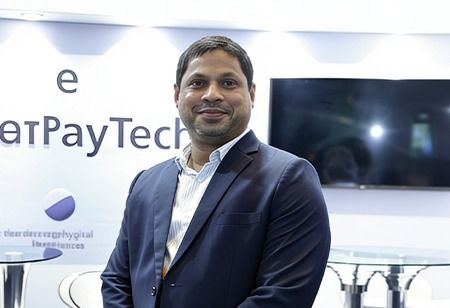 With digital payments becoming increasingly mainstream, AI is playing a crucial role in making transactions faster, smarter, and more secure. By enabling intelligent fraud detection, advanced authentication, and proactive risk management, AI is helping build greater trust in the digital payments ecosystem.
Naresh Rao, VP & Sales Head, Issuance Products, Giesecke+Devrient India says, "AI is becoming the intelligence behind the next generation of secure card payments. From predictive risk scoring to biometric authentication, tokenization and secure digital card issuance, AI is helping banks detect threats earlier, strengthen trust and deliver seamless payment experiences. As digital payments continue to evolve, AI will be central to making security more proactive, adaptive and resilient."
Responsible AI Governance
As AI capabilities continue to evolve, responsible governance has become essential to ensuring its safe, ethical, and transparent adoption. Organizations are increasingly embedding accountability, human oversight, and continuous monitoring into AI systems to balance innovation with trust and long-term business resilience.
Kumar Vikas, Executive Vice President, Data & AI, Bounteous says, “AI Appreciation Day is an opportunity to recognize how rapidly AI is advancing, and to reflect on whether organizations are evolving their responsibilities just as quickly. As AI systems become more capable and autonomous, ensuring they remain safe, transparent, and accountable is one of the defining challenges of our time.”
 “Large language models and agentic AI are increasingly becoming part of the decisions, workflows, and interactions that shape how organizations operate and how people experience technology. This means governance cannot be treated as a one-time exercise completed before deployment. It must evolve continuously alongside technology, adapting to new capabilities, changing business contexts, levels of autonomy, and emerging risks. The objective is to create an environment where people can use AI with confidence without compromising privacy, security, fairness, or accountability.”
“Achieving this requires a shared operating model across business, technology, data, risk, security, and workforce teams. Together, these functions must define what AI systems are permitted to do, what information they can access, where human judgment remains essential, how outcomes are monitored, and how unintended consequences are identified and addressed quickly.”
“Ultimately, success in the AI era will be measured not simply by how quickly organizations adopt AI, but by how effectively they balance innovation with trust. The organizations that lead will be those that continue advancing AI capabilities while ensuring the safeguards around them remain equally adaptive, resilient, and centered on the people these systems are designed to serve.”
AI is no longer simply a productivity tool—it has become a strategic capability that is reshaping how organizations innovate, compete, and create value. The perspectives shared by industry leaders reveal a common vision: the future of AI will not be defined solely by increasingly powerful algorithms but by the trust organizations build around them.
As AI Appreciation Day 2026 reminds us, the next chapter of artificial intelligence will belong to organizations that successfully balance technological advancement with ethical responsibility. Those that build AI systems capable of earning the confidence of employees, customers, regulators, and society will be best positioned to lead the intelligent enterprises of tomorrow.