

Muhurat Trading Opens an Auspicious Hour for the Indian Stock Market
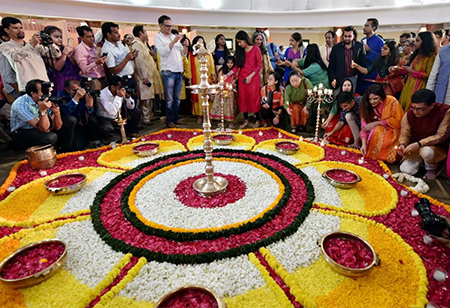
The Indian Stock Markets—the Bombay Stock Exchange (BSE) and the National Stock Exchange (NSE) hold ‘Muhurat Trading’ on the day of Diwali every year, as it is considered one of the luckiest times for stock market investment. While the stock Stock Market trading hours are closed during the whole day on Diwali, the special one-hour window, ‘Muhurat Trading,’ allows traders to make stock market investments. After an hour of trading, the markets close until the next session. The timing of this stock market trading is decided based on planetary positions. The tradition of ‘Muhurat Trading’ holds significance since the Hindu community believes that Diwali is an auspicious occasion to make investments and start new ventures.
While the market is closed on the day of Diwali, both the BSE and the NSE will conduct the Muhurat trading session between 6:00 p.m. and 7:15 p.m. on Sunday, November 12. The indicators have generally performed serviceably on this occasion, though the trading volumes are sufficiently low. In the last 15 times since 2008, 12 of the 15 Muhurat trading sessions ended in the green.
Muhurat Trading
Muhurat trading has been going on for more than six decades. The tradition of Muhurat trading first started at the Bombay Stock Exchange (BSE) in 1957 and was subsequently also embraced by the NSE. During those times when online trading wasn’t a thing, dealers used to gather at the stock exchange during the hour of Muhurat trading and make their trades. Muhurat trading is a symbolic tradition that dealers and investors use to signify new onsets and to get the blessings of Goddess Laxmi in their investment gambles. Laxmi Puja is held at BSE before the time of Muhurat trading. However, it's also important to not take any impulsive opinions during Muhurat trading if you're planning on investing. Only buy into stocks with solid funds.
The auspicious period, which begins with the first day of Navratri and ends with Muhurat trading day on Diwali, has historically left Dalal Street investors richer, with Sensex delivering positive returns in nine out of the last 10 times and an average gain of two percent. Still, Sensex may surprise in the coming many days as the indicator is down two percent since the first day of Navratri if the seasonality trend is to be considered. Among all major sectoral indicators, BSE IT is the only one to have given a negative average return in the last 10 times. BSE Bankex has been the top killer, with the average gain going beyond five percent.
Between Navratri and Diwali, bank stocks have given positive returns 7 out of 10 times, auto 8 out of 10 times, and consumer durables 9 out of 10 times. Regarding stock-specific performance, three counters- TVS Motors, personality diligence, and Petronet LNG- have a track record of giving positive returns in each of the last 10 times from Navratri to Diwali. In the previous 10 times, the average return given by TVS Motors during the blithesome season is 14 percent; for personality diligence, it's 8.6 percent and 6.6 percent for Petronet LNG.
What Should Investors Do?
During the Muhurat trading session, usually, the trading volumes are high. Although there will be exceptions, ultimate stocks experience rises in stock prices. High liquidity and rising prices might make Muhurat trading an occasion to make easy plutocrats. Nevertheless, in the stock market, there are no guaranteed returns. Those who are planning on engaging in intraday trading would need to strategize well in advance as the window is majorly shorter during Muhurat trading.
Maintain a Long-Term Perspective
Although the Muhurat trading session lasts just an hour, you would be holding a stock for a time or perhaps more as an investor. As such, before investing in a certain company during the Muhurat trading session, you must understand how it may fare in the months and times ahead. Besides, since prices tend to rise during the Muhurat trading session, investors should try to make sure they're buying at a reasonable price.
Atul Parakh, CEO of Bigul, says, “Indian markets will be under the grip of extreme volatility amid global demand weakness, rising affectation pressures, and the decaying rupee, but the overall sentiments on the road are anticipated to be auspicious in the near term period. Short-term dealers may keep their being positions hedged to save themselves from global volatility.”
During Diwali, a lot of us get infected with the delighted spirit. Numerous of us might begin our investing trip during the Muhurat trading session. But, there can always be fraudsters wanting to cash in on their pump-and-leave schemes by spreading tips and stock recommendations. Investors must be cautious of this and invest only after thorough exploration.
Similarly, any trading strategy has to be executed with or without variations in a veritably short time frame. Seasoned dealers might be used to this, but it might be inviting for beginners to the practice. Hence, unless you're a seasoned dealer and have a strategy in place, it would be stylish to avoid or limit trading during the Muhurat trading session.
As there remain four trading days of the week before Sunday’s Diwali Muhurat trading session, investors have taken a bullish approach given how Wall Street is awaiting that interest rates are nearing the peak. On the domestic front, the September quarter earnings season turned out to be astronomically in sync with prospects. Fitch’s caregiving of India's Mid-term GDP growth vaticinations to 6.2 has only candied the deal for bulls.
Prashanth Tapse of Mehta Equities says, “While specialized analysis paints a favorable picture, the primary challenge remains the breach of the 19,707 resistance position, gentled by robust support at 19,225. The 200-day moving average at 18,650 remains a solid foundation for the long-term perspective, cementing Nifty's current bullish trajectory.”