

The NVIDIA Growth Story: From Graphics Chips to AI Dominance
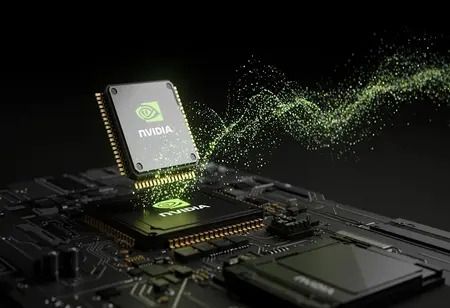
As artificial intelligence (AI), advanced computing and semiconductor innovation reshape the global technology landscape, NVIDIA has emerged as a key force driving the next generation of digital transformation. The article highlights NVIDIA's remarkable growth from a graphics chip manufacturer to a global AI powerhouse, highlighting its financial success, latest technological developments, next-generation GPU platforms, expanding industry partnerships and growing influence across data centers, robotics and autonomous vehicles. It also highlights CEO Jensen Huang's leadership and vision, the company's competitive position and the opportunities and challenges shaping the future of AI and the global semiconductor industry.
NVIDIA has emerged as one of the most influential technology companies in the world, transforming itself from a relatively small graphics processing unit (GPU) manufacturer into a global leader in artificial intelligence (AI), accelerated computing and data center infrastructure. Founded in 1993, the company initially focused on developing graphics chips for personal computers and gaming applications. More than three decades later, its technology is powering some of the world's most advanced AI systems, cloud computing platforms, autonomous vehicles and scientific research projects.
The company's extraordinary rise has coincided with the rapid expansion of artificial intelligence. As businesses, governments and technology companies increasingly invest in AI infrastructure, demand for NVIDIA's specialized processors has grown dramatically. Its GPUs have become essential components in training large language models, developing generative AI applications and operating increasingly sophisticated AI systems.
NVIDIA's success is also closely associated with its founder and long-time chief executive, Jensen Huang, whose leadership and long-term vision helped the company anticipate major technological shifts. From recognizing the importance of parallel computing to investing in software ecosystems and AI infrastructure, Huang played a central role in positioning NVIDIA at the heart of the modern technology revolution.
However, the company's journey has not been without challenges. Competition, international trade restrictions, semiconductor supply-chain constraints, questions about the sustainability of AI spending and recent leadership developments have created new uncertainties. Nevertheless, NVIDIA's financial performance and technological investments demonstrate the enormous scale of its ambitions.
From a Gaming Graphics Company to a Global Technology Giant
NVIDIA was established in April 1993 by Jensen Huang, Chris Malachowsky and Curtis Priem. The founders recognized that specialized computing architectures could dramatically improve the performance of graphics-intensive applications. At the time, computer graphics were becoming increasingly important, particularly in video games, multimedia applications and professional visualization.
The company initially concentrated on developing graphics processing technologies that could deliver more realistic images and smoother gaming experiences. Its major breakthrough came in 1999 with the introduction of the GeForce 256, which NVIDIA described as the world's first GPU. This development helped establish the modern GPU market and strengthened the company's position in the gaming industry.
For many years, NVIDIA was primarily recognized as a supplier of graphics cards for gaming computers. Its GeForce product family became popular among gamers, computer enthusiasts and professionals working with graphics-intensive applications. The company also developed Quadro products for professional visualization and Tesla products for high-performance computing.
However, NVIDIA's ambitions extended beyond gaming. The company recognized that GPUs could perform thousands of mathematical calculations simultaneously, making them suitable for applications involving large datasets and complex computational workloads.
This understanding led to the development of CUDA, introduced in 2006. CUDA allowed developers to use NVIDIA GPUs for general-purpose computing rather than restricting them to graphics processing. It represented a significant strategic investment because it encouraged researchers, software developers and businesses to build applications specifically designed for NVIDIA hardware.
The CUDA ecosystem eventually became one of NVIDIA's strongest competitive advantages. While competitors could develop processors with comparable specifications, reproducing NVIDIA's extensive software libraries, developer relationships and established infrastructure proved considerably more difficult.
The company's early investments in parallel computing became particularly valuable when artificial intelligence research began accelerating. Machine learning models require enormous computational resources, and GPUs proved highly effective at processing the mathematical operations involved in training these systems.
The breakthrough moment arrived during the 2010s as deep learning gained popularity. NVIDIA GPUs became increasingly important in academic research, image recognition, natural language processing and autonomous driving.
The launch of ChatGPT in 2022 further accelerated demand for AI computing infrastructure. Technology companies began investing billions of dollars in data centers equipped with specialized processors to train and operate generative AI models.
Also Read: Meet 10 Indian Chemical Industry Pioneers Driving Innovation & Growth
Explosive Financial Growth and NVIDIA's Dominance in the AI Market
NVIDIA's financial performance illustrates the scale of the transformation taking place within the global semiconductor industry. The company's revenue growth has accelerated dramatically as AI infrastructure spending has increased.
For fiscal 2026, NVIDIA reported record annual revenue of approximately $215.9 billion, representing a 65% increase compared with the previous financial year. Its annual net income reached approximately $120.1 billion, while diluted earnings per share increased to $4.90.
The data center business was the primary growth engine. Full-year data center revenue reached approximately $193.7 billion, increasing 68% year over year. This business includes GPUs, networking products and complete computing systems used by cloud providers, technology companies, research institutions and enterprises.
The company's latest results demonstrate that the momentum has continued into fiscal 2027.
For the third quarter of fiscal 2027, which ended on October 25, 2026, NVIDIA reported revenue of $115.8 billion, an increase of 103% compared with the same quarter a year earlier. Revenue also increased 20% compared with the preceding quarter.
Data center revenue reached $107.6 billion, growing 110% year over year. Net income stood at approximately $65.3 billion, while diluted earnings per share reached $2.70. The company's gross margin was 74.8%.
These figures demonstrate that NVIDIA has become much more than a conventional semiconductor manufacturer. Its products are now essential infrastructure for companies seeking to develop and deploy artificial intelligence at scale.
NVIDIA's business model also extends beyond selling individual graphics processors. It supplies complete computing platforms that combine GPUs, CPUs, networking equipment, software and integrated systems. This approach allows customers to purchase interconnected infrastructure designed to support demanding AI workloads.
Its major customers include cloud computing providers and technology companies that are investing heavily in AI infrastructure. Amazon Web Services, Microsoft Azure, Google Cloud and Oracle are among the important participants in NVIDIA's computing ecosystem.
The company also benefits from a strong software ecosystem. CUDA, AI libraries, development frameworks and specialized computing tools make it easier for developers to build applications using NVIDIA hardware.
Gaming remains an important part of its business, although data centers now generate the overwhelming majority of revenue. NVIDIA's GeForce graphics cards continue to serve the gaming market, while its RTX technology supports real-time ray tracing and AI-assisted graphics rendering.
Other opportunities include professional visualization, robotics, automotive technology and scientific computing.
Blackwell, Vera Rubin and the Next Phase of AI Computing
NVIDIA's latest developments demonstrate that the company is preparing for an AI market that could become significantly larger and more complex over the coming years.
One of its most important technological developments has been the expansion of its Blackwell GPU architecture. Designed specifically for demanding AI workloads, Blackwell offers improvements in computing performance, memory capabilities and energy efficiency. It is particularly important for training and operating increasingly sophisticated AI models.
The Blackwell platform has become a major contributor to NVIDIA's data center growth. Large cloud providers and AI companies are investing in systems based on this architecture to support generative AI, large language models and enterprise applications.
In November 2026, the company reported that its Vera Rubin NVL72 platform had begun shipping. The platform combines advanced GPUs, custom CPUs and high-speed networking technologies to support the next generation of AI infrastructure.
Vera Rubin is designed to improve the efficiency of AI training and inference, the processes through which AI models learn and generate responses. The platform is expected to help companies manage increasingly complex workloads while improving computing performance.
NVIDIA has also been expanding its partnerships with cloud providers and AI developers. Its collaborations with companies such as Microsoft, Google, Oracle, Meta and CoreWeave reflect the growing importance of specialized computing infrastructure.
Another significant development is the expansion of AI agents. Unlike traditional chatbots that primarily respond to user instructions, AI agents are designed to perform multi-step tasks, interact with software systems and complete more complex activities with varying degrees of independence.
NVIDIA believes this market could generate substantial demand for computing infrastructure because AI agents require continuous processing, memory and data access.
The company is also expanding into physical AI, robotics and autonomous vehicles. Its DRIVE platform provides computing and software technologies for automotive applications, while its Isaac platform supports robotics development.
In scientific research, NVIDIA is investing in technologies that can accelerate drug discovery, engineering simulations, weather forecasting and other computationally intensive activities.
The financial results released on November 17, 2026, provide a useful indication of the scale of its ambitions. NVIDIA reported third-quarter fiscal 2027 revenue of $115.8 billion and provided guidance of approximately $130 billion in revenue for the following quarter, plus or minus 3%.
The company also announced that it had returned $28.1 billion to shareholders through dividends and share repurchases during the third quarter.
Its international expansion is another important development. NVIDIA is working with technology companies and enterprise partners in India, Europe and other emerging markets to expand AI infrastructure and developer ecosystems.
Nevertheless, international expansion comes with challenges. US export controls affecting advanced semiconductor sales to China remain an important issue. In its latest quarterly outlook, NVIDIA indicated that it was not assuming any data center compute revenue from China.
Overall, the company's latest developments indicate a shift from selling powerful processors towards providing complete infrastructure for an AI-driven economy.
Also Read: Beyond Automation: How India is Building its AI Future
Jensen Huang: The Visionary Leader Behind NVIDIA's Transformation
Jensen Huang is one of the most recognizable figures in the global technology industry. Born in Taiwan in 1963, he moved to the United States during his childhood. His educational background and early professional experiences helped shape his interest in computer engineering and semiconductor technology.
Huang studied electrical engineering at Oregon State University, where he received his bachelor's degree. He later completed a master's degree in electrical engineering at Stanford University.
Before establishing NVIDIA, Huang worked at LSI Logic and Advanced Micro Devices (AMD). These experiences provided him with valuable knowledge of semiconductor manufacturing, computer architecture and the technology industry's commercial environment.
In 1993, Huang co-founded NVIDIA alongside Chris Malachowsky and Curtis Priem. He has been central to the company's strategic direction since its establishment.
One of his most important decisions was to recognize that GPUs could eventually become much more than graphics processors. While gaming remained NVIDIA's primary market during its early years, Huang supported investments in general-purpose GPU computing, scientific research and artificial intelligence long before these areas became major commercial opportunities.
His decision to develop CUDA was particularly important. It created a software platform that encouraged developers to build applications around NVIDIA's hardware, helping establish a long-term competitive advantage.
Huang is also known for his distinctive leadership style. He is closely involved in product development, strategic planning and the company's technological roadmap. His public appearances, particularly at NVIDIA's GTC conferences, have become important events for the technology industry.
His trademark black leather jacket has become closely associated with the NVIDIA brand. More importantly, his presentations frequently communicate a broader vision of how accelerated computing and artificial intelligence could reshape industries.
Under Huang's leadership, NVIDIA moved from being a gaming-focused chipmaker to a company operating across several major technology markets.
His achievements have received international recognition. He has been associated with honours including the Robert N. Noyce Award and IEEE Founder’s Medal. He has also been elected to the US National Academy of Engineering.
November 2026 marked an unusual chapter in NVIDIA's leadership history. Jensen Huang resigned as president and CEO on November 12, 2026, with CFO Colette Kress taking over as interim CEO. However, following further discussions, NVIDIA's board reinstated Huang as president and CEO on November 23. The developments brought renewed attention to corporate governance, leadership succession and the importance of executive accountability at one of the world's most influential technology companies.
Regardless of these developments, Huang's contribution to NVIDIA's growth remains substantial. His ability to identify technological opportunities and commit resources to long-term innovation has helped turn the company into a defining business of the artificial intelligence era.
Also Read: AI Advantage: Transforming Aerospace, Defence and Space
NVIDIA's Position in the Global Technology Industry
NVIDIA's future growth prospects are closely connected to the expansion of artificial intelligence. As businesses increasingly adopt AI-powered systems, demand for specialized computing infrastructure is likely to remain an important industry driver.
One major opportunity is enterprise AI. Organizations across banking, healthcare, manufacturing, retail and telecommunications are exploring how generative AI and AI agents can improve productivity, automate repetitive tasks and support decision-making.
These applications require powerful computing systems, creating opportunities for NVIDIA's data center products and software platforms.
Another major opportunity is robotics and autonomous technology. AI-powered machines could transform manufacturing, logistics, agriculture and transportation. NVIDIA's investments in robotics simulation, autonomous driving and physical AI position it to participate in these emerging markets.
Scientific computing is another promising area. Researchers are increasingly using accelerated computing to model complex biological processes, simulate climate patterns and develop new materials. These applications could expand demand for NVIDIA's specialized processors beyond conventional technology companies.
Despite challenges, NVIDIA occupies a distinctive position in the global technology industry. Its combination of GPU architecture, networking technology, software platforms and developer relationships creates an integrated ecosystem that competitors will find difficult to replicate quickly.
The company's growth story is therefore about more than selling semiconductor chips. It reflects the transformation of computing itself, from traditional CPU-based systems towards accelerated infrastructure capable of supporting artificial intelligence on an unprecedented scale.