

10 Indian Semiconductor Leaders Driving India’s Chip Revolution
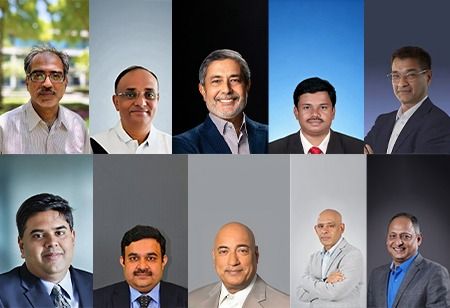
As India accelerates its semiconductor ambitions, the focus is increasingly shifting beyond manufacturing capacity towards indigenous chip design, advanced packaging, technological innovation, supply-chain resilience, and global competitiveness. The article highlights how ten Indian semiconductor leaders are strengthening domestic capabilities, advancing next-generation technologies, and shaping India's growing role in the global semiconductor industry.
With India’s semiconductor market projected to reach nearly $64 billion in 2026, according to the EY–IESA Report, the country is positioning itself for a larger role in the global chip industry. From powering artificial intelligence (AI) and data centers to enabling electric mobility, telecommunications, industrial automation, and national security, semiconductors are becoming the backbone of the modern economy.
For India, the opportunity extends beyond meeting domestic demand. It lies in building a globally competitive ecosystem spanning chip design, fabrication, assembly, testing, and advanced electronics manufacturing. Achieving this ambition requires substantial investment, technical expertise, skilled talent, and leaders capable of translating innovation into commercially viable products.
Across the industry, executives and entrepreneurs are pursuing different strategies to strengthen India's semiconductor capabilities. Some are developing manufacturing infrastructure, while others are building indigenous processor architectures, secure communication chips, and AI-enabled design solutions. Together, their efforts reflect a broader shift towards technological self-reliance and greater participation in the global semiconductor value chain.
Here are ten leaders whose work illustrates the opportunities and challenges shaping India's semiconductor revolution.
1. Dr. Randhir Thakur, CEO and Managing Director, Tata Electronics
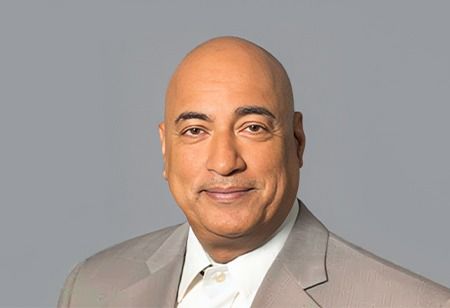 Building semiconductor manufacturing capabilities requires more than infrastructure. It demands operational excellence, global supply-chain expertise, and the ability to coordinate complex technology ecosystems. Dr. Randhir Thakur brings this experience to Tata Electronics, where manufacturing scale and technological capability are central to India's semiconductor ambitions.
With approximately four decades of experience in manufacturing, research and development, and business leadership,Dr. Randhir has held senior positions across the global semiconductor industry. He joined Intel in 2017, initially leading global supply management, before becoming chief supply chain officer in 2020. He subsequently served as president of Intel Foundry Services, overseeing the development of its foundry business under the company's IDM 2.0 strategy.
His earlier leadership experience at Applied Materials, where he headed the Silicon Systems Group, strengthened his understanding of semiconductor equipment, process technology, and industrial execution.
At Tata Electronics, these capabilities are relevant to the company's expansion across electronics manufacturing services, semiconductor assembly and testing, foundry operations, and design services. Established in 2020 as a greenfield venture of the Tata Group, the company aims to serve global customers through an integrated electronics and semiconductor ecosystem.
2. Sanjay Mehrotra, Chairman and CEO, Micron Technology
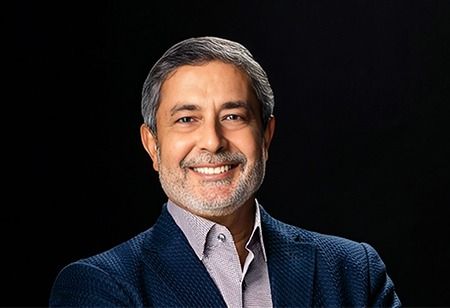 As AI and data-intensive computing expand, memory and storage technologies are becoming increasingly important to global semiconductor development.
Sanjay Mehrotra, chairman and CEO of Micron Technology, leads a company whose products support computing infrastructure, mobile devices, data centres, and intelligent systems.
A semiconductor design engineer by training, Sanjay co-founded SanDisk and served as its CEO before taking the helm at Micron. His career demonstrates how technical innovation can evolve into global business leadership.
His management philosophy emphasises attention to detail, ambitious objectives, accountability, and teamwork.
These principles are particularly relevant in semiconductor manufacturing, where product reliability, technology development, and operational efficiency must remain closely aligned.
For India, Micron's manufacturing-related investments offer opportunities to strengthen domestic capabilities in the semiconductor value chain, expand supplier participation, and develop specialised technical talent.
3. Raghu Panicker, CEO, Kaynes SemiCon
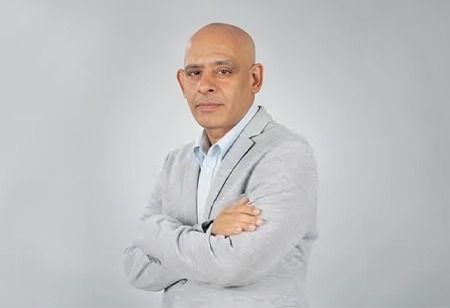 India's semiconductor ambitions depend on developing capabilities across the entire chip production process. Raghu Panicker is contributing to this effort through Kaynes SemiCon, a subsidiary of Kaynes Technology India Limited, where he has been leading the establishment and operations of its outsourced semiconductor assembly and test and ATMP facility since October 2023.
With more than 33 years of experience across industries and cultures, Raghu brings expertise in business management, strategic planning, customer engagement, and growth transformation.
Assembly and testing are critical stages in semiconductor production. Chips must undergo packaging and rigorous testing before they can be integrated into electronic products. Developing these capabilities domestically can expand India's role in the semiconductor value chain and create opportunities for electronics manufacturers.
Raghu 's responsibilities involve establishing operational processes, building customer relationships, and developing a business capable of meeting demanding industry requirements. Semiconductor operations require sustained investment, stringent quality standards, and dependable execution, making commercial discipline essential alongside technical expertise.
His entrepreneurial experience also extends beyond the corporate sector. He co-founded NazarAndaaz Ventures, a social enterprise focused on empowering transgender individuals through employment opportunities and transformational platforms.
4. Himamshu Khasnis, Founder and CEO, Signalchip Innovations
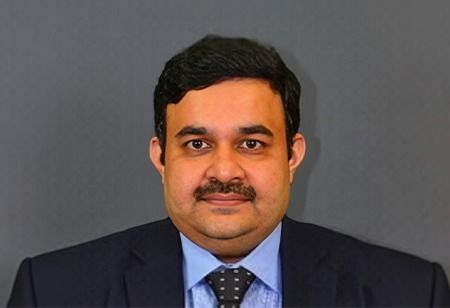 Indigenous semiconductor design is essential to India's ambition of developing technology products for domestic and international markets. Himamshu Khasnis has spent more than 28 years in the semiconductor industry, working across communication technologies, signal processing, and radio-frequency architectures.
His experience spans chipsets for 3G, 4G, 5G, emerging 6G applications, wireless networking, satellite navigation, and advanced optical communications. After working at Texas Instruments and Ittiam, he founded Signalchip Innovations in 2010.
Signalchip operates on a fabless model, developing semiconductor designs while relying on external manufacturing facilities. This approach allows companies to concentrate on intellectual property, engineering, and product development without owning fabrication plants.
Under Himamshu's leadership, Signalchip developed Agumbe, a chipset designed for complex wireless networking standards, followed by Jeet, a satellite-navigation receiver chip supporting India's NavIC system.
These developments demonstrate how specialised engineering teams can address communication requirements through indigenous chip design.
Himamshu also established Signaltron in 2019 to develop end-to-end communication systems, including 4G and 5G base stations, software-defined radios, autonomous drones, and optical networking equipment. Connecting chip development with complete communication systems creates opportunities to demonstrate the practical value of Indian-designed semiconductors.
As a founding member of the governing council of the Bharat 6G Alliance, he is also involved in the broader development of next-generation connectivity capabilities.
5. Prabhu Bhairi, Founder and CEO, Elinnos Systems
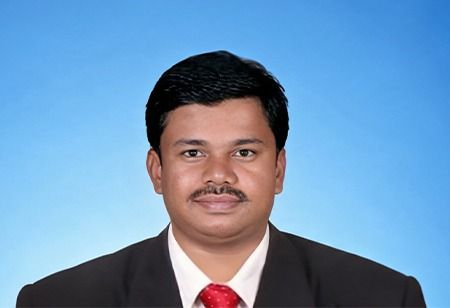 As semiconductor architectures become more sophisticated, designing and verifying chips efficiently is emerging as a competitive advantage. Prabhu Bhairi is addressing this challenge through Elinnos Systems, an AI-driven semiconductor design company focused on intelligent automation and future-ready silicon solutions.
With more than 25 years of experience in semiconductor design and technology entrepreneurship, Prabhu began his career at Texas Instruments, gaining expertise in advanced chip development, system-on-chip architecture, intellectual property, and system-level design.
At Elinnos, Prabhu is focused on applying AI and intelligent automation to semiconductor design workflows. As chips integrate more functionality, engineering teams face increasing demands in verification, design optimization, and development timelines.
AI-enabled tools offer opportunities to improve productivity and manage complexity, provided they are integrated into engineering processes without compromising the precision required for semiconductor development.
Prabhu's leadership represents the convergence of semiconductor expertise and emerging automation technologies. His work highlights how innovation in the design process can complement advances in chip architecture, helping engineering businesses develop solutions more efficiently.
6. Sandeep Kumar, CEO, L&T Semiconductor Technologies
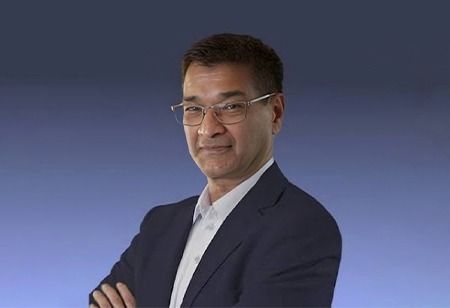 The transition towards electrification, intelligent infrastructure, and AI-intensive computing is creating demand for semiconductors that combine high performance with energy efficiency. Sandeep Kumar is leading L&T Semiconductor Technologies (LTSCT) with a focus on developing products for these evolving markets.
A technology executive with more than 35 years of experience,Sandeep has worked across semiconductor engineering, business development, finance, mergers and acquisitions, and global partnerships. His earlier leadership roles at Texas Instruments included heading its broadband business and global microcontroller research and development division.
He has also co-founded technology ventures and supported businesses through investment and advisory roles, bringing a combination of technical knowledge and commercial experience to semiconductor leadership.
As a wholly owned subsidiary of Larsen & Toubro, LTSCT develops semiconductor technologies spanning high-power products, power discretes, communications and radio frequency, analogue and mixed-signal systems, computing, and data centre solutions.
These technologies serve applications across energy infrastructure, industrial automation, communications networks, and AI data centres. Each market requires products that address specific demands involving reliability, power consumption, performance, and scalability.
His leadership underscores the importance of developing a product-focused semiconductor industry in India. Beyond manufacturing chips, the country needs companies capable of creating differentiated technologies for industrial and digital applications worldwide.
Also Read: Manufacturing: The Engine Driving India’s Industrial Leadership
7. Sridharan Mani, Founder and CEO, Aheesa Digital Innovations
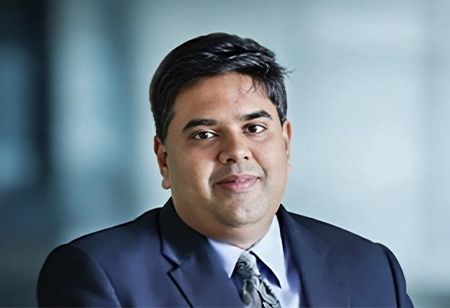 Secure communication infrastructure is becoming increasingly important as businesses and governments depend on connected systems. Sridharan Mani is pursuing this opportunity through Aheesa Digital Innovations, which focuses on semiconductor design, broadband networking, cybersecurity, and integrated technology platforms.
Sridharan Mani brings more than three decades of experience across telecommunications, broadband networking, embedded systems, and digital infrastructure. Before founding Aheesa, he served as director and CEO of American Megatrends India for more than a decade and subsequently contributed to innovation initiatives at Amazon.
Aheesa's capabilities span fabless application-specific integrated circuit design, broadband networking systems-on-chip, computing, storage, and secure edge platforms. Its target sectors include telecommunications, defence, healthcare, government, and manufacturing.
For Sridharan , semiconductor leadership extends beyond developing a chip. Commercial success also depends on system integration, validation, customer adoption, and the ability to support deployment at scale.
Through its silicon-to-system approach, Aheesa seeks to connect indigenous semiconductor design with complete technology platforms. Its work illustrates how homegrown intellectual property can contribute to India's ambitions in secure digital infrastructure and deep-tech innovation.
8. Sunil Kumar, Co-founder and CEO, BigEndian Semiconductors
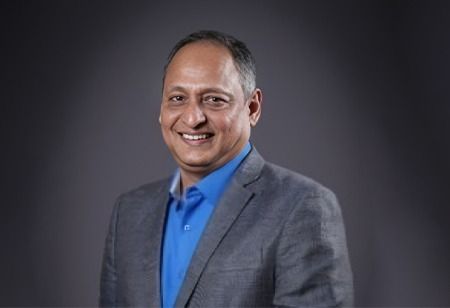 As connected devices and communication networks become more pervasive, semiconductor security is emerging as a strategic priority.
Sunil Kumar is addressing this requirement through BigEndian Semiconductors, which aims to develop secure, high-performance chips designed in India for global markets.
Sunil brings more than two decades of experience across semiconductors, embedded systems, and software. His previous roles at Intel, ARM, and Broadcom provided exposure to the global semiconductor industry, while his experience as a co-founder of Zenoti strengthened his understanding of building and scaling technology businesses.
BigEndian is developing systems-on-chip with a security-by-design philosophy. Its focus includes secure boot, chain-of-trust mechanisms, and trusted storage using cryptographic protocols.
These capabilities are intended to improve confidence in hardware used across connected systems and critical infrastructure.
Sunil's leadership combines engineering expertise with commercial execution.
Semiconductor businesses must demonstrate not only technical performance but also reliability, customer relevance, and the ability to scale products for real-world applications.
By integrating silicon and software with security considerations, BigEndian seeks to develop technology platforms for domestic and international markets. Its approach reflects an opportunity for India to build specialised semiconductor products that address growing demand for trusted hardware.
Also Read: The Leadership Traits Manufacturing CEOs Need to Win in Industry 4.0
9. G S Madhusudan, CEO and Co-founder, InCore Semiconductors
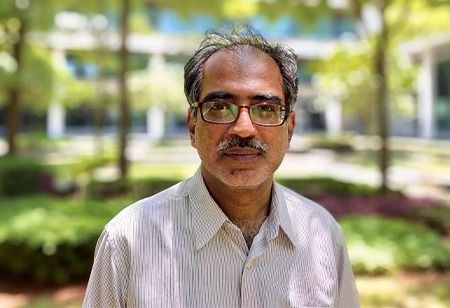 Developing indigenous processor intellectual property is an important step towards building a more self-reliant semiconductor ecosystem. G S Madhusudan is contributing to this effort through InCore Semiconductors, which specialises in silicon-proven RISC-V processor and system-on-chip IP.
With more than 30 years of global experience in technology entrepreneurship, systems architecture, and hardware and software development, Madhusudan brings a systems-level perspective to semiconductor innovation.
InCore develops processor IP and specialized cores for applications involving fault tolerance, cybersecurity, and AI and machine learning. Its focus on RISC-V, an open instruction-set architecture, offers product developers flexibility when designing customised processors.
The company also works with partners to help customers move from initial concepts towards high-volume manufacturing of application-specific integrated circuits and circuit boards. Relationships with semiconductor foundries enable support across multiple process nodes.
Rather than concentrating solely on finished chips, InCore provides technology building blocks that other companies can integrate into their products. This model can support businesses seeking to develop specialised computing solutions without building every processor capability internally.
For Madhusudan, the opportunity lies in making advanced processor design more accessible to Indian product developers while strengthening domestic expertise in semiconductor architecture.
10. Anupam Kumar Sinha, Founding Director and CEO, Yoctozant Technologies
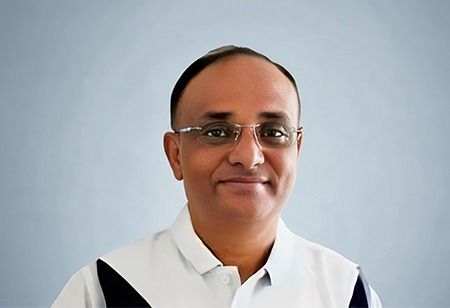 Behind every semiconductor product lies a complex process involving circuit design, verification, physical implementation, and engineering validation. Anupam Kumar Sinha is contributing to this specialised area through Yoctozant Technologies, a design services and consulting company focused on very-large-scale integration (VLSI) and embedded systems.
With more than 25 years of semiconductor product development experience, Anupam previously held engineering and senior design roles at Intersil and Cypress Semiconductor Corporation. He holds an M.Tech in Integrated Electronics and Circuits from the Indian Institute of Technology Delhi, alongside degrees in physics and electronics from Dayalbagh Educational Institute.
At Yoctozant, he leads an integrated circuit design team and focuses on developing semiconductor engineering capabilities.
The company's services include custom IC development, analogue and mixed-signal circuit design, verification and layout, digital verification, and physical design. It also develops foundational IP, including memory compilers, input-output components, and standard cells, with physical design capabilities extending to advanced FinFET process nodes.
These services help convert circuit concepts into designs ready for manufacturing. As semiconductor products become more complex, specialist engineering companies can provide the expertise required to manage development challenges and improve execution.
Anupam's leadership combines technical depth with customer-focused delivery. Maintaining quality, managing project complexity, and aligning engineering work with customer requirements are essential to building long-term business relationships.
Also Read: 10 Indian Solar Manufacturing Leaders Shaping India’s Renewable Energy
Shaping India's Semiconductor Future
India’s semiconductor revolution will depend on more than manufacturing investments or individual technological breakthroughs. It requires a robust ecosystem connecting chip fabrication, assembly and testing, processor IP, product design, secure communications, and advanced engineering services. Equally important are sustained investments in research, skilled talent, infrastructure, and industry partnerships that can translate innovation into commercial success.
Ultimately, India’s progress will be measured by its ability to develop globally competitive products, strengthen domestic supply chains, and establish itself as a trusted semiconductor technology hub.