

What the $60 Billion US-China Tariff Deal Means for Global Trade
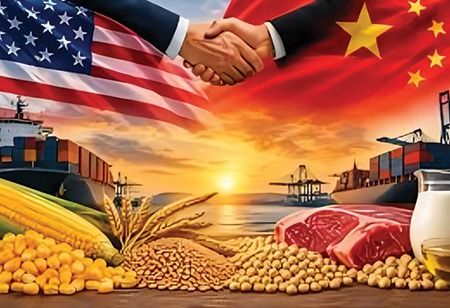
As the US-China trade relationship enters a new phase, the proposed $60 billion tariff framework could ease pressure on businesses, farmers and manufacturers while reshaping market access and global supply chains. The article examines the impact of tariff reductions on US agricultural exports, Chinese consumer goods, trade flows and supply-chain strategies, while exploring how businesses on both sides are navigating changing trade policies, geopolitical tensions and the evolving global trade landscape.
From American corn and wheat to Chinese toys, kitchenware and toasters, everyday products are emerging as unlikely symbols of a potential reset in the world’s most consequential trade relationship. The United States and China have agreed to pursue tariff cuts covering $60 billion worth of goods, marking a fresh effort to ease years of escalating duties, retaliatory measures and economic tensions between the world’s two largest economies.
At the heart of the proposed “30-for-30” framework is a plan for each country to receive more favorable tariff treatment on $30 billion worth of “non-sensitive” goods imported from the other. The proposed coverage stretches across a wide range of products, from US agricultural commodities, meat and seafood to Chinese toys, tableware, kitchen accessories, electric shavers and household appliances.
The framework follows a meeting between US President Donald Trump and Chinese President Xi Jinping in Washington last week, where renewed engagement between the two sides brought trade tensions back into focus. The agreement could mark an important step toward selectively lowering trade barriers and restoring stability to a relationship that has reshaped global supply chains, businesses and consumer markets.
New Tariff Framework
US Trade Representative Jamieson Greer said the framework could improve market access for about 30percent of US exports to China. The arrangement would support agricultural and energy purchases while expanding opportunities for American farmers, manufacturers, businesses and workers.
“The Trump Administration will continue to pursue fair, balanced, and reciprocal trade with China by ensuring compliance with commitments on agricultural and energy purchases, pursuing balanced trade in non-sensitive goods, and securing market access for American farmers, manufacturers, businesses, and workers,” Greer said.
China's Commerce Ministry said the agreement would further stabilize economic and trade relations and create favorable conditions for the export of relevant Chinese products to the US.
But the deal is not a sweeping end to the US-China trade battle. Some of the biggest and most politically sensitive trade flows remain outside the tariff reductions, including US soybeans, liquefied natural gas and oil. That leaves the agreement as a targeted truce in selected goods rather than a full reset of the world's most consequential trading relationship.
Also Read: The Rising Cost of the Canada-US Trade War: Tariffs Reshaping Cross-Border Trade
Tariff Cuts Cover Agriculture and Consumer Goods
The proposed tariff reductions span a wide range of agricultural commodities and consumer products, demonstrating how deeply the US-China trade relationship is connected to everyday commerce.
China's list of US products eligible for lower tariffs contains 1,619 items, according to a list published by the White House. These include corn, wheat, sorghum, frozen meat, seafood, dairy products, vegetable oils and meals. Wood products, cosmetics and medical devices are also included.
The agricultural component is particularly important because China has historically been one of the largest overseas markets for American farmers. Tariffs imposed during the US-China trade conflict disrupted those flows, encouraging Chinese buyers to source commodities from alternative suppliers.
However, one of America's most important agricultural exports to China has been left out. Non-seed soybeans are not included in the tariff reduction list, despite US soybean exports to China reaching $16.2 billion in 2025.
The American Soybean Association expressed disappointment, saying China's existing 10percent retaliatory tariff would continue to restrict opportunities for US soybean producers and private Chinese buyers.
The omission also affected financial markets. Chicago Board of Trade soybean futures fell sharply following the announcement as traders adjusted expectations for stronger US soybean demand from China.
On the other side of the trade relationship, the US has proposed tariff reductions on 77 categories of Chinese imports. These include toys, tableware, kitchen accessories, curtains, electric shavers and inflatable balls.
The list also covers children's car seats, artificial flowers, fireworks and holiday decorations, along with consumer products such as coffee makers and toasters.
The inclusion of these goods is significant because Chinese manufacturers play a major role in supplying the US retail market. Lower tariffs could reduce import costs for companies selling these products, although the final effect on consumer prices will depend on the tariff rates ultimately adopted and wider market conditions.
The proposed framework therefore offers relief across a broad range of goods while leaving the most sensitive areas of bilateral trade for separate negotiations.
Also Read: The Next Phase of U.S. AI Leadership: From Innovation to Responsibility
US Farmers Gain Greater Access to Chinese Markets
For American farmers, the proposed tariff cuts could reopen opportunities in one of the world's most important agricultural markets.
China's inclusion of corn, wheat, sorghum, meat, dairy products, seafood and other agricultural goods suggests that Beijing is prepared to improve access for a broader range of US farm products. The move also aligns with commitments China has made to increase purchases of American agricultural goods.
The White House has said China has a $17 billion commitment to purchase agricultural products. China has also resumed large-scale purchases of US soybeans under an earlier arrangement involving 25 million metric tons annually.
Yet the soybean exclusion illustrates the limitations of the latest agreement. Soybeans are among the most important US agricultural exports to China, and maintaining the 10percent retaliatory tariff could continue to limit the competitiveness of American supplies.
The American Soybean Association has argued that eliminating the tariff would create greater opportunities for private Chinese buyers and improve the position of US producers against competing suppliers.
The two countries are also expected to establish an agriculture working group under a bilateral trade council. Its first meeting is expected before the end of the year, with discussions focusing on market access and regulatory issues.
That mechanism could prove important because tariffs represent only one part of agricultural trade. Regulatory approvals, food safety standards, inspection procedures and import requirements can also influence whether agricultural products reach Chinese consumers.
The agreement also includes a separate commitment involving US coal. China is expected to import 10 million metric tons of US coal annually in 2027 and 2028. The White House said that volume represents approximately 2percent of China's annual coal imports.
China's Commerce Ministry described US coal as a useful supplement to the country's domestic coal market and said the trade would provide economic income and employment for the American coal industry.
However, liquefied natural gas and oil were not included in the tariff-cut lists. The energy component of the agreement is therefore narrower than the agricultural one.
Also Read: How US–China Tariffs Are Disrupting Textile Trade
Chinese Manufacturers Get Relief across Key Product Categories
Chinese manufacturers are positioned to benefit from the agreement, particularly in consumer-oriented industries that have faced higher costs and uncertainty in the US market.
The US list focuses on “non-sensitive” products, allowing Chinese exporters to receive tariff relief in areas that are commercially important but less closely linked to national security.
Toys are among the most significant categories. Chinese manufacturers have long supplied the US toy market, with the broad category, including children's bicycles, accounting for $14.4 billion in US imports in 2024. That figure declined to $9.8 billion in 2025 as higher tariffs affected trade.
Other products on the US list include tableware, kitchen accessories, curtains, blankets, bed linens, electric shavers and small household appliances.
Coffee makers and toasters may appear relatively minor compared with major industrial products, but their inclusion illustrates how the tariff dispute has affected ordinary consumer goods.
For manufacturers and retailers, lower tariffs could make pricing and inventory decisions easier. Companies that have shifted some production to alternative locations may nevertheless continue those strategies, particularly because the broader US-China trade relationship remains unsettled.
The tariff relief may therefore provide immediate assistance without reversing the structural changes that have taken place in global manufacturing.
The agreement also gives US retailers greater clarity when sourcing Chinese consumer products. Whether those savings reach consumers will depend on how importers, distributors and retailers respond to lower costs.
Strategic Sectors Remain Outside the Tariff Agreement
The breadth of the $60 billion agreement should not obscure the fact that some of the most strategically important areas of US-China trade remain outside the tariff framework.
US soybeans, LNG and oil are among the notable exclusions. Advanced technology and other strategically sensitive sectors are also being handled separately from the “non-sensitive” goods covered by the proposed tariff reductions.
This distinction reflects the increasingly complex nature of US-China economic relations. Both countries have strong incentives to preserve commercial trade, but they continue to compete over technology, energy security, industrial capacity and national security.
Artificial intelligence is one example. Washington and Beijing have agreed to establish a communication channel to discuss AI-related incidents and risks. They are also expected to hold a follow-up exchange by November 2026.
The White House said the two countries would use the term “super intelligence” in discussions around the emerging technology and establish a US-China Super Intelligence Dialogue to exchange views on its risks and benefits.
Financial services and aviation are other areas where the two countries are seeking greater cooperation. China has said it will examine and approve foreign financial services institutions, including those with US capital, to conduct business and open branches in China.
The two sides will also continue discussions on increasing direct flights between China and the United States. Expanded air links could support business travel, tourism, education and other commercial exchanges.
At the same time, the two countries have extended their existing trade truce through January 10. The arrangement maintains tariff levels of 30percent on Chinese goods and 10percent on US goods and gives both sides additional time to negotiate outstanding economic and trade issues.
China's Commerce Ministry said the extension would provide a relatively stable and predictable policy environment for businesses while allowing both countries to continue discussions on investment opportunities, market barriers and regulatory transparency.
The continued negotiations show that the tariff agreement is part of a wider effort to manage the relationship rather than a final settlement of US-China economic disputes.
What the Deal Means for Global Supply Chains and Trade
For American farmers, the tariff cuts could improve access to the Chinese market for corn, wheat, meat, seafood and other commodities. For Chinese manufacturers, lower tariffs on toys, household goods, kitchen products and other consumer items could ease some of the pressure created by earlier US trade restrictions.
The agreement also comes as the US trade deficit with China has narrowed significantly. Greer said the goods trade deficit had fallen 40percent since Trump took office and was on track to reach $140 billion this year, compared with approximately $295 billion in 2024, according to US Census Bureau data.
The latest agreement could limit further disruption across some consumer-goods industries, but it is unlikely to diminish companies’ interest in maintaining alternative suppliers and production locations.
The $60 billion framework is therefore better viewed as a selective easing of trade tensions rather than a return to the pre-tariff status quo.
Its success will depend on implementation, particularly whether China follows through on agricultural and energy purchases and whether the US delivers the proposed tariff relief on Chinese consumer goods.
The agreement’s broader significance may ultimately lie in its ability to provide sufficient stability for both sides to continue negotiations on more difficult issues. Agriculture, consumer products and selected services offer areas for cooperation, while technology, energy and other strategic sectors remain more contentious.