

Trump, Xi Seek Stable Ties Amid Rising AI, Trade and Iran Tensions
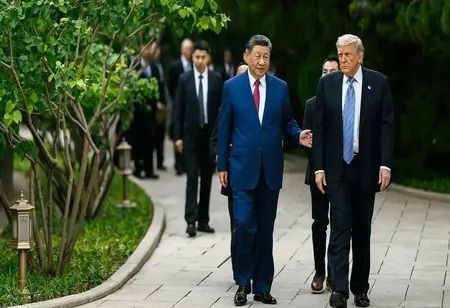
The objectives of President Donald Trump and Chinese leader Xi Jinping to enhance trade stability and achieve economic victories may be complicated by a contentious discussion on artificial intelligence, alongside changing U.S. tariffs and a sanctions initiative tied to the war in Iran.
The two leaders are anticipated to look for methods to reinforce their delicate trade agreement when they convene in Washington for their second in-person summit this year.
Even with signs of goodwill before the summit, both parties persist in exchanging accusations and initiating retaliatory trade measures.
Treasury Secretary Scott Bessent stated in an interview on CNBC's "Squawk Box" on Monday that the "great respect" Trump and Xi hold for one another influences broader U.S.-China negotiations.
He then remarked, "We had certain deliverables that China has not fully met" as part of a trade agreement that Trump and Xi made in Busan, South Korea, almost a year ago.
Certain analysts of China have expressed worries regarding the atypical top-down diplomatic structure between the two economic giants.
Also Read: SoftBank Launches $11 Billion Bond Sale to Fund OpenAI Investment
"Various conflicting perspectives appear to be competing," as Trump directs "the primary strategy" regarding China "while allowing more adverse actions to take place at the edges," stated Claire Reade, a senior associate with the trustee chair in Chinese business and economics at the Center for Strategic and International Studies.
The summit arrives with under six weeks remaining in a U.S. election period that has mainly focused on the cost of living issues facing Americans. Trump, whose approval ratings on that crucial topic have plummeted to record lows, has an even greater motivation to leave the summit with Xi promoting some type of economic agreement.
Also Read: Facebook, Instagram Recover After Brief US Outage
The trade war from last year witnessed the two economic giants raise tariffs on one another's products to astonishing levels: U.S. tariffs on Chinese goods soared to 145% at the height of the conflict, while China's counter tariffs peaked at 125%.
Also Read: Trump Set to Address UN Amid Iran Conflict and Global Economic Turmoil
The tariffs were reduced in May 2025 after trade negotiators in Switzerland reached a provisional agreement, which was prolonged in mid-August. Trump and Xi subsequently reached an agreement in Busan that resulted in both nations reducing their retaliatory trade actions further.