

Wastewater Recycling in India: Business Opportunities, Technologies & Applications
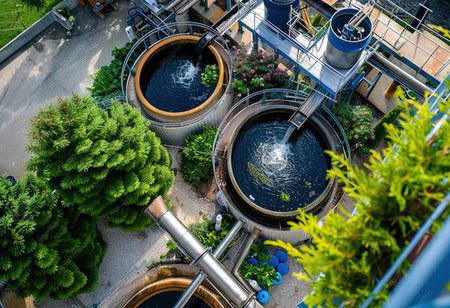 Explore how industrial water recycling and wastewater treatment are transforming India's industrial landscape. Discover the technologies, business opportunities, and practical applications helping industries reduce freshwater consumption, lower operating costs, strengthen regulatory compliance, and build a more sustainable, water-secure future.
In February 2021, the Chandrapur Municipal Corporation in eastern Maharashtra set out to turn wastewater into a reliable source of industrial water. With support from the Atal Mission for Rejuvenation and Urban Transformation (AMRUT), the city planned to upgrade its sewage treatment facilities and supply treated water to the Chandrapur thermal power plant operated by the Maharashtra State Power Generation Company (MAHAGENCO). The initiative reflects a broader shift in how cities and industries view wastewater—not merely as something to dispose of, but as a resource that can support industrial growth.
For years, wastewater was largely viewed as the final stage of the urban and industrial water cycle — something to be treated before it could be discharged. That perception is gradually changing. As freshwater resources come under increasing pressure and industrial demand rises, treated wastewater is emerging as a valuable alternative, offering factories a potential source of water beyond conventional freshwater supplies.
Also Read: WABAG Bags New Orders Totalling Up to Rs.360 Crore
The scale of the opportunity is significant. According to Central Pollution Control Board (CPCB) data, India generates 72,368 million liters per day (MLD) of urban wastewater, of which only 20,235 MLD is treated. This leaves 52,133 MLD untreated, highlighting the gap between wastewater generation and treatment capacity. The CPCB projects that urban sewage generation could reach 120,000 MLD by 2050, further increasing the need for effective treatment and reuse systems.
This challenge presents a dual opportunity for India: expanding wastewater treatment infrastructure while developing systems that can make treated water suitable for industrial use. For businesses, this opens up a growing market for water recycling technologies, treatment services, and reuse infrastructure. Wastewater is no longer just a disposal problem; it is becoming a resource around which an entirely new industrial water economy can be built.
Water Recycling as a Strategic Business Investment
Freshwater is becoming an Expensive Resource
Industrial facilities increasingly depend on water tankers, bore wells, and municipal supplies to meet their operational needs. However, each source comes with its own costs, supply uncertainties, and regulatory challenges. Recycling treated wastewater offers a more sustainable alternative, allowing factories to reuse water for suitable industrial processes while reducing their dependence on external supplies and improving long-term water security.
Rising Regulatory Pressure is Driving Water Recycling
Environmental regulations governing wastewater discharge, including limits on BOD, COD, TSS, pH, oil and grease, and TDS, are becoming increasingly important for industrial facilities. Several states are also encouraging or mandating wastewater reuse in certain sectors. As regulations evolve, treatment plants designed only to meet discharge standards may struggle to accommodate future requirements. Investing in recycling-ready systems can help industries adapt to changing regulations, maintain compliance, and reduce the need for costly infrastructure upgrades.
Cutting Operating Costs through Smarter Water Management
Recycling wastewater can help industries reduce the costs of freshwater procurement, pumping energy, raw water treatment chemicals, and wastewater discharge. When properly integrated into plant operations, these systems improve water efficiency; maintain a more consistent supply for industrial processes, and lower long-term operating costs.
Also Read: Mohit Malani: Leading India's Transition Toward Smarter Water Management
Strengthening ESG Performance through Water Recycling
Investors, customers, and regulators are increasingly paying attention to how industries manage their water resources, including water consumption, recycling rates, wastewater discharge, and environmental risk mitigation. Factories that demonstrate measurable improvements in water reuse can strengthen their environmental performance, improve transparency, and align more closely with growing sustainability expectations.
Where Industrial Water Recycling is Making a Difference
Recycled water can serve a wider range of industrial purposes than many plant managers might expect. Its applications vary by sector, depending on water quality requirements and treatment methods. Here’s how different industries are putting it to use:
Keeping Food Production Water-Efficient
In the food-processing industry, recycled water is typically used for non-product-contact applications, such as equipment washing, pre-rinse cycles during clean-in-place (CIP) operations, and cooling systems. Its use in boiler feed applications may also be possible with appropriate treatment. However, any water used in areas where it could contact food products must meet stringent quality and safety standards to prevent contamination.
Advanced Water Treatment for Chemical Industries
Chemical plants often generate complex wastewater containing solvents, heavy metals, and high levels of total dissolved solids (TDS). Advanced membrane filtration and multi-stage treatment processes can help recover this water for reuse in cooling systems and other suitable plant operations. However, careful selection and management of treatment chemicals are essential to protect membrane performance, prevent damage, and ensure reliable operation.
Water Management in Pharmaceutical Manufacturing
Pharmaceutical plants require high-purity water and must meet stringent wastewater discharge standards, particularly because their effluent may contain trace amounts of active pharmaceutical ingredients (APIs). Recycling systems often combine reverse osmosis (RO) with electrodeionization (EDI) to produce high-purity water for applications that require it. Recovered water can also be used for utilities and cleaning non-product-contact equipment, provided it meets the relevant quality and safety requirements.
Reducing Water Waste in Textile Dyeing
Textile dyeing units consume large volumes of water and generate highly coloured wastewater with elevated total dissolved solids (TDS), making treatment particularly challenging. A single treatment process is rarely sufficient, so facilities often use a multi-stage approach involving coagulation, biological treatment, membrane filtration, and activated carbon polishing. For larger facilities, zero liquid discharge (ZLD) is also gaining importance, particularly in regions where strict regulations and concerns over coloured effluent have increased scrutiny of industrial wastewater disposal.
Recovering Water and Metals in Finishing Processes
Metal finishing processes such as plating, anodizing, and phosphate generate large volumes of rinse water containing heavy metals and chemical residues. Advanced filtration and treatment systems can recover this water for reuse, reducing freshwater consumption. Meanwhile, the concentrated waste stream can be further processed to recover valuable metals or sent for safe disposal, helping industries lower waste management costs and minimize their environmental impact.
Reducing Water Consumption in Power Generation
Power plants treat cooling tower blow down using ultrafiltration (UF) and reverse osmosis (RO), allowing the recovered water to be reused as cooling tower make-up water. This is one of the significant industrial water reuse applications, given the large volumes involved in power generation. Even small improvements in water recovery can save millions of gallons annually, helping plants reduce freshwater consumption and operating costs.
Building Sustainable Industries through Water Reuse
Reducing Freshwater Use and Operating Costs
Industries can significantly reduce freshwater consumption by reusing treated wastewater for applications such as cooling towers, boiler feed, equipment washing, and other processes that do not require potable water. This reduces dependence on municipal supplies and groundwater. For water-intensive sectors such as textiles, food processing, and chemicals, achieving recycling rates of 30–50 percent could deliver substantial cost savings and improve water security, provided the treatment systems meet the quality requirements of each application.
Strengthening Compliance through Water Recycling
Stricter wastewater discharge limits and water-use regulations are pushing industries to reduce effluent generation and freshwater consumption. Water recycling helps businesses meet environmental requirements, simplify compliance audits, and minimize the risk of penalties or operational disruptions. It also provides measurable data on water conservation and reuse, supporting ESG reporting and helping companies track progress against their sustainability targets.
Building a Circular Economy through Water Reuse
A circular water economy prioritizes the recovery and reuse of water rather than treating wastewater as a resource to be discarded. Instead of releasing treated effluent, industries recycle it for suitable operations, creating a closed-loop system that reduces freshwater consumption and wastewater discharge. This approach conserves valuable water resources, minimizes environmental impact, and supports broader sustainability goals.
Improving Operational Efficiency through Water Reuse
Reliable water access is essential for uninterrupted industrial operations. Reusing treated wastewater helps maintain a consistent supply, reduce downtime caused by shortages, and ensure smoother production. It also enables factories to make better use of available water resources while reducing their dependence on external supplies, particularly in regions facing growing water stress.
Reducing Environmental Impact through Water Recycling
Water recycling helps industries reduce their reliance on rivers, lakes, and groundwater while limiting the discharge of wastewater into the environment.
This helps conserve natural water resources, reduce pollution, and protect aquatic ecosystems. By integrating water reuse into their operations, businesses can strengthen their environmental responsibility while supporting long-term industrial sustainability.
However, one critical infrastructure requirement often receives less attention in discussions about semiconductor manufacturing: water management.
Why Water Management Matters for India’s Semiconductor Ambitions
As India advances its semiconductor ambitions, the industry will need a more comprehensive approach to water management. Semiconductor fabrication depends on ultra-pure water and reliable systems for purification, recovery, recycling, and wastewater treatment. This need becomes more pressing as industrial expansion places additional demands on already-stretched water resources.
The challenge extends beyond the factory gates. Semiconductor plants require a consistent water supply, but surrounding communities, agricultural activities, and urban areas depend on the same resources.
Balancing industrial growth with water security is therefore essential. By investing in efficient treatment and recycling systems, semiconductor facilities can reduce freshwater consumption, limit their dependence on external supplies, and make better use of available water resources.
Semiconductor Growth Creates Demand for Smarter Water Solutions
India is Already Seeing a Shift Toward Semiconductor Water Technology
Water scarcity is no longer just a theoretical concern; it is becoming an increasingly important part of industry discussions.
Developments around SEMICON India 2026 have brought attention to technologies designed to improve water recovery and recycling in semiconductor and photovoltaic manufacturing. The emergence of specialized water-treatment partnerships in India further highlights the growing importance of water infrastructure to the semiconductor ecosystem, which extends well beyond fabrication plants to include suppliers and supporting industries.
However, advanced water-treatment solutions are not just a priority for large semiconductor manufacturers. Smaller suppliers and factories also need cost-effective ways to manage wastewater. This creates opportunities for specialized service providers to offer shared treatment facilities and outsourced water-management solutions, making advanced treatment more accessible without requiring every facility to invest in its own infrastructure.
Shared Water Infrastructure Creates New Business Opportunities
Large corporations can invest in and operate their own wastewater treatment plants, but smaller factories often struggle with the high capital costs, maintenance requirements, and technical expertise involved. This creates an opportunity for specialized water-treatment companies to establish shared facilities that serve multiple factories within an industrial cluster. Instead of building individual plants, smaller manufacturers can pay for treatment services, making advanced water management more affordable and accessible.
For service providers, this model offers recurring revenue through monthly contracts or usage-based fees. Additional opportunities include supplying recycled water, maintaining treatment systems, monitoring water quality, and supporting regulatory compliance. By sharing infrastructure costs across multiple customers, these companies can build scalable businesses while helping manufacturers reduce operating expenses, conserve freshwater, and meet environmental standards.
Making Every Drop Count in Industrial Growth
As India’s industrial sector expands, water recycling is set to become an increasingly important part of how businesses manage resources, control costs, and plan for long-term growth. From established industries such as textiles, chemicals, and power generation to the emerging semiconductor ecosystem, the need for reliable and efficient water management is creating opportunities for treatment technologies, recycling infrastructure, and specialized service providers. The next phase of growth will depend not just on treating wastewater, but on recovering it and putting it back to productive use. For businesses willing to invest in this shift, water recycling offers a way to strengthen operational resilience while building new revenue streams. Ultimately, the companies that view water as a resource to be managed rather than a cost to be borne could be better positioned for a more water-secure industrial future.