

A Greener Deepavali: India's Shift Towards Green Crackers

Green crackers are emerging as a relatively less-polluting alternative to conventional firecrackers in India. Developed by CSIR-NEERI, these fireworks aim to reduce harmful emissions while preserving festive traditions. The shift is also transforming Sivakasi's fireworks industry, bringing new opportunities as well as challenges involving certification, manufacturing costs, raw material availability, and regulatory compliance. With stronger enforcement, technological innovation, and greater public awareness, India hopes to make Diwali celebrations cleaner and more responsible.
Every Deepavali, the excitement of bursting crackers comes with a familiar dilemma: how do we enjoy the celebrations without adding to the pollution around us? Watching the night sky light up with colorful fireworks is a cherished part of the festival for many. Yet, this tradition has increasingly become part of a larger conversation about air quality and environmental responsibility. As families look for ways to celebrate more consciously, green crackers are gaining attention as an alternative to conventional fireworks. Designed to reduce harmful emissions, they are also reshaping India's fireworks manufacturing industry.
Against this backdrop, green crackers have emerged as a potential middle ground between preserving festive traditions and addressing growing environmental concerns. Developed to produce fewer pollutants than conventional firecrackers, they offer a relatively less-polluting way to enjoy the festivities. However, 'green' does not mean pollution-free. These crackers still release emissions and are subject to specific certification standards, licensing requirements, and restrictions imposed by authorities.
Also Read: Profit Worthy Businesses for Deepawali
Now, what exactly makes a cracker green? How different is it from a traditional firecracker? Where can consumers buy certified green crackers, and how much do they cost? Here's everything you need to know before lighting up your Deepavali.
What Makes Green Crackers a Cleaner Choice?
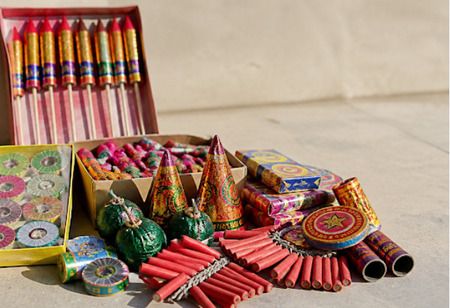 Developed by the Council of Scientific and Industrial Research – National Environmental Engineering Research Institute (CSIR-NEERI), green crackers are designed to produce around 30 percent fewer pollutants than conventional firecrackers. The initiative offers a relatively cleaner way to celebrate festivals while supporting efforts to tackle air pollution and mitigate climate change.
These crackers undergo approval and certification by the Petroleum and Explosives Safety Organization (PESO), which operates under the Department for Promotion of Industry and Internal Trade (DPIIT), Ministry of Commerce and Industry. As the country's central authority for regulating the safety of explosives, petroleum products, and compressed gases, PESO plays an important role in ensuring that these products meet prescribed safety standards. Its headquarters is located in Nagpur, Maharashtra.
What makes green crackers different is their chemical composition. They use alternative raw materials and formulations designed to reduce dust and particulate emissions. Certain variants also incorporate mechanisms that release water vapor or air, helping suppress dust and dilute gaseous emissions. While these innovations make green crackers a comparatively less-polluting option, they do not eliminate emissions altogether.
How Green Crackers Differ from Conventional Fireworks
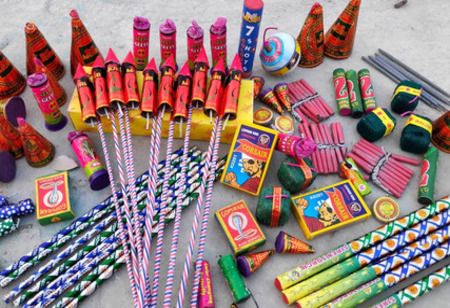 The biggest difference between green crackers and conventional firecrackers lies in their chemical composition and manufacturing process. Traditional firecrackers rely on conventional chemical mixtures that release larger quantities of particulate matter, smoke, and residual pollutants when ignited.
Green crackers, on the other hand, use modified, lower-emission formulations designed to reduce particulate emissions by at least 30 percent, in line with CSIR-NEERI's prescribed standards. Their approved formulations also exclude certain harmful substances, including barium, lead, arsenic, and mercury.
While these changes make green crackers a relatively less-polluting alternative, they are not entirely harmless. They can still release particulate matter and harmful gases, making it important for consumers to follow safety guidelines and local restrictions. Their sale and use are also permitted only through authorized channels and in locations where regulations allow them.
Also Read: Leadership Traits 2025 Case Study: The Middle-Class Man Who Delivered Rs.2000 Crore Dream
What Does the Law Say this Year?
To regulate the sale and circulation of firecrackers ahead of Deepavali, the Supreme Court has directed District Collectors and Commissioners across the National Capital Region (NCR) to work closely with Superintendents of Police to identify designated locations for selling green crackers.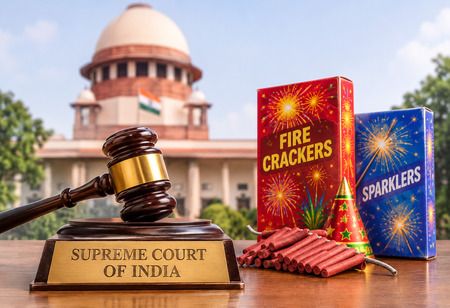
The authorities have also been asked to put up banners at approved sales outlets and designated locations, helping consumers identify genuine green crackers certified by CSIR-NEERI. The aim is to make it easier for buyers to distinguish authorized, lower-emission products from conventional and potentially illegal firecrackers. Stepping up enforcement, the Court has further directed officials to inspect vehicles entering Delhi-NCR to prevent the transportation of banned traditional firecrackers and other unauthorized products.
However, the Court emphasized that controlling sales alone cannot address the region's pollution concerns. It called for a broader shift in public awareness and attitudes towards festive celebrations. Reiterating its earlier appeal, the Court encouraged members of the Bar, celebrities, and sportspersons to voluntarily participate in public-awareness campaigns and promote more responsible celebrations.
How Green Crackers Are Reshaping India's Fireworks Industry
The shift towards eco-friendly fireworks is bringing a significant change to India's firecracker industry, pushing manufacturers to rethink traditional production methods and adapt to evolving environmental regulations.
Sivakasi, Tamil Nadu, the country's largest fireworks manufacturing hub, generates an estimated annual revenue of around Rs.7,000 crore. The industry is highly seasonal, with Deepavali accounting for a substantial share of its yearly sales. However, beyond its economic significance, the sector is now undergoing a gradual transformation as manufacturers explore less-polluting alternatives and adapt to stricter environmental standards.
A major step in this transition came in October 2018, when the Ministry of Science and Technology announced three eco-friendly firecracker formulations developed by the Council of Scientific and Industrial Research (CSIR). These included SWAS (Safe Water Releaser), SAFAL (Safe Minimal Aluminium), and STAR (Safe Thermite Cracker).
Developed with the aim of reducing emissions compared to conventional fireworks, these formulations introduced a new approach to firecracker manufacturing. For instance, SWAS was designed to reduce particulate emissions by approximately 30–35 percent, offering manufacturers a pathway towards producing relatively cleaner fireworks.
Why Do Green Fireworks Matter?
 Across northern India, particulate matter levels have been reported to rise three to five times above normal during the festival. Compounding the problem, the seasonal inversion layer that develops in late October can trap pollutants close to the ground for another two to three days, worsening exposure. The consequences extend beyond the environment, with respiratory health becoming a major concern. Cities such as Delhi-NCR, Lucknow, and Kanpur often witness increased hospital admissions for respiratory conditions, particularly among children and people with existing breathing difficulties, around Diwali.
Green fireworks are not a complete answer to this problem. Even a 30 percent reduction in emissions does not automatically bring pollution levels from severe to safe. However, they offer a practical middle ground between an outright ban and unrestricted firecracker use. While a complete prohibition has proved difficult to enforce and raises cultural concerns, allowing conventional fireworks without adequate restrictions can aggravate an already serious public health challenge.
Certified, lower-emission alternatives give regulators a more manageable framework for enforcement, manufacturers an opportunity to modernize production, and families a way to preserve festive traditions while being more conscious of their environmental impact.
The economic implications are equally important. Sivakasi's firecracker industry supports more than 800,000 people through direct and indirect employment. An outright ban could put a substantial number of these livelihoods at risk. The transition towards green crackers, therefore, offers an opportunity to keep the industry running while gradually steering it towards less-polluting products. This approach reflects a broader regulatory principle also seen in India's environmental policies for sectors such as thermal power and brick kilns: encouraging industries to adopt cleaner production practices rather than relying solely on prohibition.
The Challenges Behind the Green Crackers Transition
Despite the promise of cleaner fireworks, the transition has not been without challenges for manufacturers. Producers now face additional responsibilities involving product testing, certification, and regulatory compliance. According to CSIR-NEERI, green cracker registration is product-specific and is available only to manufacturers holding the requisite explosives manufacturing licence. These requirements add to manufacturers' compliance responsibilities and operating costs.
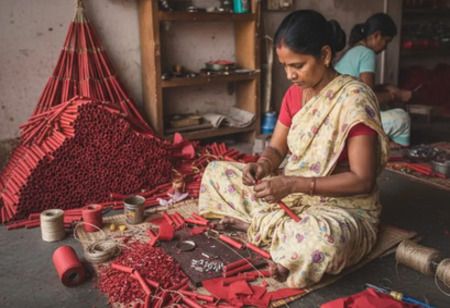 However, publicly available data does not clearly establish the total expenditure involved or the extent to which these additional costs affect profit margins. Beyond certification, manufacturers have also encountered difficulties in accessing approved formulations and procuring designated raw materials. Delays in making the formulations available reportedly left several factories idle in 2019, while the transition has increased production expenses. Product-specific testing and certification requirements have added another layer of complexity for smaller manufacturers.
Consumer confidence presents a separate challenge. Concerns over counterfeit products and the misuse of QR codes can make it difficult for buyers to distinguish genuine, certified green crackers from unauthorized alternatives. Moreover, despite their reduced-emission formulations, green crackers still generate pollution and are not necessarily quieter than conventional fireworks.
The industry also operates under the regulatory oversight of the Petroleum and Explosives Safety Organisation (PESO), which governs the manufacture, storage, and transportation of explosives under the Explosives Rules, 2008.
Also Read: Muhurat Trading Opens an Auspicious Hour for the Indian Stock Market
Adding to these regulatory and operational pressures are weather-related disruptions. According to The New Indian Express, rainfall in October 2026 forced several factories in Sivakasi to suspend production for nearly a week. G. Vinayaga Moorthi, president of the Small Cracker Manufacturers Association, stated that the disruption affected approximately 20 percent of production. Such interruptions highlight the vulnerability of an industry whose manufacturing schedules are closely tied to seasonal demand, particularly the Deepavali sales cycle. Even relatively short production delays can affect manufacturers' ability to meet orders during this crucial period.
Addressing these challenges will require sustained investment in research and development, better access to approved raw materials, streamlined certification processes, and stronger quality-control mechanisms. Over time, technological improvements could make green crackers more efficient and affordable for both manufacturers and consumers. The broader objective is to phase out the production, sale, and distribution of conventional, non-compliant firecrackers while encouraging the adoption of certified green alternatives in accordance with the Supreme Court's directions on their regulated use.
The Road Ahead for India's Green Firecracker Industry
For India's green-firecracker framework to deliver meaningful results, improvements are needed across four key areas.
First, certification and testing facilities need to become more accessible. Accrediting laboratories at the state level could decentralize the testing process, reduce approval delays, and enable manufacturers to get a wider range of products evaluated more efficiently. Second, efforts to prevent counterfeit products need to become more technology-driven. Instead of relying primarily on periodic raids and inspections, authorities could use QR-code scanning data and analytics to identify suspicious batches before they reach retail outlets. This would strengthen product traceability and help consumers distinguish certified crackers from unauthorized alternatives.
Third, public awareness campaigns must communicate the limitations of green crackers more clearly. Consumers need to understand that reduced emissions do not mean zero pollution and that these products should not be treated as entirely safe for the environment or human health. Fourth, firecracker regulations should form part of India's broader air-quality management strategy rather than being treated as a seasonal intervention limited to Deepavali. Coordinating these measures with wider pollution-control efforts could help authorities address multiple sources of emissions throughout the year.
Over the medium term, India could also explore encouraging community-level fireworks displays instead of individual households setting off crackers. Professionally managed public displays have the potential to reduce the number of separate fireworks events and make emission management more coordinated. Some Indian cities have already experimented with organized public celebrations, offering an alternative way to preserve the festive experience while limiting widespread individual use.
Ultimately, green fireworks cannot solve India's air pollution problem on their own. Their effectiveness depends on stronger enforcement, continued investment in cleaner technologies, responsible consumer behavior, and complementary measures addressing other pollution sources, including stubble burning and vehicular emissions. Rather than treating green crackers as a standalone solution, India needs to view them as one component of a much broader transition towards cleaner and more responsible celebrations.