

How Private Companies Are Changing the Global Space Industry

Private companies are reshaping the global space industry, taking exploration beyond government-led missions. From commercial rocket launches and satellite services to space tourism and lunar exploration, discover how businesses are creating new opportunities while navigating technological, regulatory, and environmental challenges.
More than 50 years after the last human walked on the Moon, the space race is entering a new era. Unlike the Cold War–era rivalry between the US and the Soviet Union, today's ambitions extend far beyond planting flags and leaving footprints.
Space is no longer the exclusive domain of government agencies. Private companies are stepping into the arena, bringing capital, innovation, and commercial ambition that are accelerating the pace of exploration and reshaping the industry.
In many ways, a new space race is already underway. But this time, the competition is not simply about reaching a destination first or demonstrating national superiority. It is about winning customers, building scalable businesses, and securing a stake in the rapidly expanding space economy. So, who are the key players driving this transformation, and how will their ambitions shape the future of space science, technology, and geopolitics?
The New Race to Reach Space
There is a significant difference between building and deploying satellites in low Earth orbit for telecommunications and transporting crew and cargo to the International Space Station (ISS) and beyond. For decades, private companies across various countries have been active in the satellite industry. Their progress in advancing non-governmental space exploration has helped create opportunities for entrepreneurs with the vision and resources to chart their own paths into space.
Also Read: Nvidia Hits $5.65T Record as SpaceX Seeks $40B for AI Chips
Today, several US-based companies are pursuing human space exploration with growing intensity. Among the most advanced are SpaceX, Blue Origin, and Virgin Galactic. While their approaches differ, all three share a broader objective: making access to space more affordable, primarily through the reuse of launch vehicles and spacecraft. By reducing the cost of spaceflight, they aim to make space more accessible to people beyond professionally trained astronauts. Another common thread connecting these companies is the personal passion and ambition of their founders, who have played a central role in driving their space ventures forward.
SpaceX: Turning Space Exploration into a Commercial Frontier
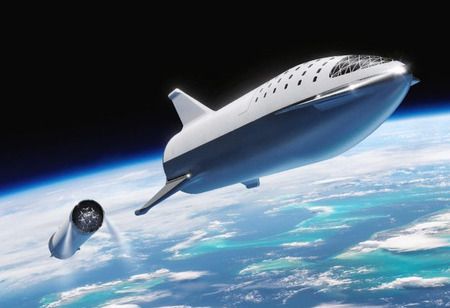 Founded in 2002 by entrepreneur, engineer, and investor Elon Musk, SpaceX set out to transform space technology and eventually make human life possible on other planets. To pursue this vision, the company focused on designing, manufacturing, and launching rockets, challenging established players such as United Launch Alliance (ULA), a joint venture between Boeing and Lockheed Martin.
SpaceX soon made its mark on commercial spaceflight. With the development of its Falcon 9 rocket and Dragon spacecraft, it became the first commercial company to successfully dock a spacecraft with the ISS in 2012. It subsequently established regular cargo missions to the station, demonstrating how private companies could support major space operations.
Its ambitions, however, extended far beyond the ISS. Through Falcon Heavy and its reusable launch technology, SpaceX sought to make space travel more affordable while building the capabilities needed for future lunar and Mars missions. In 2017, Musk also unveiled the Big Falcon Rocket (BFR) concept, envisioned as a next-generation system capable of carrying cargo and people to the Moon and Mars, as well as enabling high-speed travel between cities on Earth. Musk suggested that a journey from London to New York could take just 29 minutes.
At the heart of SpaceX's ambitions is Musk's vision of making humanity a multi-planetary species. From reusable rockets to interplanetary exploration, the company continues to push the boundaries of commercial spaceflight, while opening up new possibilities for private participation in the global space industry.
Blue Origin and Virgin Galactic: Taking Space Tourism to New Heights
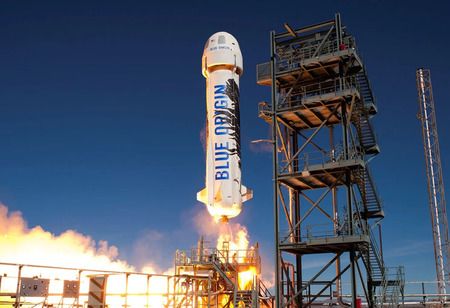 While SpaceX focuses on broader space exploration, Blue Origin has been pursuing a different opportunity: making suborbital spaceflight commercially viable, particularly for space tourism. Founded by Amazon founder Jeff Bezos in 2000, the company developed New Shepard, a vertical-launch rocket named after Alan Shepard, the first American astronaut in space.
Designed to reach an altitude of approximately 100 kilometers, the vehicle returns to Earth and lands upright. Following successful uncrewed test flights, Blue Origin envisioned a journey lasting around 10 minutes, offering passengers a brief experience of space.
 Blue Origin faces competition from Virgin Galactic, founded in 2004 by British entrepreneur Richard Branson. The company aims to take six passengers on suborbital journeys lasting approximately two and a half hours, including around six minutes of weightlessness. Unlike SpaceX and Blue Origin, Virgin Galactic uses an airborne launch system. A carrier aircraft takes SpaceShipTwo to an altitude of around 18 kilometers before releasing it to continue its journey using rocket propulsion. However, the program faced major setbacks, including the tragic death of pilot Mike Alsbury when SpaceShipTwo broke apart during a test flight in 2014, delaying plans for commercial passenger flights.
Also Read: UK Spends $40 Million on SpaceX Military Satellite Services
Private participation in space exploration has also extended to lunar missions. Launched in 2007, the Google Lunar XPrize competition carried the slogan 'Welcome to the New Space Race'. It challenged privately funded teams to land a robotic spacecraft on the Moon, travel at least 50 meters across its surface, and transmit high-quality images and video back to Earth. The competition highlighted how private ambitions were expanding beyond space tourism toward more ambitious exploration missions.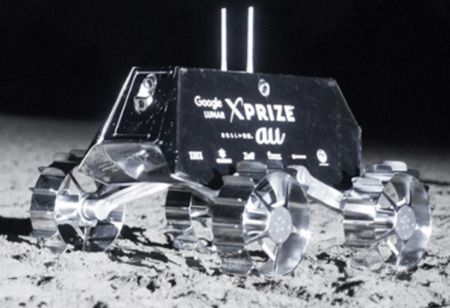
These developments are unfolding against a long history of international cooperation in space, which gained considerable momentum after the Cold War space race came to an end. During the 1980s and 1990s, the space programs of the US and Russia increasingly complemented one another, even if this cooperation was not always deliberate. Following the end of the Apollo program in 1975, the US shifted much of its attention toward robotic missions designed to explore the solar system.
These missions opened new windows into the universe. The Voyager spacecraft captured remarkable images of Jupiter, Saturn, Uranus, and Neptune, while the Mariner and Viking programs laid the groundwork for later Mars exploration missions, including Pathfinder, Spirit, Opportunity, and Curiosity. Meanwhile, MESSENGER explored Mercury, Magellan mapped Venus, and New Horizons, launched in 2006, embarked on a journey to Pluto, the last of the solar system's planets to be explored up close.
Space Exploration: Where Competition Meets Cooperation
While the US was advancing its robotic exploration missions, Russia continued to focus on human spaceflight, achieving significant milestones through its Mir space station. It developed the capability to transport cosmonauts and supplies to and from the station, laying important groundwork for future orbital missions. Meanwhile, the US revived its human spaceflight program through the Space Shuttle, which played a central role in constructing the International Space Station. With the Shuttle program ending in 2011 and its successor, Orion, still under development at the time, the US relied heavily on Russian spacecraft to transport astronauts to the ISS.
 Beyond the US and Russia, several other nations have developed ambitious space programs. Europe, Japan, India, and China have emerged as significant participants, while countries such as the United Arab Emirates have also outlined ambitious plans. The European Space Agency (ESA) was established in 1975, bringing together the efforts of several European nations. Meanwhile, the origins of China's, Japan's, and India's space agencies can be traced back to the 1960s, reflecting how space exploration has gradually become a global pursuit.
Of these emerging players, China's progress has attracted particular attention. Its advanced space program includes the development of an independent space station, with Tiangong-2 serving as an important testing platform. The country has also completed multiple lunar missions, with its Chang'e program pursuing increasingly ambitious goals, including returning lunar samples to Earth. China's long-term ambitions to send astronauts, known as taikonauts, to the Moon have added another dimension to the competition with the US and other established space powers.
Despite these rivalries, the history of space exploration demonstrates that international cooperation can thrive even amid geopolitical tensions.
The ISS stands as a powerful example of what countries can achieve by combining resources, expertise, and technology. As private companies take on a greater role in the industry, the nature of these partnerships may evolve further. The challenge will be to ensure that commercial ambitions complement international cooperation rather than undermine it.
The Roadblocks to a Thriving Space Economy
The commercial space industry is growing rapidly, but turning it into a sustainable global business is far from straightforward. From market concentration and regulatory uncertainty to high infrastructure costs and environmental concerns, private companies face several obstacles before space can become a truly accessible commercial frontier.
Breaking Through the Market Barrier
Access to orbit remains concentrated among a relatively small number of launch providers. SpaceX's significant share of global launch activity has made it difficult for newer competitors to match its launch frequency and pricing. This concentration also raises concerns about the industry's dependence on a limited number of major players.
Navigating Borders, Laws & Politics
Space may have no national borders, but the business of operating there is shaped by them. Differences in licensing rules, liability requirements, property rights, and technology-sharing regulations make international operations complicated. Although countries such as India, the UAE, and the US have introduced policies to encourage private participation, regulatory gaps and inconsistent legal frameworks continue to create uncertainty. Many commercial activities, particularly in defense, communications, and launch services, also remain closely tied to government contracts, making it harder for foreign companies to enter domestic markets.
Turning Technology into Business
Technical expertise alone does not guarantee commercial success. Space customers typically demand proven reliability, extensive testing, and a strong flight record before trusting a new supplier. This creates a difficult entry barrier for emerging companies that need their first major contract to demonstrate their capabilities. At the same time, businesses must learn to communicate the commercial value of their technology rather than relying entirely on technical specifications.
Also Read: SpaceX, Nvidia Develop AI System for Space
Keeping Space Open for Business
 As satellite constellations expand, low Earth orbit is becoming increasingly crowded. The growing volume of space debris raises the risk of collisions and could trigger a chain reaction known as Kessler Syndrome, potentially making certain orbital regions difficult to use. Managing congestion and ensuring responsible satellite disposal will therefore be essential to the industry's long-term growth.
Despite these challenges, private-sector participation has helped position space technology as an emerging investment opportunity. Growing investor interest has supported lower launch costs and innovation across related industries, opening new possibilities for the wider space economy. This shift was also reflected in the White House Frontiers Conference, led by former US President Barack Obama, where discussions on space exploration brought together representatives from NASA, technology companies, and investment firms. It highlighted how space exploration was increasingly being viewed not just as a scientific pursuit, but as a potential driver of commercial growth.
A New Frontier for Business and Exploration
The growing involvement of private companies is transforming space exploration from a largely government-led pursuit into an expanding commercial industry. From reusable rockets and satellite networks to space tourism and lunar missions, businesses are creating opportunities that were once almost entirely within the reach of national space agencies. However, the industry's future will depend on more than technological breakthroughs and investment. Strong international partnerships, clear regulatory frameworks, and responsible management of orbital resources will be equally important to its long-term success. As governments and private enterprises increasingly work together, the next chapter of space exploration will be shaped by how effectively they combine scientific ambition with commercial opportunity. What was once a race between nations is gradually becoming a global industry, with businesses playing an increasingly important role in determining how far humanity can go.