

AI and the Future of Capital Markets: Hemant Sood
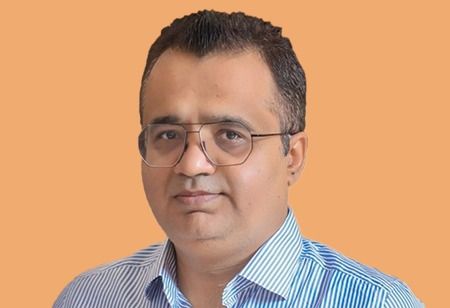 Finance is evolving from selling products to delivering outcomes powered by intelligence and trust.
Hemant believes the next era of financial services will be defined by the seamless convergence of AI, human judgment, regulatory trust, and customer-first innovation.
For Hemant, finance is not just about markets or capital or even technology but about making better choices and creating sustainable value. Hemant is a veteran in capital markets, derivatives, and structured finance, and his understanding of market psychology, risk management, and wealth creation in the long run cannot be underestimated. His philosophy in finance consists of disciplined investment, investor awareness, and innovative responsibility.
In this interaction with CEO Insights Magazine, Hemant shares his perspectives on some of the most significant trends affecting global finance today, ranging from AI trading to embedded finance, to leadership, regulation, and fintech innovation. He also highlighted what financial institutions need to do to stay relevant in our times.
Read the full interview to discover Hemant's vision for the future of finance and innovation.
With capital markets evolving rapidly, what emerging trends or disruptions do you believe will fundamentally redefine financial services over the next decade?
Three forces will fundamentally reshape financial services. First, the democratisation of institutional grade tools, AI powered research, algo execution, and risk analytics will reach retail investors, eliminating the edge that large institutions have held for decades. Second, embedded finance will dissolve the boundary between financial services and everyday platforms, banking, investing, and insurance will live inside apps people already use. Third, and most underappreciated, is the shift from product selling to outcome based advisory. The next decade belongs to platforms that can say “here is what you need to achieve your goal” not just “here is a product.” At Findoc, we are building toward that future. The broker of tomorrow is a financial co-pilot, not a transaction facilitator.
How do you envision automation and AI in Algo trading transforming not just efficiency, but strategic decision-making across financial organizations?
Algo trading is already transforming execution, speed, precision, emotion free entry and exit. But the more profound shift is happening at the strategic level. AI is beginning to identify patterns across macroeconomic data, corporate filings, global flows, and sentiment simultaneously and in real time in ways no human team can replicate. The risk, however, is equally profound.
When every major player uses similar AI models trained on similar data, you get herd behaviour at machine speed.
The 2010 Flash Crash was a preview. The firms that will win are not those with the fastest algorithms but those that combine machine pattern recognition with human judgment on context, tail risks, and the things models cannot price: war, policy shifts, black swans.
What unconventional leadership strategies have helped you guide Findoc through innovation while maintaining regulatory compliance and risk discipline simultaneously?
The most unconventional thing I do is treat compliance as a competitive advantage, not a constraint. Most founders view regulation as friction. I view it as a moat. In financial services, the firms that survive long-term are those that regulators trust. That trust cannot be purchased. It is earned through consistent behaviour over years. The second strategy is radical transparency internally every team member at Findoc understands not just what we are building but why certain lines cannot be crossed. Innovation without guardrails is not innovation, it is recklessness. The third is slowing down to speed up. When a new product idea emerges, we ask the compliance question first. It filters out ninety percent of ideas that would have consumed resources and created regulatory exposure.
From your experience at IIT Mandi, how can academia and industry better collaborate to accelerate practical innovation in financial technology?
India is sitting on an untapped arbitrage. We have world-class engineering minds in our IITs and IIMs and one of the most complex, fast-evolving financial markets in the world. Yet the two rarely speak the same language.
My provocative suggestion: stop calling it “collaboration” and start calling it co-ownership. Give students real P&L responsibility on fintech problems not case studies, not simulations. Real data, real stakes, real consequences. The learning curve compresses by years.
At Findoc, I want to go further, embed a live trading desk inside a university. Let students run actual capital under faculty supervision. That one experiment will produce more practical fintech innovation than a hundred research papers.
The future of fintech will not be built in boardrooms or lecture halls. It will be built in the space between them and India needs to create that space deliberately, urgently, and at scale.
In building futuristic financial products, how do you balance customer-centric design with complex regulatory frameworks and market unpredictability?
The tension between customer experience and regulatory compliance is real but it is also a false dilemma if you approach it correctly. Regulation exists to protect customers. So if you start with genuine customer protection as your design principle, compliance follows naturally rather than fighting you. The harder challenge is market unpredictability. Our approach at Findoc is to build products with scenario discipline and every product is stress tested not just for normal conditions but for the tail: what happens in a 2008, a COVID, a Hormuz closure? Customer centric design means designing for the moment of stress, not just the moment of onboarding. The products that fail customers always look great in the demo and collapse in the crisis.
LAST WORD: Leadership Advice for Sustainable Growth and Influence
Three principles I return to constantly. First be obsessively honest about what you do not know. The most dangerous leader is the one who has stopped being curious. Markets, technology, and human behaviour are permanently evolving. Certainty is a trap. Second, build your reputation before you need it. In financial services, trust is the only durable asset. Every shortcut you take compounds against you. Third, protect your judgment. As a leader, your most scarce resource is not capital or talent, it is clear thinking under pressure. That means managing your information environment ruthlessly, sleeping, and saying no far more than feels comfortable. Impact comes from depth of execution on a few things not breadth of activity across many.
Conclusion:
The way finance has grown in its intelligence and interconnectedness means that the biggest competitive edge for Hemant is not just technology, but technology used alongside integrity. What Hemant sees in the future ahead is one in which integrity itself becomes the key currency, in which judgment will always be needed, and in which financial institutions become partners to make dreams come true.
“Technology may accelerate finance, but trust and sound judgment will always define its future."