

Inside AMD’s Push Toward AI-Native Engineering Excellence
American semiconductor company, AMD’s (NASDAQ: AMD) global design center in Bengaluru, India, has been the epicentre of design and development of semiconductor technology including 3D stacking, artificial intelligence, machine learning, and more.
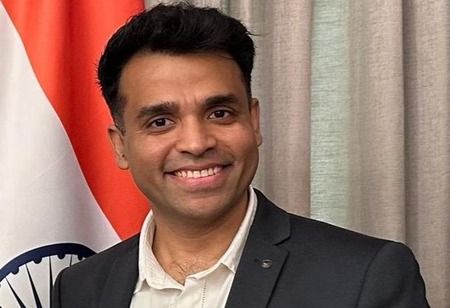
At the helm of affairs is Deepak Agarwal, CVP Silicon Design Engineering and Site Lead, AMD Bengaluru. A semiconductor engineer with over two decades of experience, Deepak has been instrumental in shaping the company's trajectory, particularly with the establishment of AMD's India Center in 2005.
In his role, Deepak embraced the responsibility of nurturing talent and fostering innovation. Notably, his leadership role expanded to encompass the verification of CPUs, a pivotal component in AMD's technological landscape.
The evolution of AMD's projects mirrored Deepak's own professional growth. From core verification to server associate roles, he navigated diverse challenges with resilience and strategic acumen.
In 2020, Deepak assumed the mandate of Bengaluru site leadership, steering AMD's endeavours. His leadership extends beyond technical domains, encompassing initiatives in artificial intelligence and core complex die delivery.
In conversation with CEOInsights India magazine, Deepak takes us through AMD’s evolution in silicon design and the growing role of its India engineering center in global chip development. He reflects on key milestones such as leading AMD’s server SoC verification efforts, scaling engineering teams in India, and adopting AI-driven workflows to improve chip design, validation, and productivity.
Deepak also emphasizes the rise of “AI-native engineers,” describing how AMD encourages engineers to integrate AI into daily workflows for debugging, verification, and design optimization. Looking ahead, the executive believes AI will fundamentally transform semiconductor design by enabling end-to-end intelligent workflows, while engineers shift toward orchestrating AI systems and focusing on innovation and complex problem-solving.
As AMD accelerates its AI leadership globally, Deepak is leading efforts in India to equip engineers with AI tools, skills, and workflows that improve design efficiency, validation speed, and product quality.
For deeper insights on how Deepak is steering AMD towards building the future of AI-Native engineering, read the interview below.
Over the past two decades, you have been instrumental in influencing AMD's abilities in silicon design. Could you share a few pivotal moments or experiences?
Over the past two decades at AMD, I have had the opportunity to grow across diverse roles - from starting as a young engineer in Austin to leading server SoC programs and now heading AMD’s largest global design center in Bengaluru.
A key milestone was leading the server SoC verification group during the company's re-entry into the server market. This expanded my perspective from IP-level work to full SoC execution and strengthened my ability to lead globally distributed teams.
Also Read: Yuma Energy Installs Battery Stations Across Mumbai Metro Line 3
Another defining phase was scaling AMD’s engineering presence in India. Building teams from the ground up required not only technical execution but also a strong focus on hiring, talent development, and culture.
More recently, the shift to new architectures, rising system complexity, and the integration of AI into engineering workflows have been transformative. Across the different phases in my career - teamwork, trust, and culture have remained my drivers of growth.
India has become a key center within AMD's global engineering network. How is AMD’s India center playing a critical role in enhancing global design productivity and product quality?
India is central to AMD global design engine. For example, the teams here have contributed to every generation of our EPYC™ server CPUs since its launch in 2016. They have led critical aspects like IP development, SoC verification, floor planning, DFT, and physical design.
Today we are adopting advanced methodologies, automation, and AI-driven workflows to speed and scale our contributions. We are enhancing validation speed, improving debug efficiency, and shortening development cycles while maintaining high-quality standards.
The concept of ‘AI-native engineers’ is gaining traction. How is AMD facilitating this transformation within its teams in India?
“AI-native” is less about a title and more about how engineers approach their work.
At AMD India, we focus on enabling practical AI integration into daily workflows. This begins with providing the right tools to our engineers and driving awareness of where AI adds value—whether in design exploration, verification, debugging, or routine productivity.
We build confidence by sharing real use cases from team members to showcase how AI has helped accelerate validation, analyze large datasets, and assist in code and test generation. Teams are encouraged to learn from each other and embed AI into everyday work.
Also Read: Mahindra Insurance Brokers Partners With WebEngage
We are fostering a culture of experimentation while maintaining quality, security, and reliability at the front & centre. We tell the teams that ultimately, being AI-native means being curious, adaptable, and open to new problem-solving approaches.
What are your thoughts on the usage of AI in engineering? How are you leveraging AI tools to streamline chip design?
AI is becoming a key enabler in engineering, helping manage complexity and improve efficiency at scale. Our focus is on practical applications that enhance silicon design, reduce development cycles, and drive innovation. In chip design, AI is helping optimize workflows across design, verification, and validation.
Moving forward, how do you foresee the integration of AI with chip design influence the trajectory of the semiconductor industry in the next 5 to 10 years?
Over the next 5 to 10 years, AI will not just improve semiconductor design, it has the potential to fundamentally reshape how design workflows operate.
Today, AI is already helping accelerate specific tasks such as validation, debug, and design optimization. I believe the next phase will move toward more integrated, end-to-end AI-assisted workflows, where multiple specialized AI systems work across different stages of the design lifecycle; from architecture exploration to verification and system validation.
In this model, engineers will increasingly orchestrate and guide these AI-driven flows, rather than manually executing each step. Human oversight will remain critical to ensure correctness, reliability, and performance, especially given the complexity of modern silicon systems.
In my mind, this shift will significantly:
- Reduce iteration cycles
- Improve design efficiency at scale
- Enable development of more complex, AI-first architectures
Ultimately, I see AI shifting the role of engineers from executing individual tasks to orchestrating intelligent systems, allowing them to focus more on innovation, system-level thinking, and solving complex problems at scale.
Also Read: Parag Milk Foods Enters RTD Protein Beverage Segment
From your extensive experience, what advice would you give engineers aspiring to become ‘AI-native’ in their careers?
My advice to young engineers is - build strong fundamentals in hardware and system-level thinking. Understand how design choices affect scalability, power, and reliability.
I would also say, stay curious and hands-on—pursue internships, contribute to open-source silicon projects, and deepen expertise in areas like physical design and semiconductor physics.
Most importantly, consistently ask: “How can I use AI here?” AI tools can significantly amplify engineering productivity, but success comes from understanding how to use them effectively and evolving with them. Focus on solving meaningful problems—this mindset will set you apart.