

Making AI Matter: HFCL's Sunil Pandey on Smarter Enterprise Transformation
 For decades, enterprise technology has focused on automating processes, improving efficiency, and strengthening operational continuity. Today, the rise of AI and digital transformation is reshaping that approach, enabling organisations to build intelligent, resilient, and data-driven operating models.
As businesses navigate increasingly complex technology landscapes, effective transformation requires more than adopting new tools. It demands strong business alignment, clear governance, operational ownership, and a leadership mindset focused on measurable enterprise value.
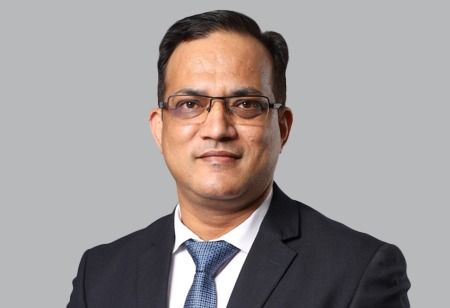
In an exclusive interaction with CEO Insights India Magazine, Sunil Pandey, Chief AI & Digital Officer at HFCL, a seasoned technology and business leader with three decades of extensive experience across manufacturing, renewable energy, power transmission, and water management, shares his insights on the evolution of technology leadership, enterprise transformation, AI adoption, digital governance, and building sustainable organisational capabilities. The conversation also explores how emerging technology leaders can move beyond implementation to create lasting business value.
For deeper insights, read the full interview below.
Q1. After three decades across manufacturing, telecom, EPC, defence communications, and renewables, how has every industry reshaped your approach to leadership?
A. Every industry has taught me that technology leadership is ultimately about understanding the business context before proposing a technology solution. Manufacturing taught me the importance of process discipline, quality, and operational continuity. Telecom and defence communications reinforced the importance of resilience, cybersecurity, and precision. EPC taught me that visibility, cash flow, and execution discipline can matter more than sophisticated technology. Renewable energy showed me how distributed operations demand simplicity, reliability and scalability.
These experiences have progressively moved my leadership philosophy from technology-centric delivery to business-centric transformation. Today, I look at technology through three lenses: business value, operational adoption, and enterprise resilience. The technology must serve the operating model, not the other way around.
Q2. Beginning with enterprise ERP programmes, when did business transformation become a greater leadership priority than technology implementation?
A. My thinking began changing during the ERP programmes I led early in my career. Initially, success was often defined by implementation milestones: configuration, integration, migration, and go-live. Over time, I realised that an ERP system can be technically successful while the business remains fundamentally unchanged. The real transformation happens when processes, decision rights, data ownership and behaviours change around the platform. That became particularly clear as I moved from applications leadership into enterprise CIO roles across manufacturing, power, EPC and renewable energy
I began measuring success less by whether technology was implemented and more by whether leaders could make better decisions, processes became simpler, and operating performance improved. Technology implementation became the foundation; business transformation became the leadership mandate.
Q3. Leading transformation across diverse industries, how did changing operational realities influence the way you approached enterprise-wide decision-making?
A. Working across industries taught me that enterprise decisions cannot be made from a technology center alone. The operating reality is different in every business. A manufacturing organisation may prioritise throughput, quality and inventory; an EPC organisation may be driven by project visibility, cash cycles and execution; renewable energy requires reliability across geographically distributed assets. I therefore learned to begin with the business constraint rather than the technology opportunity.
I also became more deliberate about separating strategic decisions from operational noise. Data and digital platforms should create a common fact base, but decisions must remain connected to business ownership. My approach today is to establish clear decision rights, measurable outcomes, and governance, while giving business leaders sufficient autonomy to act quickly within an enterprise framework.
Q4. As your responsibilities expanded from applications to enterprise strategy, how did your role shift from solving operational issues to shaping business direction?
A. The transition was gradual but fundamental. As an applications leader, my primary responsibility was solving business problems through reliable systems and applications. As I moved into CIO roles, the questions changed from “How do we fix this?” to “Why does this process exist, and what should the organisation become?” That required a much broader perspective across operating models, finance, supply chain, manufacturing, cybersecurity, data and customer experience. My role increasingly became about connecting technology investment with business priorities, sequencing transformation and creating organisational alignment.
At HFCL, that evolution continued from CIO to Chief AI & Digital Officer, where the mandate extends beyond technology operations into AI, Industry 4.0, digital twins, governance and enterprise capability. The leadership conversation is now fundamentally about business direction.
Q5. Transitioning from CIO to Chief AI & Digital Officer, what leadership priorities changed as AI became central to enterprise strategy?
A. The biggest change is that AI cannot be managed as another technology program. As CIO, a significant part of my responsibility was ensuring that the enterprise had secure, scalable, and reliable digital foundations. As Chief AI & Digital Officer, the focus has expanded toward how those foundations create intelligence, improve decisions, and reshape operating models. My priorities therefore shifted toward business alignment, AI governance, accountable ownership, capability building, and measurable outcomes.
I am particularly focused on moving beyond experimentation: identifying where AI can create meaningful enterprise value, establishing responsible guardrails and embedding AI into workflows and decisions. The objective is not to have more AI projects. It is to make AI an organisational capability that improves productivity, resilience, innovation, and competitive advantage.
Q6. Driving AI across engineering, manufacturing, supply chains, and corporate functions, how do you create enterprise-wide alignment while addressing distinct business priorities?
A. I start by creating one enterprise AI direction, but not one identical AI agenda. Different functions have different value pools, operating constraints, and risk profiles. Engineering may focus on design intelligence and predictive insights; manufacturing may prioritise quality, productivity and maintenance; supply chain may focus on forecasting and optimisation; corporate functions may target productivity, compliance and decision support. The common framework is therefore strategy alignment, clear ownership, governance, capability and measurable outcomes. Each function should understand how its AI priorities contribute to enterprise objectives, while retaining enough flexibility to solve its own problems.
This is why I emphasise an operating model alongside use cases. Alignment comes from common principles, decision rights, and outcome measures—not from forcing every function into the same implementation pattern.
Q7. Advising Boards on AI, cybersecurity, and digital governance, how has your perspective on enterprise leadership evolved beyond technology oversight?
A. Board-level conversations fundamentally change the perspective. The question is no longer whether a technology is technically sound; it is whether the enterprise understands the value, risk, accountability, and strategic consequences associated with it. AI brings questions around governance, data, regulatory exposure, workforce impact, intellectual property and decision accountability. Cybersecurity similarly extends beyond the technology function into enterprise resilience and reputation.
My perspective has therefore evolved toward helping leadership teams understand technology as part of the organisation’s overall risk-and-value architecture. Boards need sufficient technological literacy to challenge assumptions without becoming operational. They need visibility into where digital and AI can create competitive advantage, where they introduce material risk, and whether governance mechanisms are strong enough to support responsible innovation at scale.
Q8. Looking back across successive technology waves, what leadership approach did you consciously leave behind as enterprise transformation became increasingly complex?
A. I consciously moved away from the belief that transformation is primarily a technology delivery exercise. Earlier in my career, success could be strongly associated with implementing systems on time, within budget, and according to specification. Those disciplines remain important, but they are insufficient for enterprise transformation.
I have learned to avoid technology-first thinking, isolated pilots and transformation programmes that depend excessively on a central technology team. Complexity increases when ownership, processes and decision rights remain unclear. Today, I focus much more on business ownership, operating-model design, adoption and institutionalisation. I also believe leaders must resist the temptation to chase every emerging technology. The better question is whether a technology materially improves a strategic outcome and can be governed and scaled sustainably.
LAST WORD: What practical leadership principle would you encourage emerging technology leaders to develop for building long-term enterprise value?
My strongest advice is to learn to think like an enterprise leader before trying to become a technology leader. Understand how the organisation makes money, where value is created or destroyed, how customers experience the business, and which operational constraints limit growth. Then connect technology to those realities.
I would also encourage emerging leaders to develop three habits: measure outcomes rather than activity, build capabilities rather than dependency, and create governance before scale rather than after it. Technology changes rapidly, but these principles remain durable. The leaders who create long-term value are not necessarily those who adopt technology first; they are those who make the organisation better at making decisions, executing strategy, and adapting to change. That is where technology becomes an enterprise advantage.