

Saurabh Bansal: Wealth Creation in a Changing Investment Landscape
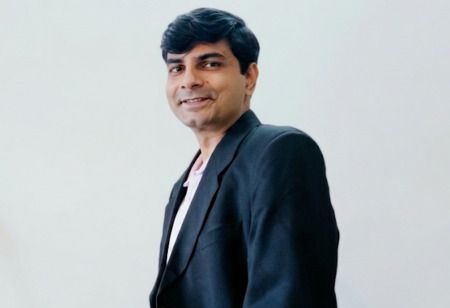 An IIT and IIM alumnus with global experience across the US, Europe, and India, Saurabh Bansal previously worked with leading financial institutions, including Credit Suisse, Citigroup, and Dresdner Bank. He is a strong advocate of evidence-based investing, behavioural finance, and transparent, fee-only wealth management focused on long-term financial success.
An IIT and IIM alumnus with extensive global experience, Saurabh spent years working across international markets before launching Finatwork nearly 15 years ago. His journey was shaped by a simple observation: while the financial industry focused heavily on products, market forecasts, and investment returns, the biggest determinant of investor success was often behaviour. This led him to build Finatwork around the concept of "Math and Mind," combining systematic, rule-based investing with behavioural coaching. His belief is that successful investing is not merely about finding the right products, but about helping investors maintain discipline when emotions threaten to derail long-term plans.
Operating under the philosophy of "Simple Living, High Thinking," Finatwork has built a fee-only advisory practice that focuses on transparency, process, and long-term wealth creation rather than product distribution.
What inspired you to build Finatwork?
The development of Finatwork was born from several years spent in the global financial markets and working with investors from all walks of life. Regardless of geographic location or the maturity of a particular marketplace, one thing that has become apparent to me about both individual and institutional investors is that access to information is not the primary obstacle; rather, it is the ability of an individual or institution to maintain discipline during periods of market volatility. When the market experiences a correction (evidenced by fear leading to panic selling), or when there is extreme positive performance and investors become too confident (evidenced by chasing returns), they tend to abandon the careful financial planning process. This behavioural gap between an investor's intent and actual behaviour intrigued me as it continually appears to dominate even the best financial plan. This observation led to the foundation of Finatwork: A wealth management company that combines an evidence-based investment approach (math) with a behavioural-based advisory (mind). Our belief in "Math and Mind" reflects this integration of a systematic investment approach and coaching through behavioural finance. The "math" helps create a portfolio using evidence-based portfolio construction principles, diversification, and risk; whereas, the "mind" allows an investor the opportunity to follow their plan through the various down and up markets.
Ultimately, our approach is not based upon market predictions or chasing returns. Instead, we provide tools to both individual and institutional investors to enable them to take control of their financial future via proper planning and better creation of an objective/goal.
Also Read: GIFT City Partners With Vietnam's Da Nang Financial Center
What makes your approach to wealth management different?
The way traditional wealth management works is by recommending products for clients, such as insurance, mutual funds, alternative investments and PMS. While all these different types of products do matter, they are only part of the total picture when it comes to creating wealth through financial investments. At Finatwork, we believe that the real differentiator is having a disciplined investment process that is enhanced by behavioural advice.
Because of this philosophy, our typical discussions with clients start with an understanding of their goals for investing, their risk tolerance, and what kind of family obligations they have, and what their ultimate financial objectives are - not what type of investment products to purchase. Once these objectives are clearly established, we then move on to designing an investment plan based on an asset allocation strategy, a diversified portfolio, periodic reviews of the investment portfolio, and a disciplined implementation of the investment plan.
One of the most common misunderstandings that many investors have is that in order to create wealth, investors need to identify the next "hot stock" or mutual fund every time they make an investment. In reality, wealth creation usually occurs over the long term through a combination of having a long-term investment strategy, rebalancing the portfolio when necessary, and avoiding emotionally driven investment decisions during extreme market conditions.
Behavioural finance plays an equally important role in our advisory process. During periods of rampant optimism in the stock market, we help clients avoid making excessively risky investments. In a down market, we encourage investors to concentrate on long-term fundamentals and not respond to short-term price fluctuations.
Our goal is to bridge the gap between investment science and investor behaviour. The stock market will always be unpredictable; however, using disciplined procedures can minimize portfolio risk.
Are Indian investors becoming more receptive to fee-only advice?
I believe that this change demonstrates the ongoing transformation of the investment landscape in India. Over 10 years, there has been a marked rise in the level of financial literacy among investors. They are now much more aware of how to separate true financial advice from just financial products being sold to them, and increasingly realise that the two should be kept separate from one another.
Many investors previously evaluated an adviser based only on the adviser’s ability to achieve the greatest level of returns, or to recommend the best products, but now many more appreciate the importance of a transparent, trust-based, fiduciary relationship with their adviser, together with the importance of receiving totally unbiased advice. More and more investors are now asking the question of their advisers: "Am I receiving this recommendation because it is the best recommendation for me, or because the adviser is receiving a commission from the vendita of this product?"
Fee-only advisory eliminates this potential conflict, by aligning the adviser’s incentives with the client’s long-term financial success instead of with product sales. As a result, there is a higher degree of trust within the adviser/client relationship and the development of long-term plans, as opposed to a transactional relationship based on the sale of products.
The evolution of advisory against commission-based fees has been further enhanced by digital platforms, regulatory changes, and an increase in investor awareness. Younger investors primarily professionals and entrepreneurs strongly advocate for a transparent, objective approach to investing. They will pay for advice if the adviser can help them make more informed, better investment decisions. Ultimately, clients aren't paying for products. They're paying for judgment.
Although commission-based models will continue to exist, in my opinion, the future of the wealth management industry will focus increasingly on advisory models that emphasise transparency and accountability.
Also Read: SWPE Strengthens RIL Partnership with Contract Extension
What is the biggest mistake investors make during strong bull markets?
While bull markets inspire optimism in those who invest, there will typically also be an element of complacency. Bull markets don't just increase wealth—they quietly increase overconfidence. The key mistake that most investors will make while market rallies seem to go on for long periods of time is that they will assume that recent results will continue into the future. This usually results in unrealistic expectations and poor decisions.
As markets consistently deliver strong returns, many investors will abandon their well-thought-out financial plans in favour of pursuing the most recent top performing investment sectors. As a result of social media, market influencers, and ongoing conversations about "multibagger" opportunities; this type of behaviour becomes a lot more common than it should be. The fear of missing out (FOMO) is a primary force behind making investment decisions.
The unfortunate result of this behaviour is that many investors create too much concentration in their portfolios, make speculative investments, and ignore some of the fundamental principles of investing, including diversification and risk management. Many investors are increasing their exposure to the markets at the time that valuation multiples are at their highest and risk is rising.
History has consistently done a good job of proving that every cycle in the stock market includes corrections. Therefore, investors who invest systematically over the long term and periodically rebalance their portfolios also tend to come out of the bear trend with much stronger portfolios than those who invest in a momentum-based strategy.
An investment objective should never be to maximise one investment return during one cycle (i.e. bull market). As an investor, it is far more prudent to seek to accumulate wealth over time across multiple cycles. Long-term investment strategies provide a much larger dividend than do speculative/volatile strategies. Long-term investing usually outperforms period-to-period performance. Historically, investing with a structured financial plan through a disciplined approach will result in greater performance on an investment-for-investment basis than if you try to time the market.
Why do you believe behaviour is a bigger risk than markets?
The inherent uncertainty of the market does not pose as much danger to investors as the manner in which they react to this uncertainty does. When uncertainty arises in investing, a large portion of the decision-making process becomes influenced by the reaction of the investor.
Behavioural biases can have a considerable impact on an investor's decision-making, and include fear, greed, overconfidence, recent events, and a herd mentality. These biases often lead investors to purchase assets after their price has risen substantially, and to sell those same assets in a panic when the price has fallen significantly. Ironically, these types of decisions usually happen to occur at what is considered to be the worst time for making such an investment decision.
Many studies conducted in the field of behavioural finance indicate that an investor's return can be very different from the investment return due to the investor's poor timing decisions. The actual performance of an investment may still be quite satisfactory when measured over the long-term, however, the investor's emotional reaction to the market creates a much lower level of return on his or her actual invested capital.
Also Read: The Magnum Ice Cream Company Opens RD&I Center in Bengaluru
Helping our clients develop a behavioural discipline is part of our overall commitment to them. By helping clients connect their long-term investment strategy with short-term anxiety or excessive optimism, we can assist clients to stay focused on the objectives of their investments in the long term.
Successful investing is not about being able to predict every single movement of the market, but rather about consistently making rational decisions regarding an investment, despite the existence of uncertainty. While there will always be corrections/depressions in the market, it is the investor's emotional response to those corrections/depressions that will negatively impact the investor's ability to create wealth over the long term. Therefore, I believe that behavioural risk (risk based upon an investor's emotional reaction to the market) significantly outweighs any other types of market-related risk.
How do you see AI shaping the future of wealth management?
Over the next 10 years, wealth management will be significantly changed through the use of artificial intelligence technology. AI will allow clients and financial advisers to improve the monitoring of their portfolios, identifying risks in their investments, planning for their future financial needs, ensuring that reports are completed accurately and in compliance with relevant regulations, and engaging with their clients.
In addition, AI will allow financial adverts to process massive amounts of market data much faster than they would due to their limited capacity; generate insights about the market; and make better-informed investment decisions. More importantly, AI will dramatically reduce the cost of information. As information becomes increasingly abundant and accessible, judgment will become even more valuable. The adviser of the future will not compete on access to data, but on helping clients make better decisions amid an overwhelming volume of information.
Despite AI's vast capabilities, investing is not just about performing calculations and making decisions based upon numerical data. It is an emotional experience for most investors that includes the achievement of life goals, the attainment of financial success, family obligations, and the individual's circumstances. During periods of uncertainty, many investors want to hear that their adviser gives them reassurance, perspective, and guidance with respect to behaviours, as opposed to merely providing them with more data.
This would create an environment in which human advisers continue to provide value-added support to their clients. Because although technology can assist in identifying patterns and trends in their clients' behaviours, it cannot inherently understand the emotional state, values, and long-term goals of any one particular individual. Trust, empathy, and judgement are attributes that lie within humans.
I view the implementation of AI in the wealth management profession as enabling advisers to perform their jobs more efficiently by reducing the amount of time they spend on repetitive operational functions or tasks, thereby allowing them to dedicate additional time to really knowing their clients and providing useful strategic advice to them.
In conclusion, the future of wealth management will consist of the combination of intelligent technology and the judgement of experienced financial advisers. Those firms that are able to successfully bring together data-driven insights with behavioural coaching and personalised advice will create sustainable long-term value for their clients.
What is your core investing philosophy?
My investing philosophy can be summarised in a simple phrase: "Simple Living, High Thinking." Simple Living, High Thinking reflects how I approach both life and investing. Wealth creation doesn't require constant activity. It requires clarity of thought, disciplined execution, and the patience to let compounding work.
The financial world often celebrates complexity, but complexity does not necessarily produce better outcomes. In fact, investment strategies that become too complicated are often difficult for investors to understand and even harder to follow consistently during volatile markets.
I strongly believe wealth creation should be based on timeless principles discipline, patience, diversification, asset allocation, and evidence-based decision-making. Rather than attempting to predict every market movement, investors should focus on building resilient portfolios capable of performing across different economic cycles.
Compounding remains one of the most powerful forces in investing, but it requires time and consistency. Investors frequently underestimate the value of remaining invested while overestimating the benefits of constantly changing strategies.
Successful investing is ultimately a marathon rather than a sprint. Markets will experience corrections, geopolitical uncertainties, policy changes, and economic cycles, but investors who remain disciplined and committed to a well-designed financial plan generally create lasting wealth over time.
At Finatwork, we encourage clients to avoid unnecessary complexity, trust the investment process, and focus on decisions they can control. Markets cannot always be predicted, but disciplined behaviour, thoughtful planning, and patience remain the strongest foundations for long-term financial success.