

Adani's Copper Plant Hit by Technical Setbacks in First Year
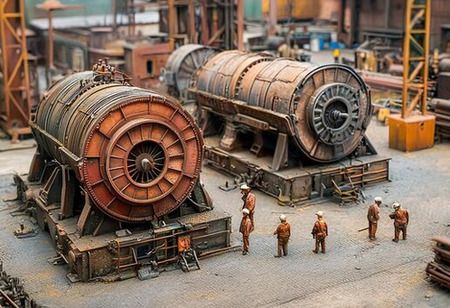
Billionaire Gautam Adani's $1.2 billion copper facility has encountered a series of technical challenges since its commissioning 10 months ago, sparking concerns regarding the operation's future, which is crucial for expanding supply outside of China.
Adani Enterprise Ltd.'s Kutch plant has not yet achieved significant copper output due to these engineering issues and temporarily ceased operations for repairs in late March. It remains unclear whether the plant has resumed operations since then.
Also Read: Jubilant FoodWorks Moves to Transfer Dunkin’ India Rights
Based on statistics from India's Ministry of Mines, the plant, with a production capacity of 500,000 tonnes annually, yielded 94,000 tonnes of refined copper from April of the previous year to February of the current year.
Earth-i, an enterprise specializing in the global surveillance of smelter operations through satellite observations of emissions, inventories, and vehicular activity, reported that it has not observed any definitive or substantial indications of continuous smelting activities at the Gujarat location since June of last year.
Over the previous year, the organization has identified such indicators at newly established smelting facilities in regions across Asia and Africa. The satellite data indicated additional activities, specifically the arrival of shipments of copper concentrate and the presence of smoke. Copper concentrate, which is a semi-processed form of ore, is utilized as input for the smelting process.
According to four individuals with direct knowledge of the situation, elevated impurity levels in the feedstock—comprising elements like antimony, arsenic, and uranium—have led to operational challenges.
The existence of these additional metals can destabilize the primary smelting process, adversely impacting the purity of the produced copper and sulfuric acid. It has been reported that Adani’s procurement team is actively seeking shipments of cleaner copper concentrates for the months of June and July.
Also Read: Amazon India to Invest Rs.2,800 Crore to Scale Quick Commerce
For Adani’s plant to operate at full capacity, it requires approximately 1.6 million tonnes of copper concentrate annually. Records of imports by Kutch Copper Ltd. indicate they purchased just over a quarter of the necessary feedstock between February 2024 and February 2026.
The facility is characterized by an integrated design, wherein a primary smelter supplies semi-refined copper to the refinery. Despite this, the company has imported over 26,400 metric tons of copper anodes—a semi-processed form—in the past two years, based on a Bloomberg analysis of trade data.
Currently, China is responsible for smelting nearly half of the world’s copper, attributable to its low-cost energy and advanced technical expertise. The expansion of this capacity, alongside disruptions in mining activities and competitive pressures from traders, has led to a global shortage of raw materials. This shortage has compelled several operations outside of China to close down or seek government assistance over the past year.
Also Read: Tata Steel Expands Partnership With Google Cloud
Disturbances at Kutch might lead to a reevaluation of the global copper supply. Analysis firms CRU, Wood Mackenzie, and Benchmark Mineral Intelligence presently project that the Adani facility will play a significant role, with an anticipated output ranging from 175,000 to 385,000 tons of copper this year.