

BRICS Could Help Meet Energy, Fertiliser Challenges: Jaishankar
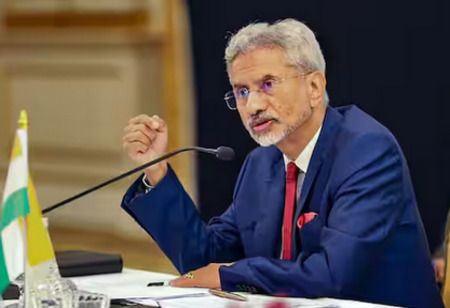
Emphasizing that developmental issues continue to be of paramount importance, External Affairs Minister S. Jaishankar observed that BRICS could assist nations in addressing challenges related to energy, food, fertilizer, and health security, in addition to facilitating access to financial resources.
The BRICS nations should explore feasible methods to enhance collaboration in the face of ongoing conflicts, economic unpredictability, and challenges related to trade, technology, and climate, says the minister.
Also Read: BOMBAYDC Appoints Milind Bibodi to Delivery Head
Jaishankar stated that there is an increasing anticipation, especially from emerging markets and developing nations, that BRICS will assume a constructive and stabilizing function.
The assembly, convened by India on May 14-15, holds particular importance due to the unpredictability associated with the continuing strife in West Asia.
Moreover, the participation of Iranian Foreign Minister Abbas Araghchi is drawing considerable attention. The minister stated that the gathering in New Delhi provides a platform to contemplate global and regional progress and to explore "practical strategies" to enhance collaboration among the member nations.
Additionally, Jaishankar emphasized that development challenges remain a focal point.
Also Read: Skoda Volkswagen Builds Global Car and Software Hub in India
Numerous nations are confronted with issues related to energy, food, fertilizer, and health security, as well as access to financial resources. BRICS has the potential to assist these countries in addressing these challenges more efficiently.
Economic resilience is equally crucial," he stated. He urged participants to promote sustainable development during the discussions and to support the principles of "equity and common but differentiated responsibilities.
Additionally, Jaishankar emphasized that recent conflicts have highlighted the critical role of dialogue and diplomacy.
"Technological advancements are reshaping the global landscape. It can be leveraged for good governance and inclusive growth. Peace and security remain central to the global order. Recent conflicts only underline the importance of dialogue and diplomacy,” he said.
“There is also a deeply shared interest in strengthening cooperation against terrorism. As chair, I will facilitate an open and constructive exchange. I encourage all delegations to share their perspectives in that spirit..."
Also Read: Toyota to Build Three New Assembly Plants in Maharashtra
Moreover, the minister extended a cordial welcome to his Iranian counterpart, Seyed Abbas Araghchi, with a handshake and a succinct dialogue during the Brics Foreign Ministers' assembly in New Delhi, set against the backdrop of intensifying geopolitical tensions in West Asia. The Iranian Foreign Minister is also set to engage in comprehensive bilateral discussions with S Jaishankar. These talks are anticipated to focus primarily on the worsening security conditions in West Asia, against the backdrop of the current conflict involving Iran, the US, and Israel.
The strategically significant Strait of Hormuz is anticipated to be a focal point in the discussions. It is projected that India will express apprehensions regarding the secure transit of commercial ships through this confined passage, which continues to be essential for the worldwide distribution of crude oil and liquefied natural gas, as reported by individuals acquainted with the situation.
The global markets for oil and gas have experienced significant fluctuations as a result of Iran's strategic decision to limit shipping activities in the Strait of Hormuz. This critical maritime passageway connects the Persian Gulf to the Gulf of Oman and is responsible for approximately 20 percent of the worldwide trade in oil and liquefied natural gas.
India's attempts to establish a unified Brics stance on the crisis encountered challenges during a meeting held last month involving the grouping's deputy foreign ministers and special envoys focused on the Middle East and North Africa.