

BRICS Summit Takes Aim at Tariffs, Sanctions and Carbon Measures
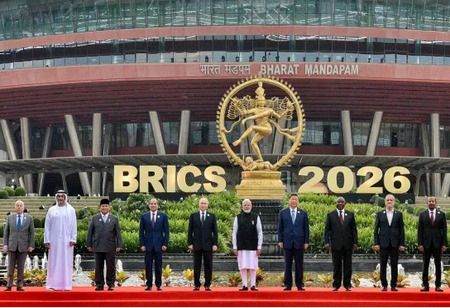
The New Delhi Declaration approved at the 18th Brics Summit has condemned tariffs, sanctions, and carbon-border measures linked to Western nations, while largely refraining from identifying the countries responsible for these actions.
Ajay Srivastava, Founder of the Global Trade Research Initiative (GTRI), mentioned in a LinkedIn post that this wording indicates a diplomatic attempt to tackle problems without provoking a direct clash with the West.
Also Read: Modi, Putin Focus on Trade, Defense, Energy Ties Ahead BRICS
The statement addresses various trade-related topics, such as tariffs, sanctions, reform of the World Trade Organisation (WTO), agriculture, supply chains, and enhanced collaboration among Brics nations.
Its method is especially remarkable in how it mentions policies without explicitly citing their origin. The statement demands the reinstatement of the WTO's two-level dispute-resolution system. Srivastava mentioned that this mainly pertains to the United States, whose blockage of new members to the WTO's Appellate Body has rendered the appeals process unable to operate entirely since December 2019.
The statement also expresses worries regarding unilateral tariffs and non-tariff actions that disrupt trade and do not align with WTO regulations. Srivastava mentioned that the mention of “indiscriminate” tariff hikes seems to be a clear criticism of US tariff policies. The statement, nonetheless, does not explicitly mention the US. The bloc has also condemned "protectionism" conducted under the guise of environmental goals.
Srivastava indicated that this seems to refer to the European Union's Carbon Border Adjustment Mechanism (CBAM), which imposes a carbon-related charge on specific imports entering the EU.
The statement directly challenges “unilateral, punitive, discriminatory, and protectionist” carbon-border policies. Although the EU is not specifically mentioned, Srivastava noted that the mention of CBAM is evident.
Developing nations have expressed worries that these actions might elevate the expenses of their exports, especially in industries like steel, aluminium, cement, and fertilisers. The Brics declaration's broader critique of one-sided trade actions aligns with its appeal for a more inclusive multilateral trading framework.
Also Read: Decathlon India's Wholesale Business Grows 20-Fold
The proclamation additionally denounces one-sided economic and secondary sanctions. Srivastava mentioned that the language seems to focus on the sanctions placed by the US and European nations against countries like Russia and Iran. These actions can also impact third nations and businesses that persist in trading with sanctioned economies.
The bloc has been engaging in talks about increased utilization of local currencies and cross-border payment methods, which is part of a wider initiative to reduce trade's susceptibility to interruptions in current financial systems. According to Srivastava, the same method is evident in the declaration's part concerning West Asia.
Paragraph 28 raises alarm about the increasing tensions in the area and urges for “maximum restraint.” It additionally calls on parties to refrain from actions that may exacerbate the situation and emphasizes the need to safeguard civilians and civilian infrastructure.
The statement emphasizes sovereignty and territorial integrity while urging dialogue and diplomacy to attain enduring peace, security, and stability. It additionally emphasizes the importance of preserving the uninterrupted movement of global trade, supply chains, and energy.
Srivastava remarked that the paragraph conveys a message to the relevant parties without directly identifying them. "Although the United States, Israel, and Iran are not explicitly mentioned, the declaration conveys a distinct message," he stated.
Also Read: Ashok Leyland Grows Karnataka Footprint With Raichur Dealership
Based on his interpretation, the language warns the US and Israel against taking military action against Iran while also indicating to Iran that it should refrain from retaliating against neighboring Gulf nations.
The appeal to preserve the continuity of trade, supply chains, and energy is aimed at all parties. Srivastava stated that Iran must not interfere with shipping in the Strait of Hormuz, and the US and its allies should refrain from military actions that might hinder this vital energy passage.