

China Supports India's BRICS Summit, Underscores Global Cooperation
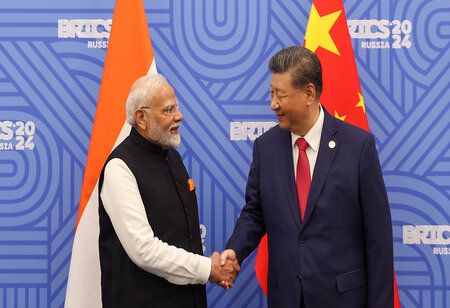
China places significant importance on BRICS collaboration and backs India in effectively hosting this year's leaders' summit, said Chinese Foreign Ministry spokesperson Mao Ning on Tuesday, according to China's state-run media Global Times.
Reports indicate that the comments were made in reply to an inquiry about whether the Chinese Foreign Ministry could verify who would represent China at the 18th BRICS Summit, set to occur in New Delhi from September 12 to 13, and what Beijing anticipates from the forthcoming summit.
Emphasizing Beijing's support for New Delhi's presidency while responding to the specific inquiry, Mao remarked, "Regarding your specific question, I don't have any information to provide at this time," as further reported by Global Times.
In light of this diplomatic context, India is preparing to hold a significant diplomatic event as leaders from the enlarged BRICS coalition get ready to convene in the capital city for the 18th Leaders' Summit, commemorating twenty years since the establishment of the group.
Also Read: India Joins US and 24 Nations in Global 6G Network
As New Delhi assumes the chairmanship with the central theme "Building for Resilience, Innovation, Cooperation and Sustainability," dialogues will concentrate on guiding global collaboration in trade, digital technology, finance, energy security, and reform of global governance.
Also Read: OpenAI Chief Scientist Urges AI Development Slowdown
The two-day summit will gather heads of state and government from member countries, along with invited international guests and senior officials, at Bharat Mandapam in Pragati Maidan.
The agenda of the summit emphasizes enhancing collaboration among member states while producing concrete results in economic growth, technology integration, sustainable development, and institutional governance.
Also Read: US Imposes New Cuba Sanctions on Oil Firm and Castro's Grandson
Conversations through multiple sessions are anticipated to focus on resilient international supply chains, cross-border payment integration, increased utilization of national currencies, development of micro, small, and medium enterprises (MSMEs), digital trade, and artificial intelligence. Discussions will also address energy security, climate adaptability, development funding, the growth of the New Development Bank, and necessary reforms of multilateral financial and political institutions.