

Independence Day: Business Leaders on Building India's Economic Independence

India’s journey toward true economic independence is no longer defined by political freedom alone. It is increasingly shaped by resilient supply chains, indigenous technology, manufacturing strength, strategic partnerships, innovation, and the ability to compete globally. This article explores how Indian business leaders are contributing to that transformation. The piece also examines how India can move beyond simply assembling products to creating intellectual property, technologies, and globally competitive solutions, positioning the country as a resilient and influential force in the global economy.
In the early 1900s, a simple choice made an Indian became a powerful act of defiance against the British Raj: what to buy. As the Swadeshi Movement gathered momentum, Indians began turning away from foreign-made goods and choosing home-grown products. A piece of Indian cloth was no longer just a piece of cloth—it represented self-reliance, economic strength, and the belief that a free India needed the ability to stand on its own.
The movement revealed a powerful truth: political freedom and economic strength are deeply connected. India’s struggle for independence was not only fought on the streets or in political chambers; it also played out in markets, businesses, factories, and the everyday choices of ordinary people.
More than a century later, the battleground has changed, but the question remains remarkably similar: Can India build enough strength at home to shape its own future? Today, the answer is increasingly being shaped by business leaders, entrepreneurs, manufacturers, and technology innovators.
On the occasion of Independence Day 2026, we speak to Indian business leaders on how they are writing a new chapter in India’s journey toward economic independence. Through the conversations, few key themes emerge: building resilient supply chains; developing indigenous technologies to strengthening manufacturing and competing in global markets.
What is Economic Independence & Why Is it Important for India in 2026?
Economic resilience is a nation’s ability to withstand global disruptions, adapt to change, and keep growing without becoming overly dependent on external forces. For India, this means stronger supply chains, domestic capabilities, reliable infrastructure, skilled talent, and access to critical technologies.
True economic independence does not mean India becoming completely self-reliant or cutting itself off from the global economy. Instead, it means building an economy strong enough to make its own strategic choices without being overly vulnerable to external shocks. This includes reducing excessive dependence on imported energy, critical technologies, raw materials, and essential goods while developing strong domestic capabilities in areas that matter to national security and long-term growth. This forms an important foundation for understanding what true economic independence means for India.
Also Read: FM Nirmala Sitharaman Praises India's Economic Resilience
One of the clearest ways businesses are contributing to this new chapter is by building supply chains that are resilient enough to withstand global disruptions while strengthening India’s role in the world economy.
Building India’s Manufacturing Capabilities
India’s economic independence is increasingly being shaped by the country’s ability to reduce imports and increase manufacturing capabilities at home. According to RBI data, India's merchandise imports for July 2026 reached $76.22 billion, an increase from $64.86 billion in July 2025.
As the American tariff war and Middle East conflict continues to disrupt global business and pressurize the Indian economy, the focus is gradually being shifted to developing manufacturing capabilities at home. The emphasis is no longer limited to assembling products but toward developing components, strengthening supplier networks, investing in production facilities, and building the skills and technology needed to compete globally.
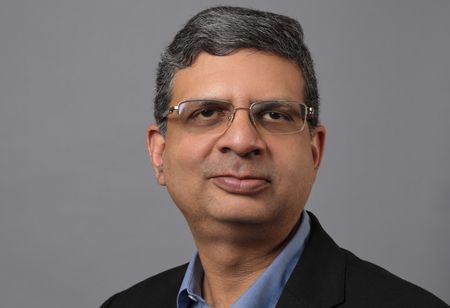 Nirupam Sahay, Chief Executive Officer, Hindware says, “Reducing import dependence begins with a deliberate choice to build capability at home rather than relying on external sourcing as the default. For businesses in manufacturing, this means investing in indigenous production, backward integration, and local supply chains.”
Speaking about how the building products company is investing in boosting Hindware’s manufacturing capabilities, Nirupam says, “Following the COVID pandemic, we took a deliberate decision to invest further in our own manufacturing units for our sanitaryware and faucet business, while working closely with our supplier and outsourcing partners to strengthen their capabilities”.
According to Nirupam, strengthening local manufacturing can create a stronger ecosystem of suppliers, skilled talent, and technical expertise, making import substitution a long-term investment in India’s capabilities and a competitive advantage for businesses.
India’s manufacturing ambitions are backed by policies such as Make in India and the Production Linked Incentive (PLI) Scheme, which incentivize investment across 14 key sectors, including electronics, pharmaceuticals, automotive, telecom, and solar manufacturing. The scheme has attracted more than Rs.3 lakh crore in committed investments, according to government projections. India is also targeting $300 billion in electronics production by 2026.
Also Read: Rahul Attuluri : Recalibrating Education For A Post-Degree World
As more businesses deepen local manufacturing and integrate domestic suppliers into their operations, India can reduce critical import dependencies while creating stronger industrial ecosystems. This shift is helping the country move from being primarily a large consumer and assembly market toward becoming a more capable producer and exporter.
The transformation highlights India’s growing role in global companies’ efforts to diversify manufacturing and build more resilient supply chains.
Creating Indigenous Technology to Strengthen Indian Business Foundations
 Technology has emerged as the strongest enabler for businesses and its impact on strengthening critical sectors such as manufacturing are no exception.
The future of India’s economic independence will be powered by such tech-led disruptions believes Ranjan Chopra, Founder and CEO of IT infrastructure and solutions provider, Team Computers. Elaborating further on this thought he says, “India's next chapter of independence will be written in code, cloud, and computing power as much as in policy. To reduce import dependence in technology, we must empower Indian enterprises to own the architecture, security, and intelligence layers that power their businesses. When we help organizations modernize legacy systems, secure their digital assets, and build AI-driven enterprise IT, we're not just delivering a service, but strengthening the foundation on which India's manufacturing, financial services, and healthcare sectors can compete globally without being technologically dependent on the outside world”.
The impact of these innovations goes beyond individual industries—they are also helping build an economy that can adapt, withstand disruption, and remain competitive.
In the words of Sarabjeet Khurana, Country Manager for India & ASEAN at Sectigo, "India's journey towards true economic independence today goes beyond building physical infrastructure or reducing import dependence but is about developing the technological capabilities, digital trust and resilience that allow businesses and institutions to innovate, compete and grow securely.
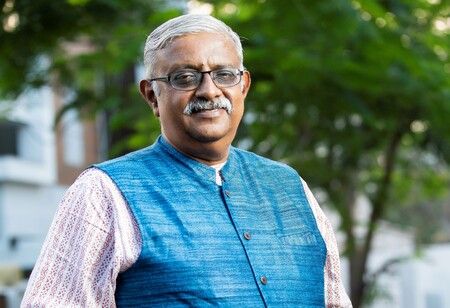 According to Sarabjeet, startups and established businesses have an important role in strengthening economic independence by investing in homegrown innovation, skilled talent, and secure digital infrastructure. He highlights that cybersecurity and digital trust are becoming essential to economic sovereignty, particularly as AI systems increasingly make transactions, verify information, and take decisions autonomously.
A truly independent economy is also one that creates value at home rather than simply serving as a large consumer market. India’s progress in manufacturing, semiconductors, defense, pharmaceuticals, renewable energy, digital payments, and technology shows how domestic capabilities can strengthen economic resilience. The goal should be to move further up global value chains—from assembling products to designing, developing, and exporting them.
Sai Pattabiram, Founder & MD, Zuppa Geo Navigation Technologies denotes, “Startups and enterprises have a complementary role in this journey. Startups bring agility, experimentation and new ideas, while established enterprises can provide scale, manufacturing capabilities and access to global markets. Together, they can create complete technology ecosystems rather than focusing only on assembling products locally. The objective should be to build intellectual property, components, software and systems in India”.
Also Read: Top 10 Visionary Indian Business Leaders - 2025
Strong Governance Fundamental to National Resilience
 Beyond technology and digital trust, economic independence also depends on strong governance and the systems that help businesses grow with confidence.
“As the Indian economy grows in scale and complexity, strong governance is becoming as fundamental to national resilience as manufacturing, infrastructure and technology. Organizations globally lose an estimated 5% of annual revenue to fraud, while weak controls and delayed detection can allow financial and operational risks to compound long before they are identified. For businesses aspiring to compete globally, governance is a foundation for sustainable growth and economic confidence,” says Manish Pipalia Founder & CEO, Sama Audit Systems & Softwares.
Opportunities for All: A Mark of India’s Economic Independence
Economic independence must also translate into opportunities for people. A stronger economy should create productive jobs, support entrepreneurs and small businesses, improve incomes, and give farmers and workers greater access to growing markets. Infrastructure, education, skills, and access to finance therefore become just as important as industrial capacity.
This connection between economic independence and opportunity is especially visible in how India’s cities and infrastructure are evolving. Gurinder Bhatti, Chairman & MD, GB Realty, says, “India’s economic independence will ultimately be reflected in the strength of its cities, industries and people. A country cannot become truly self-reliant unless it creates an environment where businesses can grow, people can find meaningful opportunities and local economies can become stronger”.
“The emergence of new growth corridors and the rising potential of Tier-2 cities are a significant part of this transformation. As infrastructure improves and connectivity expands, cities beyond the traditional metropolitan centers are increasingly becoming engines of investment, employment, consumption and entrepreneurship. Their contribution to India’s economic growth will only become more significant as businesses and talent spread into newer markets.”
Ultimately, India’s economic independence will be measured not by how little it imports, but by how much strength it has to compete, innovate, and withstand uncertainty. The ambition is not isolation from the world, but greater bargaining power within it—an India that can participate in global trade and investment from a position of strength while building a resilient and inclusive economy at home.