

India-Oman Trade Agreement Comes into Force
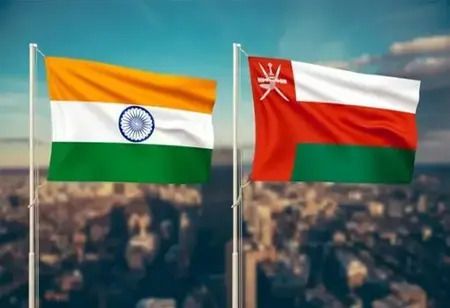
The Comprehensive Economic Partnership Agreement (CEPA) between India and Oman, allowing zero duty entry for various Indian labor-intensive products, will commence.
On Sunday, the Finance Ministry announced a notification regarding duty reductions on Omani products as per the trade agreement with India, effective June 1. In December last year, during Prime Minister Narendra Modi's trip to Muscat, India and Oman finalized the Comprehensive Economic Partnership Agreement (CEPA).
The Partnership Agreement (CEPA) was executed in December of the previous year.
"The exemption from duties will be granted only if the importer satisfactorily demonstrates to the Deputy Commissioner of Customs or the Assistant Commissioner of Customs, depending on the situation, that the goods for which the exemption is requested originate from the Sultanate of Oman," the finance ministry announced.
Also Read: How US–China Tariffs Are Disrupting Textile Trade
The finance ministry announced that this notification will take effect on June 1, 2026. Oman has provided duty-free access on 98.08 percent of its tariff lines, which includes 99.38 percent of India's exports to Oman.
Complete tariff elimination is granted to all significant labour-intensive sectors such as Gems & Jewellery, Textiles, leather, footwear, sports equipment, plastics, furniture, agricultural goods, engineering products, pharmaceuticals, medical devices, and Automobiles.
Also Read: SCO Summit 2025: Outcomes of Modi-Xi Meeting
India is providing tariff concessions on 77.79 percent of its total tariff lines, encompassing 94.81 percent of India’s imports from Oman in terms of value.
For the export products of interest to Oman that are sensitive to India, the proposal primarily consists of a tariff-rate quota (TRQ) oriented tariff liberalization.
Also Read: US Tariffs on India an Economic Boon?
To protect its interests, India has classified sensitive products into an exclusion category without making any concessions, particularly agricultural items like dairy, tea, coffee, rubber, and tobacco; gold and silver bullion, jewellery; as well as other labour-intensive products like footwear and sports goods; and scrap from various base metals.