

Trump Seeks New Import Taxes After Tariff Setback
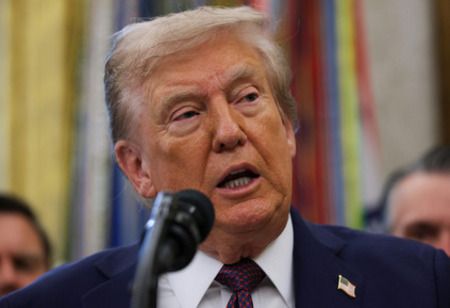
US President Donald Trump has introduced temporary import taxes in February after the Supreme Court struck down his preferred tariffs. The interim levies, brought in as a replacement measure, are set to expire in less than three months.
The administration is currently making urgent efforts to establish more lasting tariffs to ensure a continuous influx of revenue into the US Treasury and to reinforce the president's protectionist measures surrounding the American economy.
Also Read: Natural Diamond Council Appoints Susie Dewey as CMO
Commencing this week, the Office of the United States Trade Representative is set to initiate hearings concerning two separate investigations. These inquiries are anticipated to culminate in the imposition of a new series of US tariffs. Such tariffs, essentially taxes borne by importers within the United States, tend to be transferred to consumers through increased prices, further burdening those already exasperated by the escalating cost of living.
Trump's newest tariff push is sure to face more challenges in court but is likely to prove sturdier than the one the Supreme Court tossed out. However, it is anticipated to demonstrate greater resilience compared to the previous measure that was invalidated by the Supreme Court.
The initial proceedings will take place on Tuesday and Wednesday, focusing on evaluating whether 60 economies, ranging from Nigeria to Norway and representing 99 percent of US imports, sufficiently enforce measures to ban the trade of goods produced through forced labor.
In the upcoming week, the administration plans to conduct hearings to assess if 16 U.S. trading partners, such as China, the European Union, and Japan, are excessively producing goods, which might lead to price reductions and disadvantage US manufacturers. These economies under review represent 70 percent of US imports, as reported by Erica York from the Tax Foundation. The investigation could potentially lead to the imposition of new tariffs.
Also Read: King Charles Moves ahead with US Visit
The world's leading economies, such as China, the European Union, and Japan, are featured in both compilations. The government has initiated these cases under Section 301 of the Trade Act of 1974, which permits the imposition of tariffs and additional penalties on nations determined to engage in trade practices that are deemed "unjustifiable," "unreasonable," or "discriminatory."
US Trade Representative Greer, responsible for supervising the investigations, has emphasized that he will not form any conclusions in advance. Importers and international counterparts harbor reservations regarding the fairness of the process. Notably, Treasury Secretary Scott Bessent under Trump's administration did not hesitate to announce, prior to the completion of investigations, that the US government intends to substitute original tariff revenues with newly introduced import taxes, some of which will be enacted under Section 301.
The president has personally stated that these new tariffs "are going to get us more money." Observers have seized upon the rapid pace of the latest investigations involving Trump. During the president's first term, the implementation of Section 301 tariffs on China required nearly a year of inquiry and public commentary. Should the current investigations result in the imposition of new tariffs before the expiration of Section 122 duties, the overall process will have been completed in less than half the time.
Also Read: US mulls Emergency Powers in Spirit Airlines Restructuring
Importers anticipating the reintroduction of burdensome tariffs may find some solace in the understanding that tariffs under Trump’s Section 301 likely won't exhibit the same unpredictability as his IEEPA charges. He is required to adhere to certain procedures before implementing them.